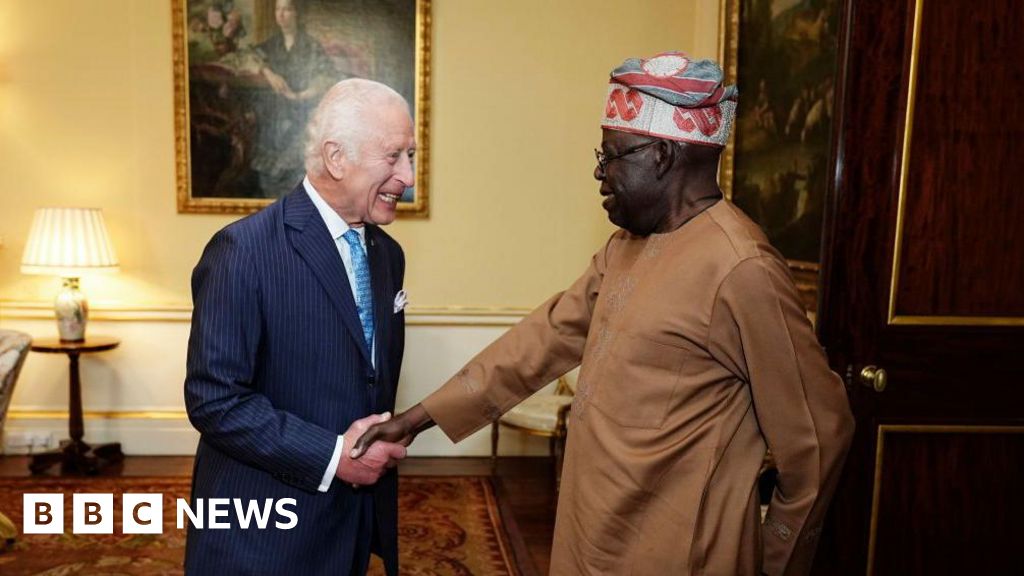
King Charles III will host Nigerian President Bola Tinubu and First Lady Oluremi Tinubu for a state visit at Windsor Castle on 18-19 March, the first Nigerian state visit to the UK since 1989. The visit highlights improving UK–Nigeria ties — bilateral trade exceeded £8bn in the year to October and the countries signed a trade and investment partnership in 2024 — which could support increased commercial and investment cooperation, though the formal agenda has not been disclosed.
Market structure: The state visit is a soft-power catalyst that marginally increases the probability of UK-backed trade/FDI deals (energy, infrastructure, fintech) between March and the next 12–24 months; UK-Nigeria trade was ~£8bn/year to Oct, so even a 5–10% re‑routing of activity into UK channels would materially lift trade finance volumes. Direct winners: UK export‑finance providers, UK-listed energy majors with Nigerian operations (SHEL.L, BP.L) and contractors (BBY.L); losers: local competitors to UK service providers and higher‑cost non‑UK financiers. Cross-asset: expect modest NGN appreciation vs USD/GBP on improved sentiment, tightening of Nigerian USD sovereign spreads (if accompanied by UKEF deals), and negligible global commodity price impact absent large oil production agreements.
Risk assessment: Tail risks include protests or reputational backlash in the UK that limit deal scope, a Nigerian political shock that reverses reform momentum, or failure to secure UKEF / private capital — each could widen Nigerian USD spreads by 200–500bp within weeks. Time horizons: immediate (days) — symbolic, market noise; short-term (0–3 months) — MoUs and financing announcements; long-term (6–24 months) — FDI and project execution. Hidden dependencies include Nigeria’s oil revenue/fiscal sensitivity and FX liquidity; catalysts to accelerate flows are announced UKEF guarantees, UK bank syndications, or M&A by London‑listed firms.
Trade implications: Tactical plays: small, event-driven allocations (1–3% portfolio) to UK exporters with Nigeria exposure and to Nigerian sovereign credit on spread compression signals. Use options to cap downside: buy 6–12 month call spreads on SHEL.L and BP.L (targeting 10–20% upside) and protective puts on any Nigerian bond holdings. Monitor three leading signals in next 30–90 days: UKEF commitment >£100m, announced UK‑Nigeria M&A, or 30‑day tightening of Nigerian USD spreads by >150bp.
Contrarian angles: The market likely understates execution risk — many state-visit headlines never convert to investible revenues within 12 months, so don’t pay up for permanent multiple expansion. Conversely, negative sentiment around Tinubu could create a mispricing in Nigerian assets; a disciplined, catalyst‑driven entry (spread compression or confirmed UKEF support) can capture idiosyncratic returns. Historical parallel: past state visits often produce press + a single headline deal rather than broad capex — position sizes should reflect that asymmetric payoff.
AI-powered research, real-time alerts, and portfolio analytics for institutional investors.
Request DemoOverall Sentiment
mildly positive
Sentiment Score
0.25
