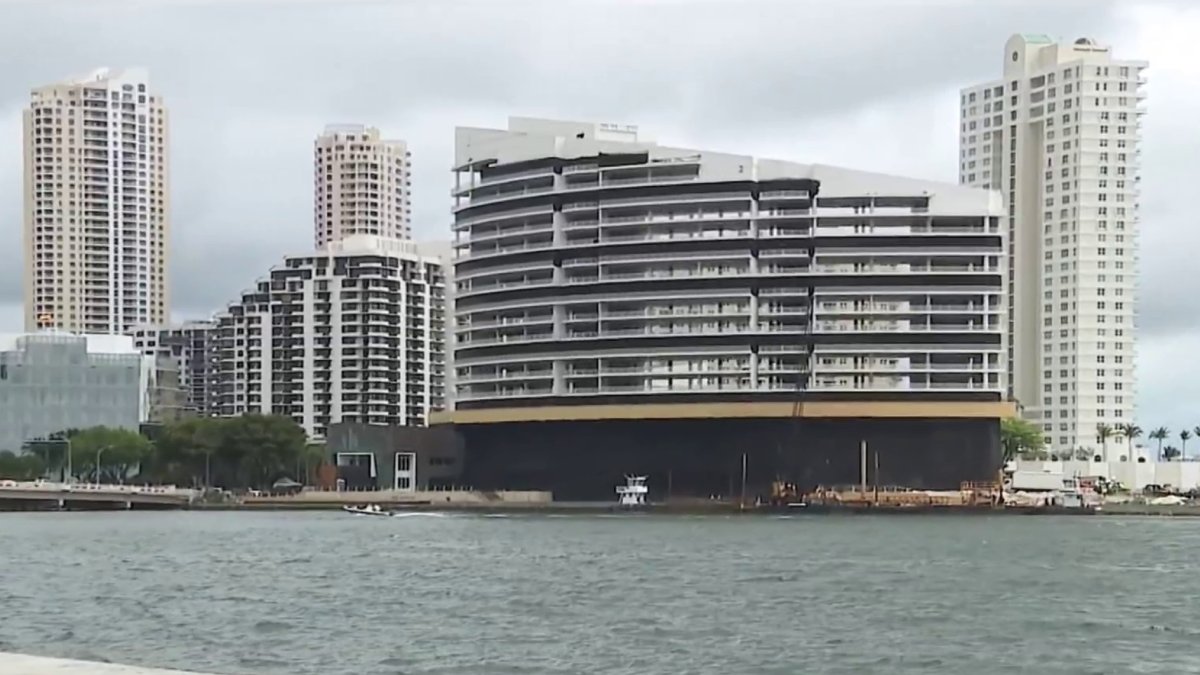
The Mandarin Oriental on Brickell Key is scheduled for implosion at 8:30 a.m. Sunday, with the island closed to pedestrians and traffic from 7:00 a.m. to about 1:30 p.m. The hotel, built in 2000, will be replaced by The Residences at Mandarin Oriental, a two-tower ultra-luxury development featuring a 66-story South Tower and a 34-story North Tower. The event creates localized road and access disruptions, but no broader market impact is implied.
This is less a one-off demolition story than a visible marker of a broader supply reset in prime Miami waterfront. The near-term equity impact is mainly around construction and access friction: a brief but complete shutdown of Brickell Key can create localized revenue loss for nearby hospitality, food delivery, rideshare, and last-mile logistics, but the bigger trade is that the replacement asset class shifts from legacy hotel cash flows to ultra-prime residential inventory. That matters because Miami’s luxury condo market has been absorbing trophy-branded product at premium pricing while hotel ADR is increasingly vulnerable to cyclical travel normalization.
The second-order winner is the developer ecosystem tied to luxury fit-out, interiors, engineering, and waterfront infrastructure, not the old hotel brand itself. A two-tower branded residential project typically improves pricing power for adjacent comparable units within a 1-2 mile radius by reaffirming scarcity at the top end, while also pulling forward demand from domestic wealth migration and international capital seeking hard assets. The risk is execution timing: luxury deliveries into 2028-2030 face rate sensitivity, insurance costs, and condo financing friction; if financing tightens or absorption slows, the value creation thesis extends further out and can become stranded in IRR terms.
The contrarian view is that the market may be overestimating how seamlessly hotel demand converts into condo demand. Miami luxury has been a beneficiary of inflows, but the forward marginal buyer is more rate- and insurance-sensitive than the headline narrative suggests, and branded-product premiums compress quickly if a broader Florida condo repricing develops. The near-term closure also creates a small but tradable dislocation in local transport and leisure names if same-day volumes are materially interrupted, though the effect should fade within hours to days rather than persist beyond the event window.
AI-powered research, real-time alerts, and portfolio analytics for institutional investors.
Request DemoOverall Sentiment
neutral
Sentiment Score
-0.05
