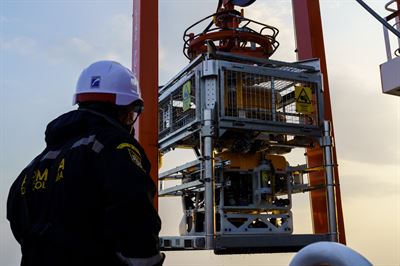
Saab UK’s Seaeye Lynx ROV conducted multiple deep‑sea survey missions on the 18th‑century galleon San José at roughly 600 metres, producing high‑resolution imagery, 3D photogrammetry and recovering artefacts (a cannon, three gold coins, Chinese porcelain) to support Colombian underwater heritage documentation. The piece underscores Lynx’s proven subsea inspection capability and highlights Saab UK’s local footprint (~600 employees, eight facilities) and supply‑chain contributions to major defence programmes (cited: ~60% of Next‑generation Light Anti‑tank Weapon content and ~35% of Gripen components), reinforcing the unit’s operational relevance to archaeological, commercial and defence customers.
Market structure: The San José work is a narrow but high-visibility win for specialist ROV/inspection vendors and defense-technology integrators — think Saab AB (SAAB-B.ST), Oceaneering (OII), TechnipFMC (FTI) and Subsea 7 (SUBC.L). These firms gain reputational pricing power for deepwater inspection work that serves archaeology, offshore energy and renewables, tightening demand for high-spec ROVs versus commoditised vessel time; expect contract margins to incrementally expand 100–300bps over 12–24 months in bespoke inspection segments.
Risk assessment: Tail risks include international legal/sovereignty claims over finds, export-control/regulatory limits on dual-use tech, and reputational backlash that could delay contracts; low-probability events could wipe out near-term revenues for operators. Immediate market impact is negligible (days); expect tendering and procurement signals in 3–9 months and material revenue recognition over 12–36 months. Hidden dependencies: UK/Swedish supply chains and FX (SEK, USD, NOK) exposures can swing reported EPS by ±5–10% on multi-year deals.
Trade implications: Direct plays — establish small, staged positions: 1–2% long SAAB-B.ST, 1–2% long OII, 1% long SUBC.L; use 9–12 month timeframes and scale into contract announcements. Options: for OII buy a 12-month call spread (buy 20% OTM, sell 40% OTM) sized to 0.5–1% portfolio to cap cost; set stop-loss at −25% and take-profit at +40% or upon confirmed multi-year framework awards. Rotate portfolio +3% to defence/industrial automation and −1.5% from speculative salvage/junior explorers.
Contrarian angles: The market will likely treat this as PR rather than revenue — consensus is underpricing multi-year service demand from offshore wind and inspection markets; a conservative estimate is a 5–10% incremental top-line lift for best-in-class ROV vendors over 2–3 years. Beware overreach: legal freezes on artifacts (historical parallel: Titanic salvage litigation) can produce sudden share-price collapses; size positions small and anchor upside to tangible contract milestones rather than publicity.
AI-powered research, real-time alerts, and portfolio analytics for institutional investors.
Request DemoOverall Sentiment
mildly positive
Sentiment Score
0.25
