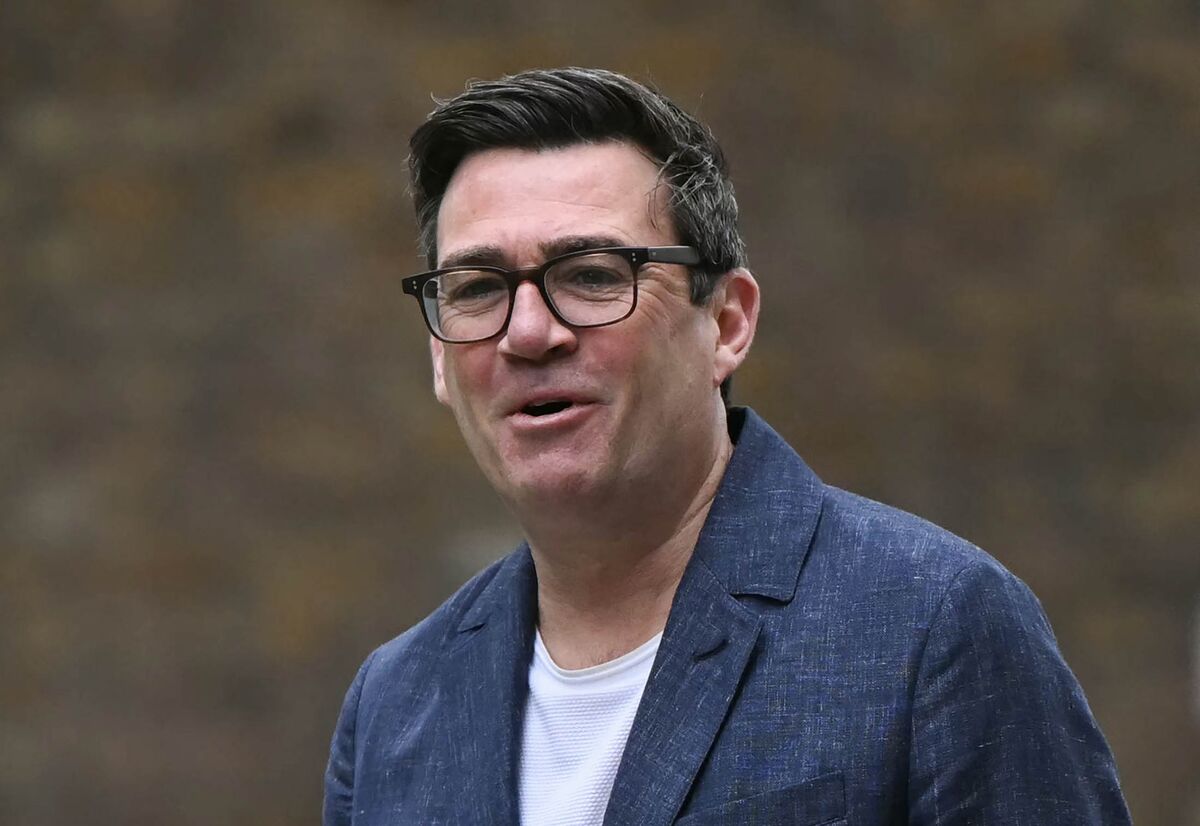
Andy Burnham moved a step closer to a potential Labour leadership challenge after MP Josh Simons quit the House of Commons, which could clear the way for Burnham to win a parliamentary seat required for the top job. The article is political and speculative rather than market-sensitive, with no direct economic or company-specific financial impact. It mainly signals an incremental change in the odds of a future UK leadership contest.
This is a governance event with a high beta to UK political risk premia rather than a clean macro catalyst. The market’s first-order read is leadership uncertainty, but the second-order effect is a longer window where Labour policy optionality widens: asset allocators will price a higher probability of tax, spending, and regulatory shifts if Burnham becomes a credible succession endpoint. That tends to compress multiples in domestically exposed UK sectors before any actual policy change, because the discount rates move faster than earnings estimates. The immediate beneficiaries are volatility sellers and any hedge that benefits from widening dispersion inside UK equities. Large-cap international earners should outperform domestic cyclicals because they are less sensitive to Westminster turnover and more insulated from a potential shift toward redistribution, labor-friendly regulation, or municipal-style industrial policy. The loser set is not just banks and retailers; it is also UK small caps and midcaps with low pricing power, where even a 1-2 turn hit to terminal multiple assumptions can overwhelm near-term fundamentals. The key tail risk is that a succession contest becomes self-fulfilling: once investors believe a leadership change is plausible, Cabinet positioning and donor behavior can accelerate the probability. Time horizon matters: over days, this is mostly sentiment and positioning; over months, it becomes an election-policy regime trade if Burnham is seen as offering a clearer growth narrative than Starmer. What would reverse it is a rapid reconsolidation around Starmer or evidence that Burnham cannot convert local popularity into parliamentary machinery, which would unwind the political risk premium quickly. The contrarian point is that the market may be underestimating how little near-term economic impact this has if it stays an internal Labour story. Leadership drama can be very tradable while still being noise for real assets unless it spills into polls, manifesto drafts, or union alignment. That argues for expressing the view with options or relative-value hedges rather than outright bearish UK beta.
AI-powered research, real-time alerts, and portfolio analytics for institutional investors.
Request DemoOverall Sentiment
neutral
Sentiment Score
-0.05
