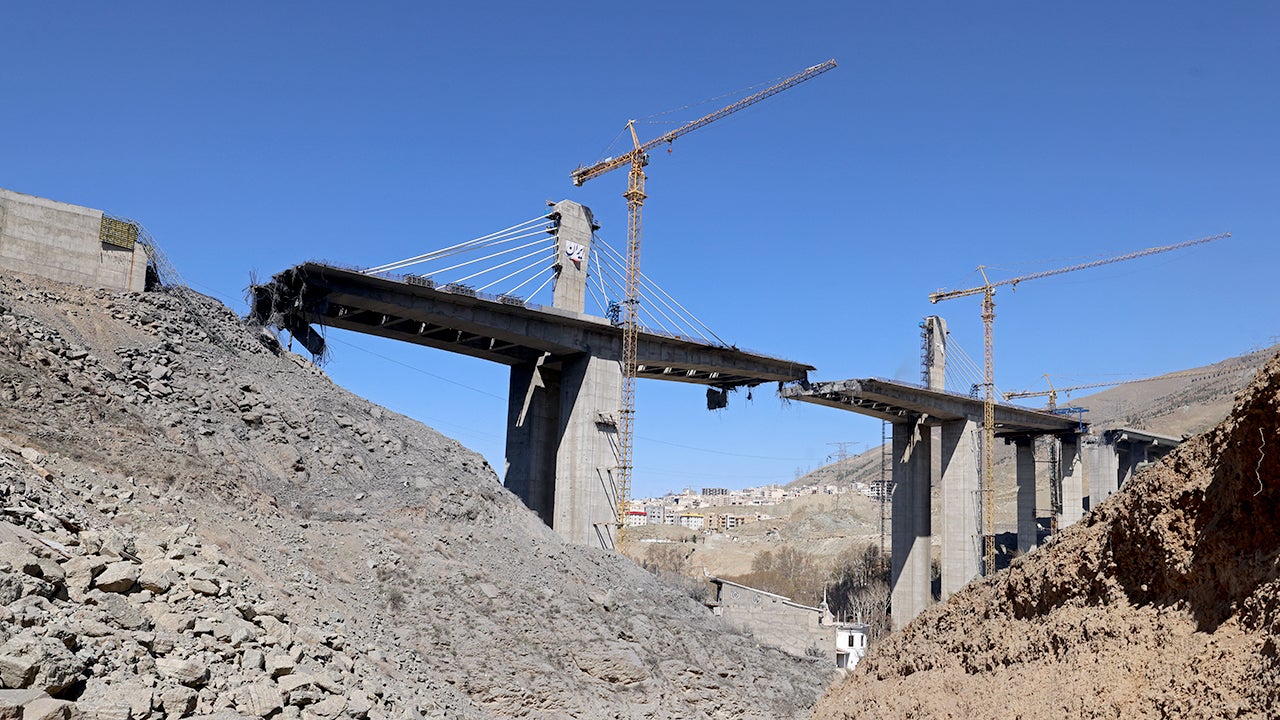
70%: Israeli PM Netanyahu claimed recent air strikes have destroyed 70% of Iran's steel production capacity; the IDF reported ~1,000 militants eliminated in Lebanon, 3,500+ targets struck and 5 central bridges hit. President Trump warned the US will next target bridges and electric power plants, saying US forces “haven’t even started destroying what’s left in Iran.” These developments represent a significant escalation in the Israel-US campaign and raise material geopolitical risk that is likely to be risk-off for markets, with potential upside pressure on oil and heightened regional asset volatility.
Escalatory messaging that normalizes strikes on hard infrastructure raises the odds of persistent regional chokepoints and insurance-premium repricing rather than a single, short-lived shock. Expect layered transmission: higher freight and war-risk premiums within days, elevated spot energy volatility for weeks, and slower-moving capex re-routing (port upgrades, alternative steel sourcing) over 6–24 months.
Defense and security-adjacent supply chains will see front-loaded order visibility but asymmetric delivery risk — prime contractors can win contracts quickly, yet subcontractors (specialized optics, microelectronics, titanium forgings) face lead-time and export-control bottlenecks that compress margins. Conversely, sectors with concentrated Middle East inputs (select steel, petrochemical feedstocks, and regional logistics operators) will suffer margin pressure if disruption persists beyond a month.
Tail scenarios are binary and fast: a direct strike on a critical maritime transit point or a major energy export facility could push Brent into the $100–140/bbl band within days and force immediate macro policy responses; de-escalation via diplomacy or rapid blackout-capping would reverse flows within weeks. For portfolio construction, prefer option structures to capture skew; favor names with visible backlog and government funding lines while avoiding one-way equity exposure to sectors with high regional supply concentration.
AI-powered research, real-time alerts, and portfolio analytics for institutional investors.
Overall Sentiment
strongly negative
Sentiment Score
-0.80
