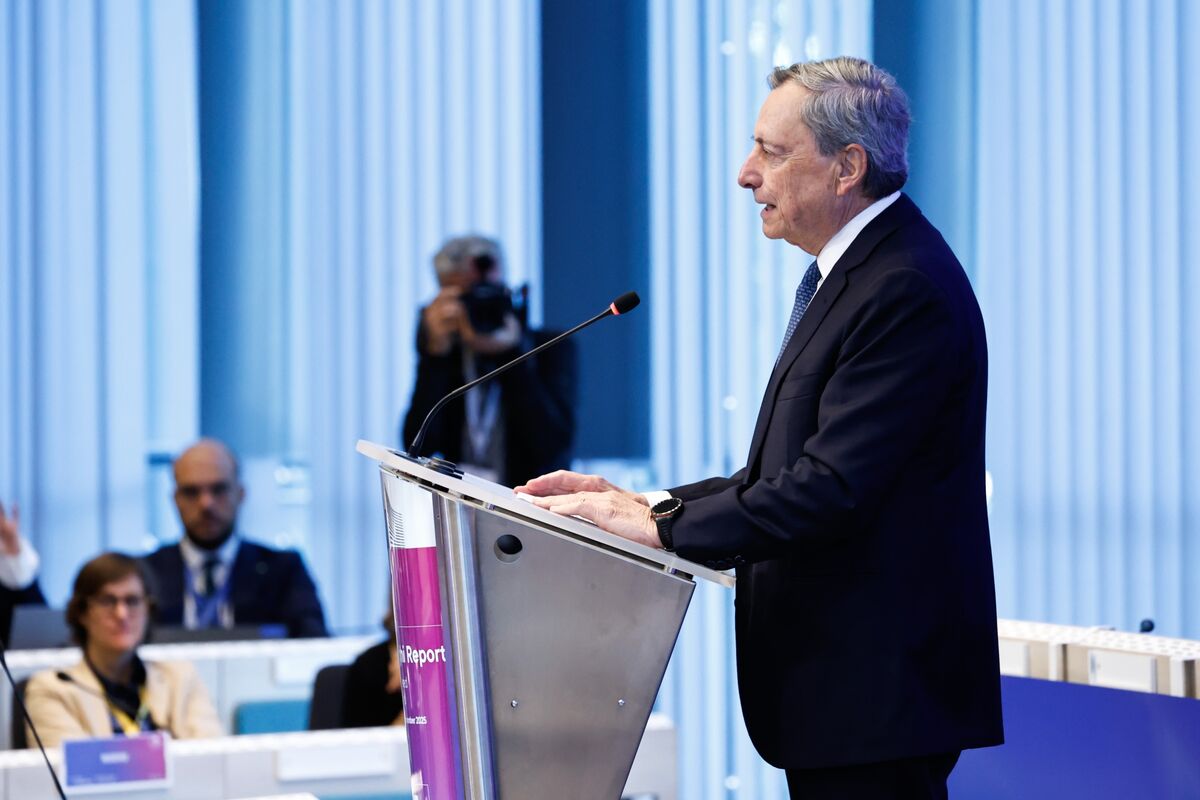
Former European Central Bank President Mario Draghi criticized the European Union's slow pace in boosting economic competitiveness, stating the bloc is "failing to match the speed" of a rapidly changing global order. A year after presenting a report on the issue, Draghi noted widespread disappointment among citizens regarding the fragmented region's inability to keep pace with global rivals, underscoring persistent structural challenges to the EU's economic standing.
Former European Central Bank President Mario Draghi has issued a stark warning regarding the European Union's lagging economic competitiveness, stating the bloc is "failing to match the speed" of a rapidly changing global order. This assessment, coming a year after he presented a foundational report on the subject, underscores a persistent structural inertia and political fragmentation that is impeding necessary reforms. The pessimistic tone of the commentary, reflected in a moderately negative sentiment score (-0.65), suggests that these concerns are deeply rooted and present a significant headwind for the region's long-term growth trajectory. Draghi's observation that Europeans are "disappointed" by the lack of progress indicates a growing awareness of the EU's struggle to maintain its economic standing relative to global rivals, which poses a fundamental risk to the attractiveness of pan-European investments.
AI-powered research, real-time alerts, and portfolio analytics for institutional investors.
Request DemoOverall Sentiment
moderately negative
Sentiment Score
-0.65
