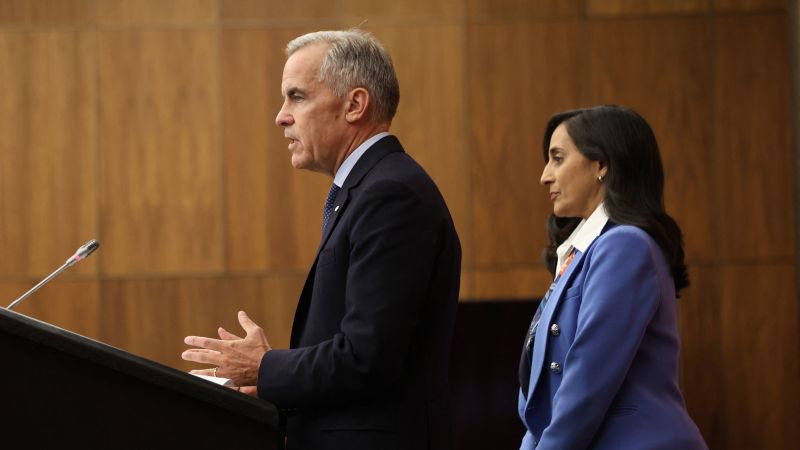
Canada announced its intention to recognize a Palestinian state in September at the UN General Assembly, with Prime Minister Mark Carney citing a commitment to a two-state solution and the Palestinian Authority's pledges for reform, elections without Hamas, and non-militarization. This decision, which follows similar moves by France and the UK, was swiftly rejected by Israel, which labeled it a "reward to Hamas" detrimental to ceasefire and hostage release efforts. The announcement reflects growing international pressure and evolving diplomatic positions regarding the Israeli-Palestinian conflict.
Canada's announcement to recognize a Palestinian state in September represents a significant, coordinated diplomatic shift among key Western allies, aligning with similar intentions from France and the UK. This move is explicitly conditional on the Palestinian Authority's commitment to substantial reforms, including holding elections in 2026 without Hamas's participation and ensuring the future state remains non-militarized. While Canadian Prime Minister Mark Carney framed the decision as a step toward a two-state solution that secures both Israeli and Palestinian futures, it was immediately met with a sharp rebuke from Israel's Foreign Ministry, which labeled it a "reward to Hamas" that undermines ongoing ceasefire and hostage negotiations. This development underscores a growing divergence between the policy approaches of Canada, the UK, and France versus the more cautious stance of the United States. The recent multilateral sanctions against Israeli ministers, which Canada participated in, further highlight this increasing international pressure on Israel's current government regarding the war in Gaza and settlement expansion, despite criticism from the U.S. that such actions are unhelpful.
AI-powered research, real-time alerts, and portfolio analytics for institutional investors.
Overall Sentiment
mixed
Sentiment Score
0.00
