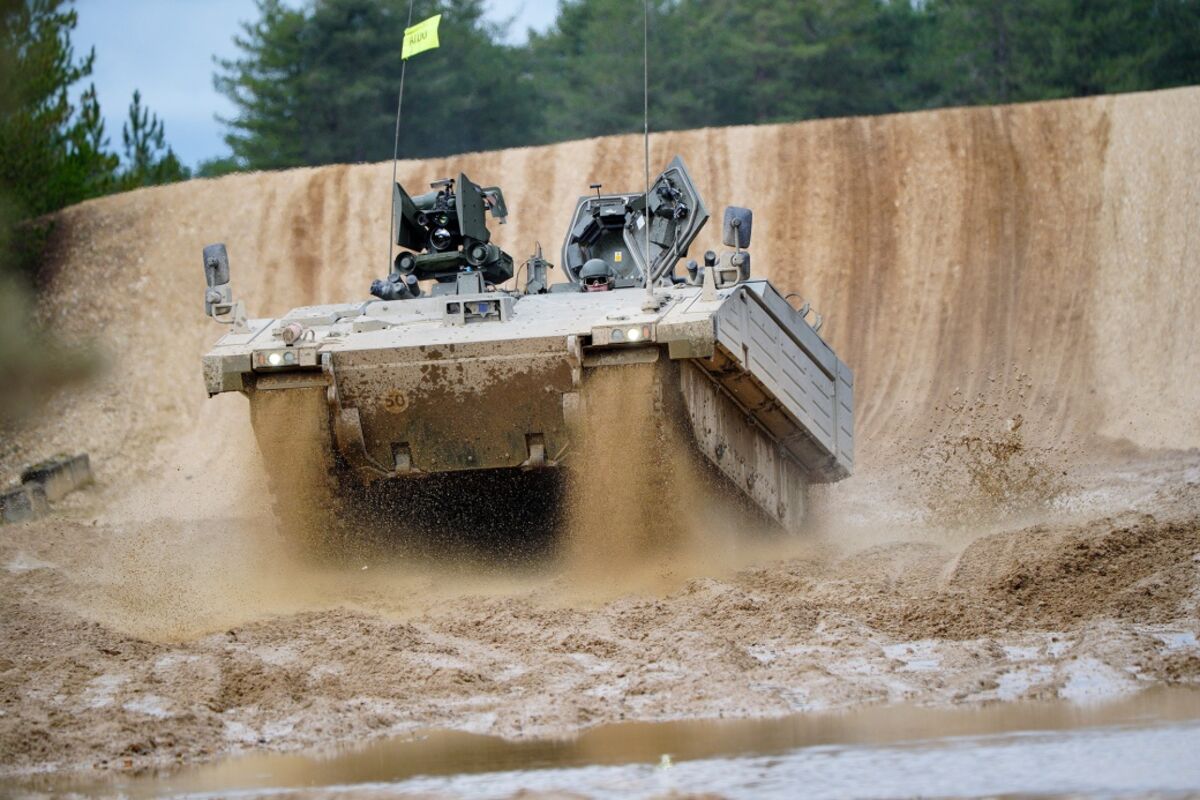
The British Army has suspended use of General Dynamics UK’s Ajax armored vehicles for two weeks after an exercise left more than 30 soldiers injured, with Defence Minister Luke Pollard ordering the pull while an inquiry is conducted. Most of the injured have been medically cleared, but the pause and investigation create operational disruption and potential reputational and contractual risk for General Dynamics UK and may prompt closer Ministry of Defence scrutiny of the fleet and contractor obligations.
Market structure: The immediate losers are General Dynamics’ UK division and its subcontractors tied to the Ajax program, with near-term reputational and scheduling risk likely to pressure GD (NYSE: GD) shares by ~2–5% on elevated headlines; winners are alternative armored-vehicle and retrofit suppliers (e.g., BAE Systems plc — LSE: BA.L, Rheinmetall — XETR: RHM) who can pick up accelerated aftermarket work. Competitive dynamics shift modestly toward suppliers with proven safety/retrofit credentials and domestic UK footprint; procurement timelines (demand) may be pushed out 3–12 months, creating short-term spare-capacity for competitors. Cross-asset: expect small widening in GD credit spreads (<25–50bps) if pause extends, minor GBP volatility (-0.2% to -1% on risk-off), and negligible impact on commodities or broad bond markets.
Risk assessment: Tail risks include a protracted grounding or a finding of systemic design fault that triggers contract renegotiation or litigation — low probability but high impact (could affect GD revenue in UK by multiple percentage points over 12–24 months). Time horizons: immediate (next 2 weeks — mandated pause), short-term (2–12 weeks — investigation outcomes), long-term (3–12 months — contract amendments, retrofits). Hidden dependencies: political pressure ahead of UK parliamentary cycles and reliance on UK sovereign procurement budgets could amplify outcomes. Catalysts to watch: MoD interim report within 14–60 days, parliamentary scrutiny, and any insurer/class-action filings.
Trade implications: Tactical pair trade: short GD and long BA.L/RHM sized 1–3% of portfolio to capture market-share reallocation if Ajax work is rebid; prefer size 1–1.5% each given low market-impact score. Options: buy a 3-month GD put spread (buy 6–8% OTM put, sell 12–15% OTM put) sized to 1% portfolio risk to hedge headlines; alternatively buy 3–6 month call spreads on BA.L or RHM to play aftermarket upside. Sector rotation: underweight UK-centric primes and overweight diversified global primes (LMT, NOC) by +1–2% for safety and contract diversification. Entry/exit: enter within 3–14 days; take profits or re-assess on formal MoD findings or a >5% sustained move.
Contrarian angles: Consensus may overstate permanent brand damage — historical military platform groundings typically produce retrofits and restored orders within 3–9 months rather than cancellations. The market could over-react if grounding is procedural; a selloff >8–10% in GD would likely be an asymmetric buying opportunity. Unintended consequence: aftermarket retrofit vendors and insurers could see revenues rise; consider structured exposure to those players rather than pure play on original equipment manufacturers.
AI-powered research, real-time alerts, and portfolio analytics for institutional investors.
Request DemoOverall Sentiment
mildly negative
Sentiment Score
-0.30
