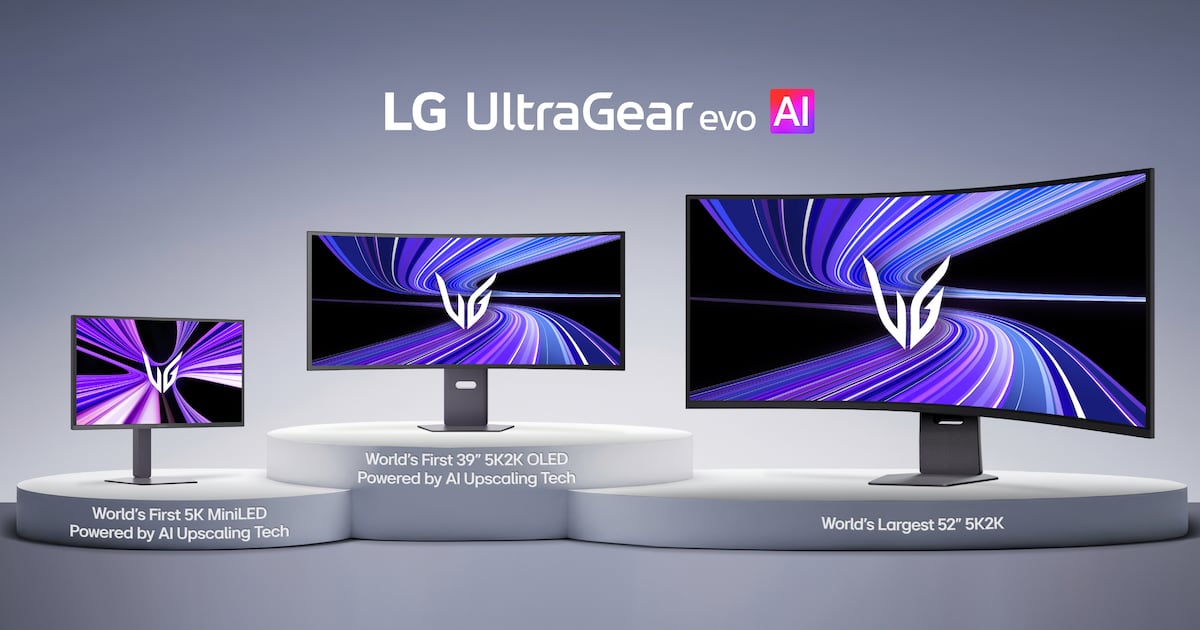
LG Electronics has introduced UltraGear evo monitors that incorporate on-device AI for 5K upscaling, targeting improved image fidelity for gaming and creative use cases. The product launch strengthens LG's premium gaming-display proposition and could support higher average selling prices and differentiation in the monitor market, though the article provides no sales or margin guidance and near-term financial impact is likely limited.
Market structure: LG Electronics (066570.KS) and LG Display (034220.KS) are immediate beneficiaries — premium monitor ASPs could rise ~5–10% and premium-volume share could expand 10–20% within 12 months if adoption follows current product cycles. Edge‑AI SoC suppliers (Qualcomm QCOM, MediaTek 2454.TW) and niche NPU IP vendors gain optionality; discrete GPU demand (NVIDIA NVDA, AMD AMD) faces a modest 1–3% displacement in upscaling workloads over 12–24 months, not a structural collapse. Pricing power concentrates in OEMs that bundle on‑device AI features, enabling $100–300 price premia in the premium monitor segment.
Risk assessment: Tail risks include product underperformance, firmware regressions, IP litigation, or tightened export controls on edge AI chips that could delay ramp — each could wipe 5–15% off near‑term revenue expectations. Immediate (days) impact is negligible; short‑term (3–6 months) is driven by reviews and holiday season sales; long‑term (12–36 months) depends on win rate with gamers/prosumer ecosystems. Hidden dependencies: third‑party GPU/driver support, content ecosystem adoption, and component supply (panel/DRAM) could amplify swings.
Trade implications: Direct plays — overweight LG Electronics (066570.KS) and LG Display (034220.KS) for 6–12 month product cycle upside; balanced exposure to edge‑AI SoC suppliers (QCOM, 2454.TW). Pair trade: long QCOM (edge AI monetization) / short NVDA (partial GPU demand risk) sized 2:1 to express asymmetric upside. Use 3–6 month call spreads on winners and 2–4 month put spreads on NVDA for defined risk; enter on any pullback in next 2–8 weeks, trim at +15–25% or after three consecutive negative review metrics.
Contrarian angles: Market may underprice component winners while overestimating GPU losses — historical upscaling (e.g., Sony/BRAVIA) delivered brand premium but limited industry displacement. The upside is underdone for suppliers; downside is underappreciated for OEM margin risk if BOM increases >$50–100, which would compress gross margin by ~200–400bps. Watch threshold signals: if ASP uplift <3% after two quarters, rotate out.
AI-powered research, real-time alerts, and portfolio analytics for institutional investors.
Request DemoOverall Sentiment
mildly positive
Sentiment Score
0.32
