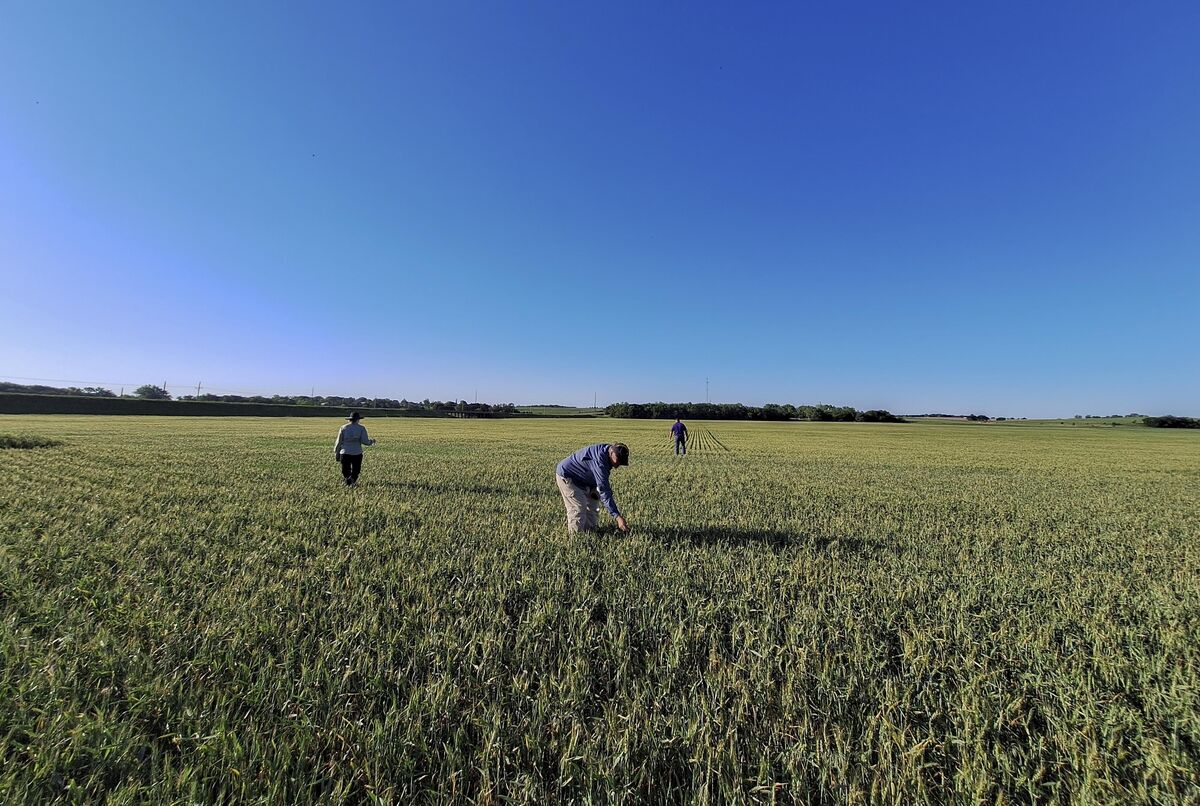
Severe weather is damaging U.S. wheat crops, with drought, hail, and unseasonable warmth forcing farmers to call crop adjusters to assess losses. An Oklahoma farmer reported hail that bent wheat stalks in half after a storm that delivered only an inch of rain. The article signals crop-quality and yield risk for wheat producers, but does not provide broader pricing or production figures.
The immediate market implication is not just lower wheat output; it is a higher volatility regime for the entire grain complex. When crop damage is heterogenous and insurance claims rise, the marginal seller becomes more defensive, which can steepen nearby futures backwardation and widen basis differentials versus deferred contracts. That dynamic tends to favor physical merchandisers and storage-linked businesses over pure agricultural producers, because scarcity is monetized at the origination and logistics layer before it fully shows up in end-user pricing. Second-order effects should show up in feed substitution and acreage decisions over the next 1-2 planting cycles. If wheat quality deteriorates, millers and feed users will push toward corn, barley, and alternative protein inputs, supporting cross-commodity correlation spikes rather than a clean one-way wheat trade. The bigger winner may be crop insurance and ag services exposure: higher claim frequency and larger severity from weather whipsaws can lift underwriting losses in the near term but also support premium repricing and tighter terms into the next renewal season. The key risk to the bullish grain thesis is policy and global substitution. A weather shock matters most when inventories are already tight; if Black Sea or Southern Hemisphere supply normalizes, the price impulse can fade within weeks even if domestic damage remains visible. Conversely, if the same weather pattern persists through harvest windows, the market can overshoot because quality downgrades are often underappreciated until delivery starts failing specifications. Consensus may be over-focusing on the headline crop loss and underpricing duration risk: the real issue is not one storm, but repeated stress events that reduce yield certainty and increase hedging demand. That argues for expressing the view through volatility and relative value rather than outright direction, because the best risk/reward is likely in instruments that benefit from broader grain price dispersion and elevated uncertainty.
AI-powered research, real-time alerts, and portfolio analytics for institutional investors.
Request DemoOverall Sentiment
moderately negative
Sentiment Score
-0.35
