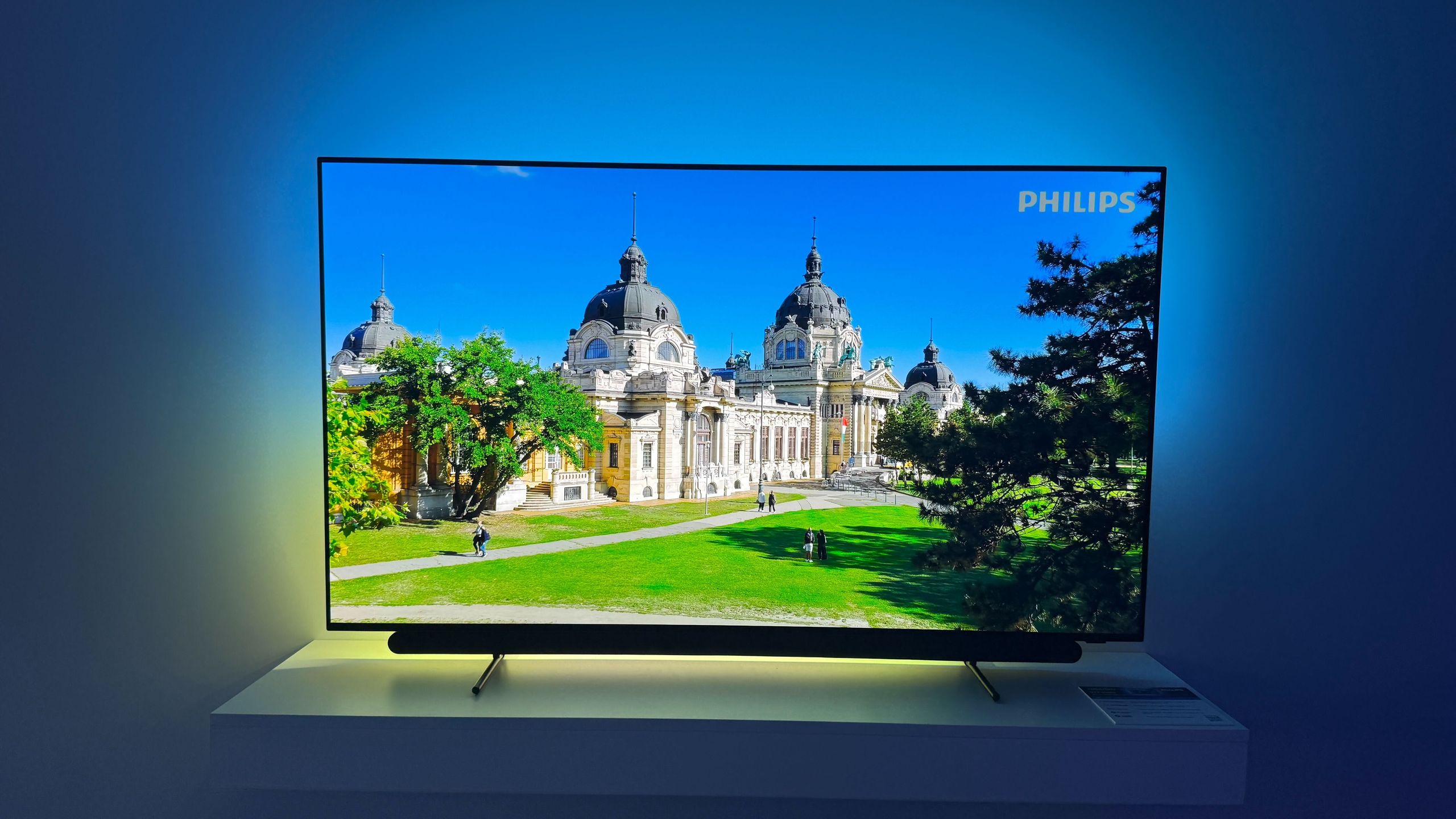
Philips previewed the OLED911 with a claimed 4500-nit peak brightness, support for Dolby Vision 2 Max (the first OLED to do so), four full-bandwidth HDMI 2.1 ports enabling 4K gaming with VRR up to 165Hz, and an 81W Bowers & Wilkins 8-channel built-in sound system. The TV uses a MediaTek Pentonic 800 with Titan OS and Philips’ 10th Gen P5 AI processor; pricing is unconfirmed but the OLED910 launched at £2,199 (briefly discounted to £1,799), and TP Vision will not sell this range in the US or Australia. Early hands-on impressions are positive (bright, vivid picture, strong gaming/audio features) but cautious due to some banding on streamed content and limited testing, so any near-term commercial or stock impact should be modest.
Philips’ 2026 push materially raises the probability of renewed price deflation at the high end of the TV market over the next 6–12 months, which will compress reported margins for legacy premium brands whose scale is small relative to their corporate market caps. Panel suppliers and SoC vendors with flexible capacity will capture most of the upside from volume restarts; incumbents that are vertically integrated around legacy OS and distribution relationships will see the slow erosion of pricing power before they can fully re-platform.
The gaming/spec upgrade cycle embedded in newer sets is a demand lever that can pull forward console/PC upgrade spending and adjacent accessory sales (soundbars, subwoofers, streaming boxes) over a 3–9 month window, creating transient semiconductor and peripherals demand spikes but also increasing seasonality risk for suppliers that can’t commodity-match price. Conversely, diversification away from major smart-TV OS providers opens a small but non-trivial route for alternative software stacks to build recurring services revenue — an underpriced optionality for companies that can aggregate content/OS value.
Downside risks are concentrated and time-bound: an aggressive price war among OLED/mini‑LED incumbents would remove gross margin tailwinds and could lead to single-quarter inventory write-downs at OEMs and distributors; content bitrate limitations and streaming codecs could also cap perceived end‑user quality, slowing consumer replacement cycles. Monitor panel capacity utilization, seasonal promotional cadence, and the cadence of major OEM firmware/OS rollouts — any of which can flip the narrative in 60–120 days.
AI-powered research, real-time alerts, and portfolio analytics for institutional investors.
Request DemoOverall Sentiment
moderately positive
Sentiment Score
0.40
Ticker Sentiment
