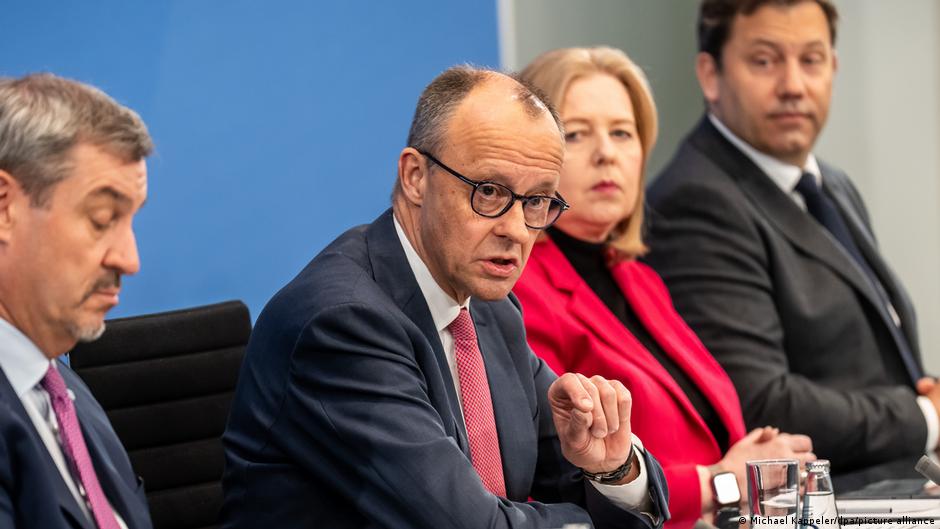
Germany’s political and macro backdrop looks fragile: 58% of respondents in an INSA survey expect the conservative-led coalition to break up before the 2029 election, while 75% are dissatisfied with its performance. The Ifo chief warned that a new US-EU tariff fight could push Germany into recession in 2026, with Trump threatening 25% tariffs on imported cars and trucks next week. The article also flags rising geopolitical and weather-related risks, including Iran keeping the Strait of Hormuz constrained and multiple wildfires across German states.
The market implication is not the survey itself; it is the widening gap between political legitimacy and policy continuity. A coalition perceived as fragile tends to discount medium-dated reform initiatives, which matters more for German cyclicals than for the headline index: spending plans, labor reform, and energy/grid investment all become harder to execute, so domestic-demand beta should trade at a discount to peers. That also raises the odds of more frequent coalition concessions, which usually means slower fiscal impulse and lower visibility for banks, builders, and industrials with Germany-heavy revenue exposure. The tariff threat is a cleaner macro transmission. If the US moves to a 25% auto tariff, the first-order hit is margin compression for German OEMs, but the second-order hit is even more important: a forced re-routing of exports into Europe and China would intensify price competition across the entire premium-auto stack, including suppliers with little direct US exposure. That argues for shorting the ecosystem, not just the branded names, because supplier multiples are still anchored to a benign volume recovery that can be invalidated quickly if order books reset in the next 1-2 quarters. The coalition/polling weakness and tariff shock together create a policy-drift regime that tends to underperform on the currency as well as equities. If investors start pricing weaker growth and more fiscal stalemate, EUR-sensitive exporters may appear protected, but their translated earnings are offset by lower operating leverage and weaker domestic capex demand. The contrarian point is that the setup is not automatically bearish for all German equities: defense, grid, and infrastructure beneficiaries can outperform if political fragmentation forces a narrower set of spending priorities, even while the broad market compresses. Weather and wildfire risk are an underappreciated near-term input for local utilities, insurers, and rail/logistics disruptions, but the bigger second-order effect is on permitting and land-use politics rather than earnings. Expect the market to initially treat this as noise, yet repeated extreme-weather events can accelerate insurance repricing and local infrastructure capex, which is supportive for specialty insurers and selected industrials with fire/water remediation exposure over a 6-12 month horizon.
AI-powered research, real-time alerts, and portfolio analytics for institutional investors.
Request DemoOverall Sentiment
mildly negative
Sentiment Score
-0.25
