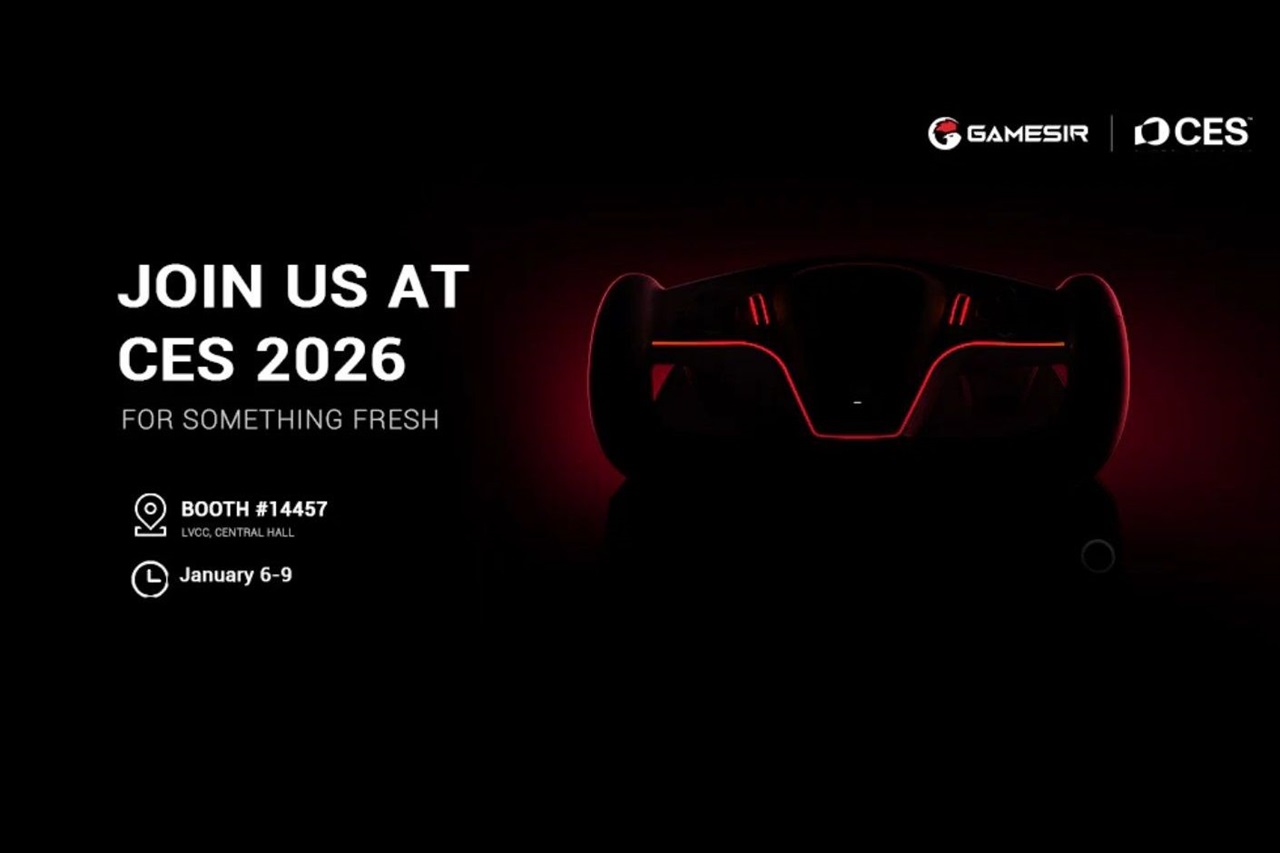
GameSir will unveil three flagship gaming peripherals at CES 2026 — Turbo Drive, Swift Drive and Tracer Pro — showcasing proprietary hardware features aimed at the premium sim-racing and shooting markets. Key product specs include Turbo Drive's 2.4G wireless racing setup with a Hall Effect encoder offering up to 65,000 resolution levels and Turbine Fan Feedback; Swift Drive's compact direct-drive force feedback with the company's smallest direct-drive motor and up to 30 hours battery life; and Tracer Pro's wired shooter with electromagnetic recoil, a Hall Effect stick and a 4000mAh battery with smart dock. The announcements position GameSir to compete in higher-margin, enthusiast segments and could modestly support brand and sales momentum, but are unlikely to produce material near‑term market moves.
Market structure: GameSir’s CES showcase signals rising demand and productization in high-end gaming peripherals (racing wheels, direct-drive motors, Hall-effect sensors). Winners include large OEMs/retailers with scale and supplier-equities (Logitech LOGI, Corsair CRSR, Allegro ALGM, STMicro STM) who can absorb R&D and distribution costs; niche premium vendors risk ASP compression and share loss. Expect a 6–18 month window where incumbents with retail/console partnerships convert hype into sales, potentially lifting ASPs for premium peripherals by ~10–20% if adoption translates to retail SKUs.
Risk assessment: Tail risks include product safety recalls (battery/haptic motors), supplier concentration (Hall-effect chips from ALGM) and IP litigation; a single high-profile recall could erase CES-driven upside in days. Immediate (days): CES hype; short-term (weeks/months): preorder announcements and retail listings; long-term (quarters): revenue recognition and market-share shifts. Hidden dependencies: battery-cell supply chains, EMS contract capacity, and exclusive retail bundling with MSFT/Sony — any bottleneck or missed bundling deal materially alters outcomes.
Trade implications: Tactical plays favor suppliers and scaled peripheral OEMs—long LOGI or ALGM exposure; use 3–6 month options to capture CES-to-retail re-rating (buy call spreads to limit GTM risk). Consider pair trades: long a diversified OEM (LOGI) vs short smaller hardware names/OTC players with weak balance sheets (RAZFF) to capture execution dispersion. Size entry pre-CES (1–2% portfolio) and trim 30–50% within 2–6 weeks post-CES if no retail distribution/partner announcements.
AI-powered research, real-time alerts, and portfolio analytics for institutional investors.
Request DemoOverall Sentiment
mildly positive
Sentiment Score
0.35
Contrarian angles: Consensus will inflate the durability of CES novelty — history (2014–2017 peripheral cycles) shows rapid commoditization and margin erosion after an initial bump. The market may underprice regulatory/safety risk from higher-capacity batteries and active haptics which could trigger costly redesigns; conversely, a surprise console OEM endorsement would be a >30% positive catalyst. Watch order-visibility and retailer commitments in the next 30–90 days — they separate PR wins from durable revenue.
