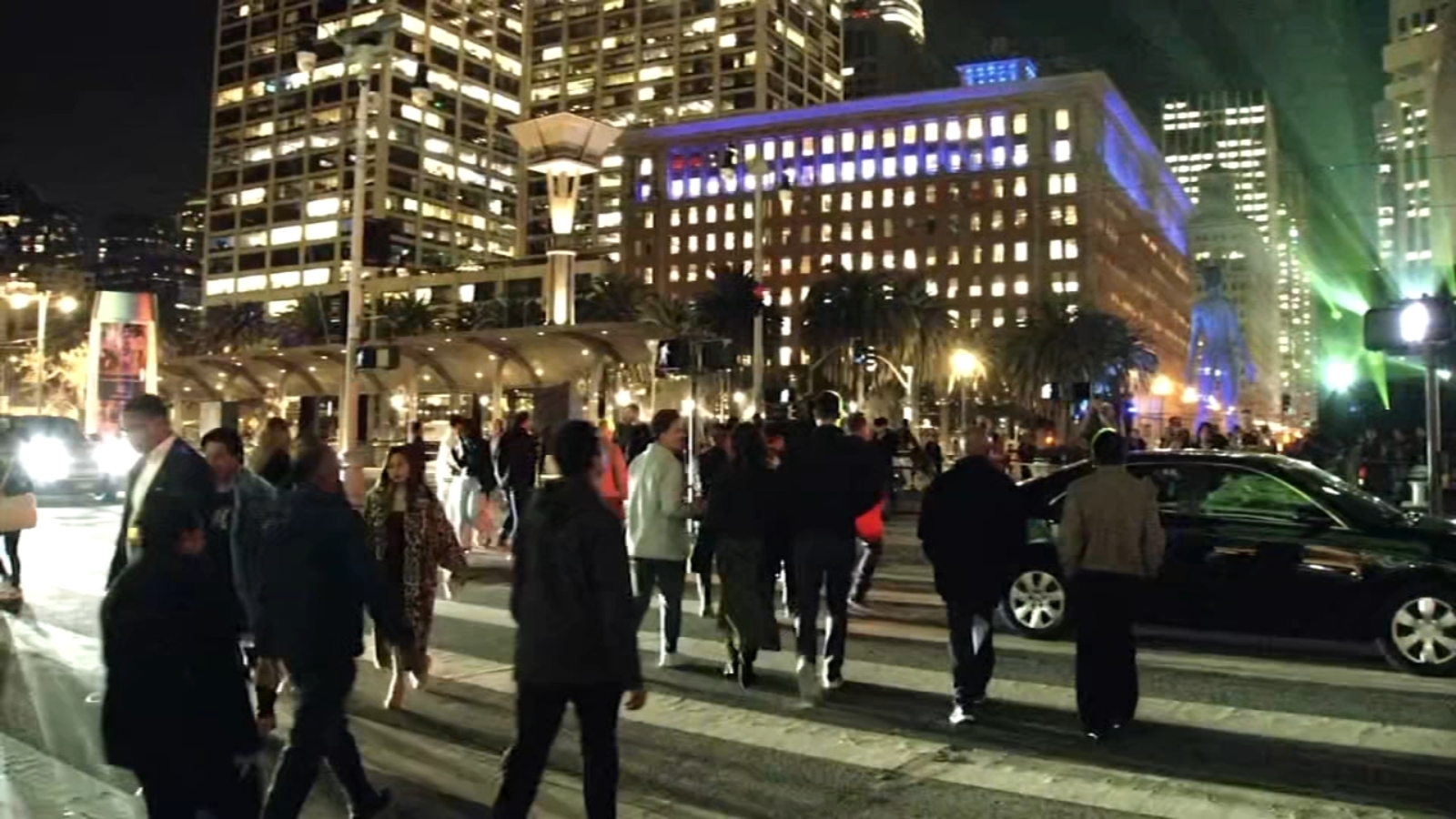
During Super Bowl week, visitors and locals reported more favorable impressions of San Francisco—citing cleaner streets, visible police and Coast Guard presence, and fewer visible encampments—despite ongoing concerns about homelessness and crime. The more positive perception could provide a short-term boost to tourism, hospitality and retail activity around the event, but the item contains no quantitative data and is unlikely to materially change longer-term real estate or municipal fiscal outlooks.
Market structure: Short-term influx of visitors around the Super Bowl lifts demand for hospitality, short-term rentals and local transportation; expect STR (Airbnb ABNB) and branded hotels (Marriott MAR, Hilton HLT, Park Hotels PK, hotel REIT HST) to see week-over-week occupancy uplifts of +8–12% and ADR gains of +5–10%, temporarily improving pricing power versus standalone restaurants and small operators. Retail/entertainment landlords and ride-hail (UBER, LYFT) capture outsized transactional volume; downtown office landlords (Kilroy KRC, large SF-exposed office REITs) see no structural benefit and remain disadvantaged. Cross-asset: short-lived revenue beats should lift equities and skew near-term options IV higher for travel names while municipal credit and muni yields move only marginally unless costs of policing/cleanups force budget reallocations >$50–100m.
Risk assessment: Tail risks include a high-visibility safety incident or aggressive enforcement of encampment sweeps that could reverse sentiment within 48–72 hours and depress bookings 15–25% for the following month; regulatory tightening on short-term rentals in SF could subtract 3–8% regionally from ABNB bookings over 12 months. Time horizons split: immediate (days-weeks) for event arbitrage, short-term (1–3 months) for post-event booking flow, long-term (3–24 months) for structural office demand and city policy shifts. Hidden dependency: temporary policing and Coast Guard presence can mask underlying safety trends—monitor STR and TSA throughput rather than headlines; catalysts include STR weekly reports, city press releases, and TSA passenger counts within 7–14 days.
Trade implications: Tactical: establish small, event-driven long positions in ABNB and MAR sized 2–3% of fund AUM via defined-cost options (3-month 10% OTM call spreads) to capture upside if occupancy/ADR beats by >5% versus prior-year, exit within 2–6 weeks. Relative-value: pair long MAR (2%) / short KRC (1.5%) to express travel upside vs persistent office weakness over 3–12 months; use stop-loss if MAR revenue per available room (RevPAR) falls >4% vs prior-year for two consecutive weeks. Rotate 5–10% portfolio weight into travel & leisure and reduce office REIT exposure by 3–5% through Q2 2026.
Contrarian angle: Consensus praises a one-week perception improvement; markets may underprice the probability (~15–25%) that improved optics are ephemeral and that structural office demand will continue to depress SF commercial real estate prices by 10–30% over 12–24 months. The trade mispricing: ABNB upside is real short term but regulatory risk in SF is under-acknowledged—offset long ABNB with a small short (0.5–1%) in city-specific exposure (KRC) or by buying ABNB calls and selling nearer-term calls (call wheel) to monetize elevated IV. Historical parallel: past mega-events (2012 London Olympics) produced short spikes in hospitality equities but no durable improvement in underlying urban fundamentals; position sizing should assume 20–30% volatility tail.
AI-powered research, real-time alerts, and portfolio analytics for institutional investors.
Request DemoOverall Sentiment
mildly positive
Sentiment Score
0.25
