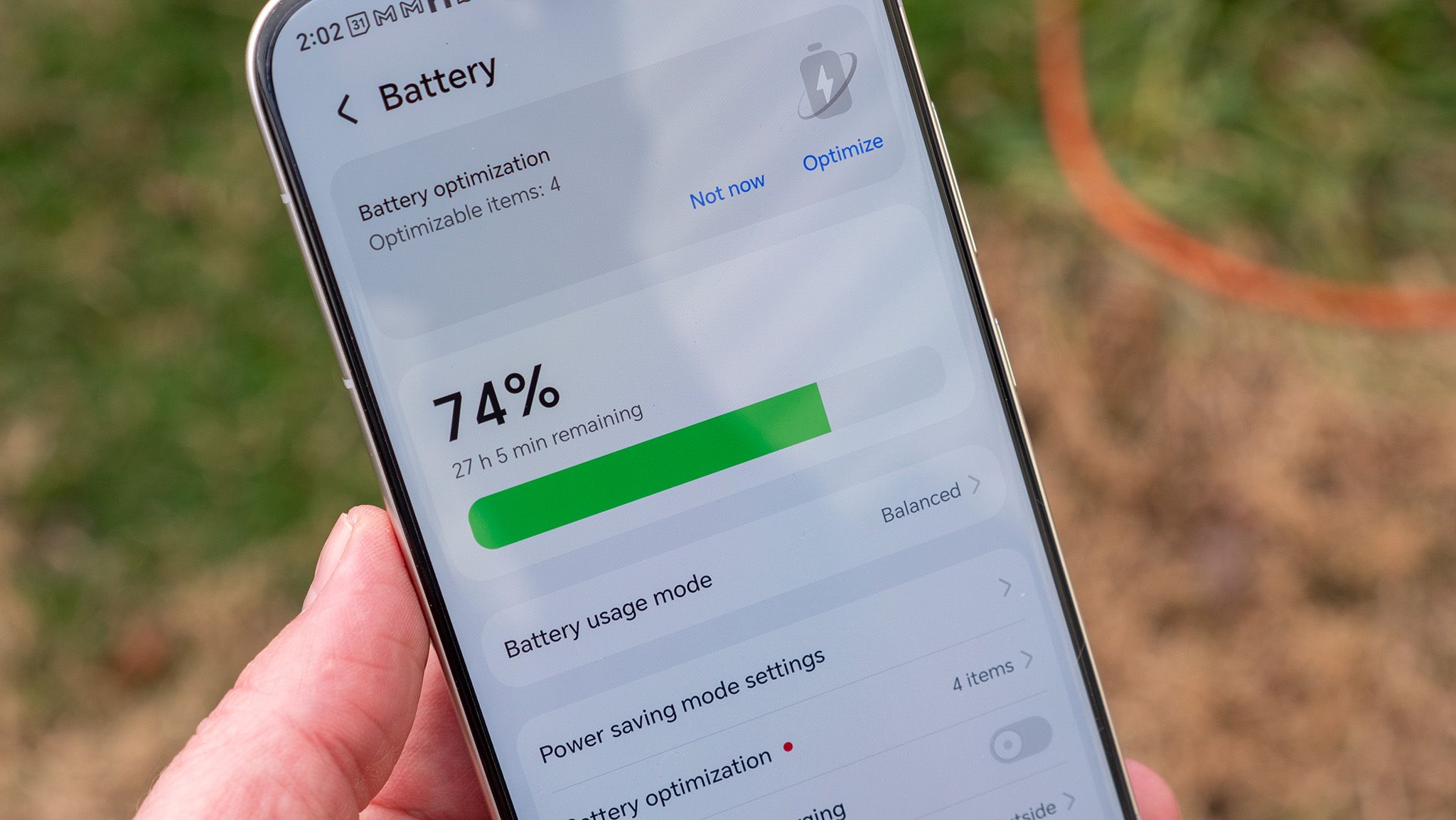
A reader poll of over 1,000 respondents found 88% prefer longer battery life over faster charging on smartphones, highlighting consumer priorities toward battery capacity and efficiency. The article cites charging limits such as Samsung's ~45W cap on current flagships (e.g., Galaxy S25 Ultra) and notes Chinese OEMs like OnePlus often lead on charging specs, implying product positioning advantages for vendors prioritizing battery endurance and charging performance. This consumer preference could inform handset product strategy and competitive positioning but is unlikely to produce immediate market-moving financial effects.
Market structure: The poll (88% prefer longer battery life) signals OEM product roadmaps will prioritize larger capacity cells and energy-efficiency gains over headline fast‑charge marketing. Direct winners: battery cell makers (CATL, LGES, Panasonic), lithium miners (ALB, SQM) and PMIC/power‑efficient SoC vendors (TXN, QCOM, STM). Losers: niche fast‑charge accessory specialists and any OEMs that cannot increase battery capacity without pushing price or weight beyond consumer tolerance.
Risk assessment: Tail risks include a sharp lithium supply shock (price +30% within 12 months) or a regulatory clamp on Chinese battery exports; conversely a solid‑state breakthrough (2–5 year horizon) would materially reprice current cell producers. Immediate catalysts are MWC/CES and upcoming flagship launches (next 60–120 days) that will reveal design wins; short‑term (3–12 months) effects are inventory and contract flow; long‑term (1–3 years) are R&D/capex cycles and raw‑material contracts.
Trade implications: Tilt portfolios into battery materials (ALB, SQM) and PMIC/SoC names (TXN, QCOM) with 6–18 month horizons; expect supplier ASP lift of $5–15/device and margin expansion if OEMs pay up. Use 9–18 month LEAPS on top battery suppliers and 3–6 month call spreads on TXN/QCOM around chipset/phone launch windows to capture event volatility. Rotate away from small-cap fast‑charge accessory makers and overexposed low‑margin OEMs.
Contrarian angles: The market overweights fast‑charge branding; the durable preference for runtime favors scale battery cell producers under‑owned by Western funds—this is likely underpriced. Historical parallel: prior shifts to higher capacity (2016–2019) produced 20–40% supplier EPS expansion over 18 months; unintended downside: heavier phones can slow replacement cycles, capping upside if OEMs overshoot weight/price thresholds.
AI-powered research, real-time alerts, and portfolio analytics for institutional investors.
Request DemoOverall Sentiment
neutral
Sentiment Score
0.00
