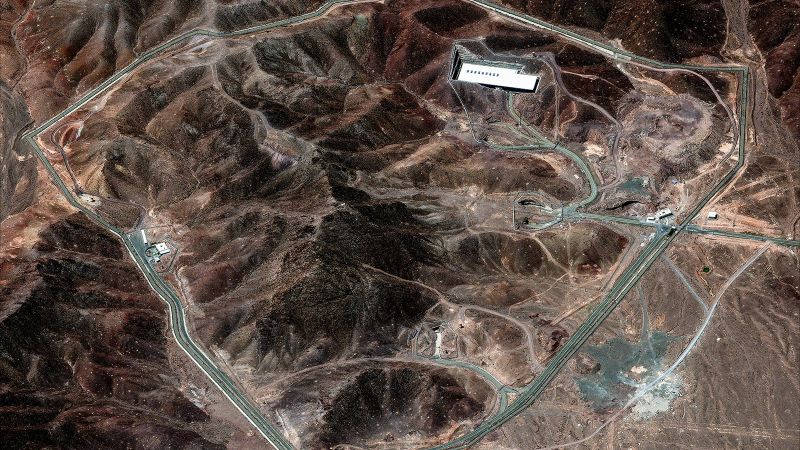
Iran's underground Fordow Fuel Enrichment Plant, initially exposed in 2009, is raising concerns due to its potential for rapid conversion of enriched uranium into weapons-grade material, with enough to potentially create nine nuclear weapons in three weeks. The facility, deeply buried and heavily guarded, has been the target of Israeli strikes, but its destruction from the air is considered nearly impossible without significant US assistance and specialized weaponry, though other methods of disabling the facility may exist. Despite the dangers posed by Fordow, analysts note that destroying it would not eliminate Iran's nuclear capabilities entirely, as undeployed centrifuges remain a concern.
Iran's Fordow Fuel Enrichment Plant, buried approximately 80 to 90 meters underground near Qom, represents a critical flashpoint in geopolitical tensions, primarily due to its capacity for rapid uranium enrichment. Recent International Atomic Energy Agency (IAEA) reports confirm Iran has increased uranium enrichment to 60% at Fordow, a level deemed by experts as lacking peaceful justification and enabling swift conversion to weapons-grade material. The Institute for Science and International Security (ISIS) estimates Iran could produce enough weapons-grade uranium for nine nuclear weapons from its current 60% enriched stockpile within three weeks at this facility. The plant's significant depth renders it exceptionally difficult to neutralize through aerial bombardment; Israeli capabilities are considered insufficient, and even the United States' GBU-57 massive ordnance penetrator, with a reach of about 60 meters, would likely require multiple, precise strikes and delivery via B-2 stealth bombers, which Israel does not possess. While analysts suggest alternative disabling methods like targeting tunnel entrances or ventilation systems could offer temporary disruption, the consensus, including views from experts like David Albright, indicates that the destruction of Fordow would not entirely dismantle Iran's nuclear ambitions due to the potential existence of undeployed centrifuges elsewhere. This situation, underscored by a 'strongly negative' sentiment (score -0.75) and a 'high' market impact score (0.75), highlights severe concerns regarding nuclear proliferation and regional stability, validating earlier international apprehensions about the facility's true purpose.
AI-powered research, real-time alerts, and portfolio analytics for institutional investors.
Request DemoOverall Sentiment
strongly negative
Sentiment Score
-0.75
