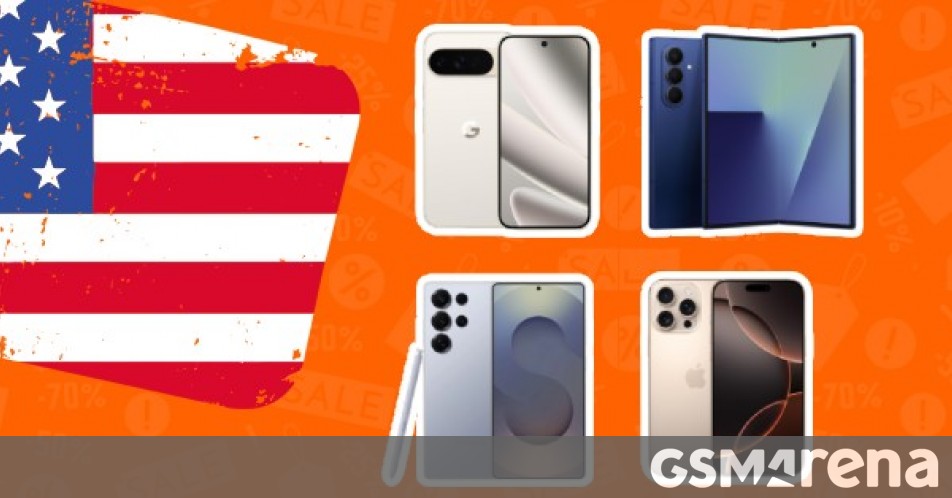
This roundup compares current flagship and alternative smartphones ahead of Cyber Monday, highlighting performance, camera hardware, battery life and charging differences that could shape near-term consumer purchasing. Key datapoints: the Samsung Galaxy S25 Ultra uses a 200MP 1/1.3" main sensor and improved 50MP ultra-wide with superior battery life (14:49h Active use) and faster full charging (59 minutes) versus the Pixel 10 Pro XL which peaks brighter (2,340 nits) but uses the slower Tensor G5 and records 12:29h Active use and 1:22 full charging. Foldable comparisons note Galaxy Z Fold7 (200MP main, no periscope on fold) vs Pixel 10 Pro Fold (smaller main sensor but longer tele and $100 lower price), while Motorola Razr Ultra 2025 ships with Snapdragon 8 Elite, larger 4,700mAh battery (15:10h) and much faster 68W charging but only three OS updates versus seven from Samsung—details that may influence resale values, upgrade cycles and consumer demand rather than immediate market-moving financial metrics.
Market structure: Black Friday/Cyber Monday messaging highlights a bifurcation — Apple (AAPL) retains pricing power and aftermarket demand (refurbished iPhone activity), Samsung’s Snapdragon-powered flagships and DeX maturity strengthen Android high-end, while Google’s Pixel struggles on Tensor G5 performance. Expect short-term ASP pressure on mid-tier Androids but steady/high ASPs for Apple; gross-margin winners are chipset suppliers (e.g., QCOM) and premium accessory ecosystems. Near-term sales readings (next 7–21 days) will reveal inventory digestion and guide Q4 revenue revisions.
Risk assessment: Tail risks include regulatory action against Google (ad/antitrust) and China supply disruptions affecting Qualcomm/Samsung; low-probability adverse outcomes could swing multiples ±15–25%. Timeline: immediate (days) — sales/returns; short-term (weeks–months) — inventory and holiday comps; long-term (quarters–years) — OS upgrade promises and chipset roadmaps shaping lifecycle value. Hidden dependency: handset halo effects on services/ads (GOOGL) and accessory ecosystems (AAPL) are nonlinear.
Trade implications: Favor semiconductor exposure that captures Snapdragon wins and wireless charging dynamics (QCOM, consider 1–2% core longs). Tilt equity book toward AAPL (2–3% overweight) vs. GOOGL/GOOG (1–2% underweight) via pair trade to isolate hardware sentiment. Use 90-day options to size asymmetric risk: AAPL bull-call spreads and GOOG puts as low-cost insurance around next quarterly prints.
Contrarian angles: Consensus down-weight on GOOGL hardware may be overdone vs. its dominant ad/AI moat — a post-earnings ad-revenue beat could spark a 10–20% relief rally. Conversely, AAPL’s resilience could be priced for perfection; a soft January sell-through or ASP decline of >3% would be a catalyst for a snapback. Monitor Pixel sell-through rates, QCOM design wins, and AAPL iPhone ASPs as 3 concrete leading indicators.
AI-powered research, real-time alerts, and portfolio analytics for institutional investors.
Request DemoOverall Sentiment
neutral
Sentiment Score
0.05
Ticker Sentiment
