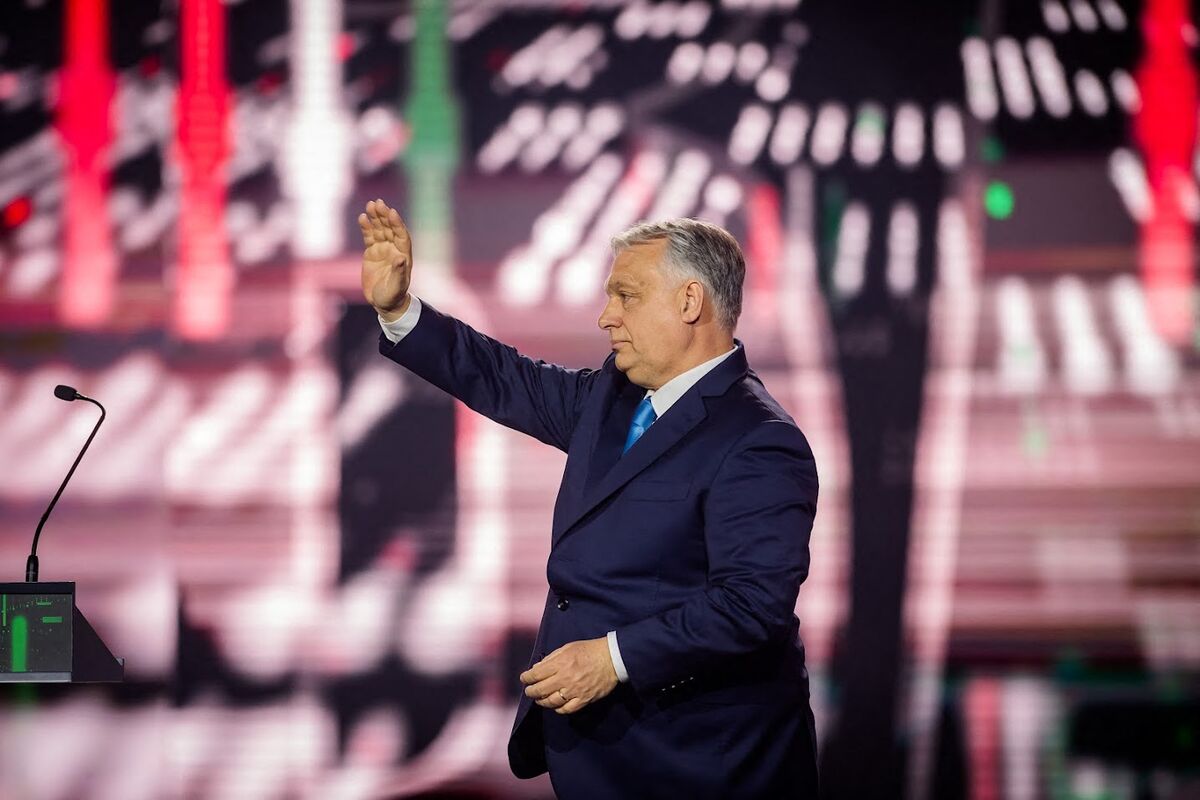
April 12 Hungarian election: Prime Minister Viktor Orban, reportedly trailing in opinion polls, is rallying EU far‑right allies by hosting a Patriots meeting in Budapest with Marine Le Pen and Matteo Salvini. The event comes amid allegations of Russian attempts to influence the vote, raising geopolitical and political‑risk considerations for the region, though immediate market impact is likely limited.
The immediate market channel is political-risk driven sovereign and FX stress rather than direct macro shock; if EU conditionality or sanctions proceedings accelerate, expect Hungary sovereign spreads to reprice higher by 100–200bp over a 1–3 month window and EUR/HUF to move 5–12% weaker for the forint. That magnitude shows up fast in funding-sensitive sectors: local banks and corporates with foreign-currency debt will see rollover costs spike and NPL formation risk tick up, compressing local equity multiples by 15–30% absent offsetting fiscal action.
A less obvious second-order effect is the strain on EU cohesion that raises the bar for common fiscal/energy responses to Russia. If Brussels signals tolerance of populist coalition-building (to avoid political fights), it lowers the probability of coordinated sanctions — which would relieve some near-term energy dislocation risk but increase long-term policy fragmentation, elevating volatility in European sovereign credit markets for 6–24 months. Conversely, a harsh EU response raises immediate idiosyncratic tail risk for Hungary and related CEE assets.
For alpha generation, the highest Sharpe comes from asymmetric downside protection (sovereign CDS, short HUF) and short-duration options on regional risk assets; directional long-defense exposure is a lower-frequency, multi-quarter play if a sustained EU security narrative emerges. Watch three near-term catalysts: EU conditionality rulings (days–weeks), bond auction performance and primary market liquidity (weekly), and any concrete legal evidence of foreign interference (days–weeks) — each can move implied risk premia materially.
The clearest reversal would be rapid de-escalation via credible investigations disproving interference or a decisive fiscal/transfer compromise with the EU; those outcomes can compress Hungary CDS and tighten EUR/HUF by 3–6% within 2–6 weeks, so position sizing and tight stops are essential.
AI-powered research, real-time alerts, and portfolio analytics for institutional investors.
Request DemoOverall Sentiment
neutral
Sentiment Score
0.00
