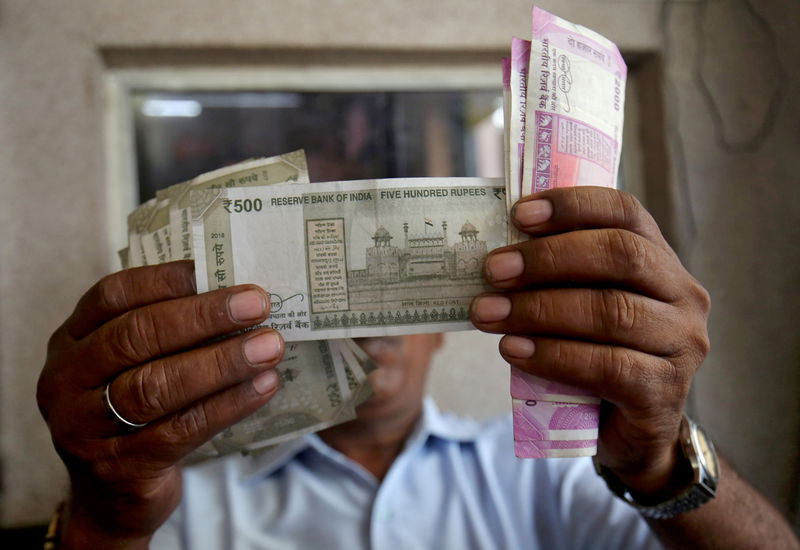
Asian currencies weakened broadly as the Indian rupee hit a record low of 95.625 per dollar before recovering slightly on suspected RBI intervention. Elevated Middle East tensions kept oil prices high, pressuring oil-importing Asian economies and boosting demand for the U.S. dollar, while markets also await U.S. CPI data and the Trump-Xi meeting. The report highlights heightened risk-off sentiment across FX markets, with the yen, won, and Singapore dollar also under pressure.
This is a classic cross-asset squeeze where the first-order move is USD strength, but the second-order winners are the domestic exporters and hard-currency earners in Asia that can pass through FX weakness without destroying demand. The bigger implication is for balance sheets: oil importers with USD liabilities, low reserve coverage, or hedge ratios below 50% are getting hit twice—higher input costs and tighter financial conditions as local central banks are forced to choose between defending FX and easing growth pain.
The market is probably underestimating how quickly FX stress can feed into earnings revisions outside of energy. For sectors with imported components, gross margin compression tends to show up 1-2 quarters later, while price action often anticipates it by weeks; that creates an opportunity to short the weakest domestic cyclicals against global earners. If the oil shock persists, the true macro risk is not just inflation prints but a regional policy error: tighter rates into slowing growth, which historically extends EM currency underperformance beyond the initial geopolitical spike.
The contrarian angle is that the move may already be too crowded in the defensive USD trade. If U.S. inflation comes in softer than feared or if the diplomatic meeting lowers tail risk even modestly, the fastest reversal should be in high-beta Asia FX and local small caps, not in the dollar itself. In that scenario, the trade is less about calling the macro peak and more about owning convexity in the most battered currencies and avoiding companies with unhedged dollar costs.
AI-powered research, real-time alerts, and portfolio analytics for institutional investors.
Overall Sentiment
moderately negative
Sentiment Score
-0.45
Ticker Sentiment
