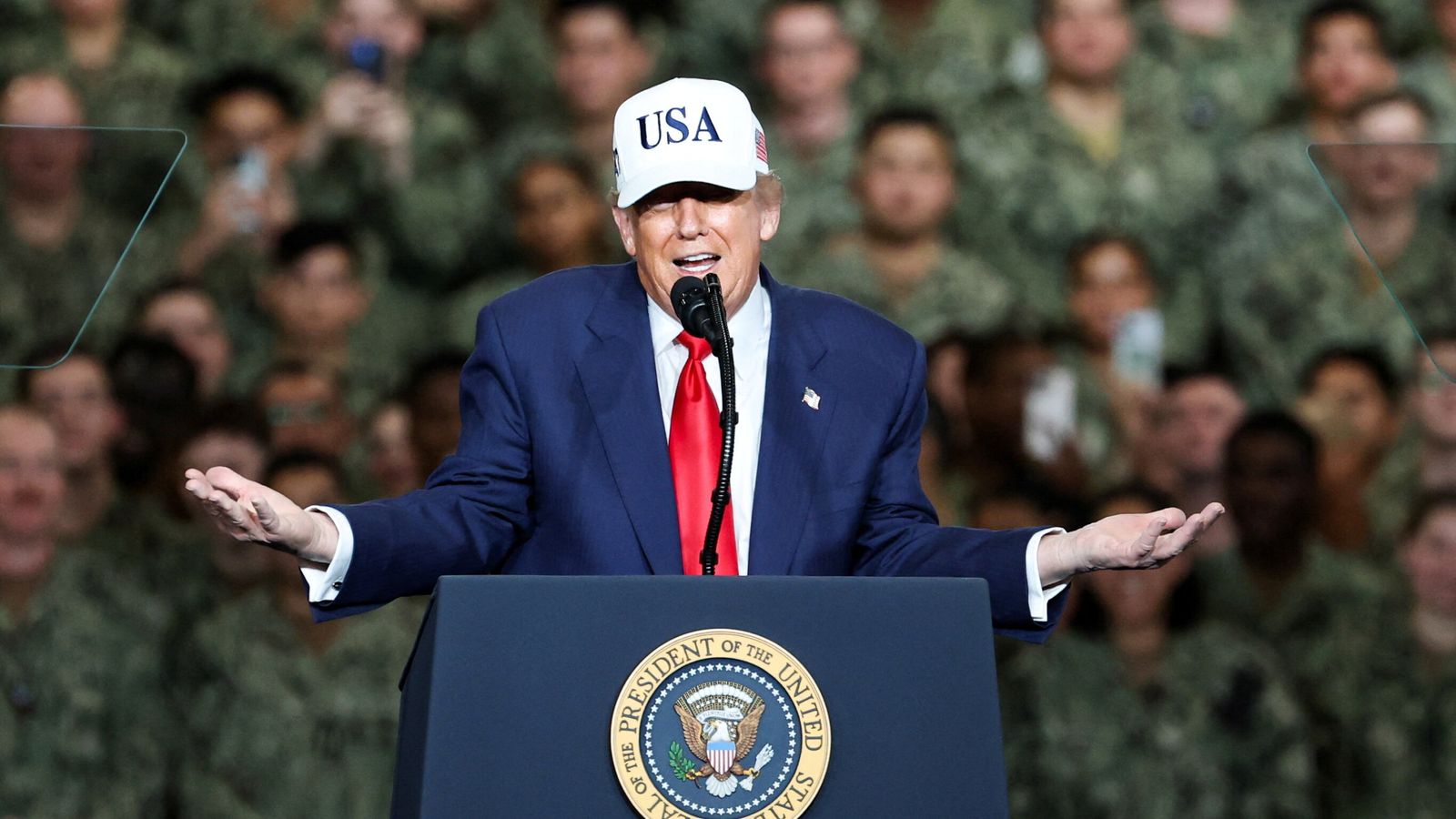
President Trump proposed a $500bn increase to the FY2027 defence budget, taking total defence spending to about $1.5tn and pairing the request with a 10% cut to non‑defence spending; the plan includes a 5–7% military pay raise, funding for a Golden Dome missile shield, 34 ships and initial funding for a new 'Trump class' battleship. The Pentagon had separately sought $200bn in emergency funding for the US war with Iran (which has driven up gas prices), and the White House proposal would also cut USDA, HHS and trim NASA by $5.6bn (~25% of its budget). The package will require congressional approval, has strong Republican backing but faces Democratic opposition, and should be monitored for implications to defence contractors, shipbuilders, energy markets and broader fiscal policy expectations.
Incremental federal demand for military platforms will compress lead times across shipyards, specialty metals, and precision suppliers, creating a multi-quarter procurement squeeze that favors vertically integrated producers and firms with domestic capacity. Expect order cadence to front-load subcontract awards within 3–12 months, driving revenue visibility for select primes while forcing smaller suppliers to raise prices or miss delivery windows.
A fiscal tilt toward procurement over domestic discretionary programs shifts R&D and hiring toward classified and dual-use programs, advantaging firms with missile, ISR, and space payload capabilities while depressing demand for civil R&D and grant-funded university contracts. That reallocation also raises skilled labor intensity in localized manufacturing hubs, producing upward pressure on blue‑collar wages and local inflation in 6–18 months.
Politically driven appropriation risk makes this a multi-stage event: committee markups, appropriations riders, and reconciliation will create episodic binary volatility over the next 3–9 months, even if final funding is smaller than initial asks. Market pricing will likely overshoot on initial headlines and then reprice on amendment cycles — the largest P/L windows are around legislative calendar milestones, not continuous drift.
A sustained shift into defense procurement is inflationary for commodities tied to heavy manufacturing (steel, copper, nickel) and supportive for conventional energy prices in the near term; simultaneously, reduced civil-program funding is a headwind for niche civil-space and research-exposed small caps. These opposing forces create practical pair-trade opportunities across large-cap primes and smaller civil contractors over a 6–18 month horizon.
AI-powered research, real-time alerts, and portfolio analytics for institutional investors.
Request DemoOverall Sentiment
neutral
Sentiment Score
0.00
