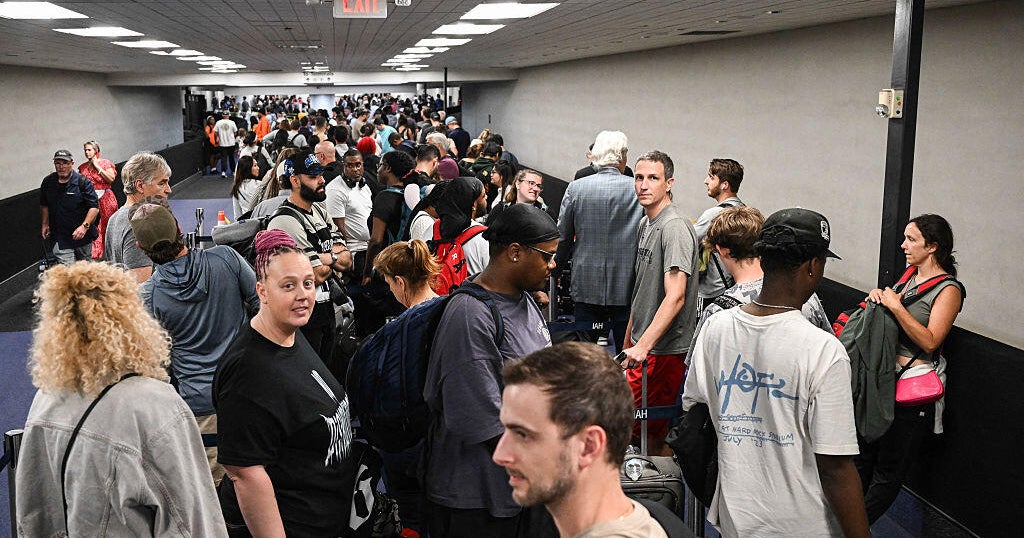
36% TSA staffing shortage at Houston's George Bush Intercontinental Airport is producing multi-hour security lines (passengers reported up to ~5-hour waits) and widespread missed flights amid a six-week partial DHS funding lapse. TSA workers are likely to miss a second full paycheck this Friday; even if Congress restores funding, pay restoration is expected to take ~5 business days. Senate negotiations may resolve funding (potentially excluding ICE), but operational strain risks near-term disruption to airlines, airport services, and passenger traffic.
Security-screening staff shortfalls create asymmetric shocks across air travel and logistics: immediate seat cancellations and rebookings compress airline unit revenue while reducing network efficiency (higher turnaround costs, crew deadhead hours). If 10-20% of scheduled seat capacity is pulled for even 2–4 weeks, expect short-term fare dispersion — remaining flights see yield uplifts of ~8–15% while ancillary and rebooking revenue rises; carriers with flexible fleets and strong loyalty programs capture outsized share of the scarce seats.
A less-visible transmission is to air cargo and intermodal logistics. Lost belly capacity on passenger aircraft forces freight onto dedicated freighters or slower surface modes, raising short-term airfreight yields and spot rates; forwarders and integrators can monetize this within a 1–3 month window while shippers reroute. Conversely, airport retail, ground transport, and concession revenue suffer immediately and may face slower recovery if customer satisfaction metrics deteriorate, pressuring shorter-duration credit spreads for airport operators.
Catalysts that would unwind the disruption are administrative — rapid funding resolution, emergency staffing reinforcements, or temporary contractor deputization — all of which can normalize flows within days of implementation. Tail risks include a protracted impasse or structural attrition that raises baseline headcount needs for months; if shortfalls persist beyond ~30 days the market should reprice to account for durable capacity loss. The consensus is over-indexed to headline chaos; markets should differentiate between a transitory operational shock (days–weeks) and structural degradation (months–years) before moving capital decisively.
AI-powered research, real-time alerts, and portfolio analytics for institutional investors.
Request DemoOverall Sentiment
mildly negative
Sentiment Score
-0.30
