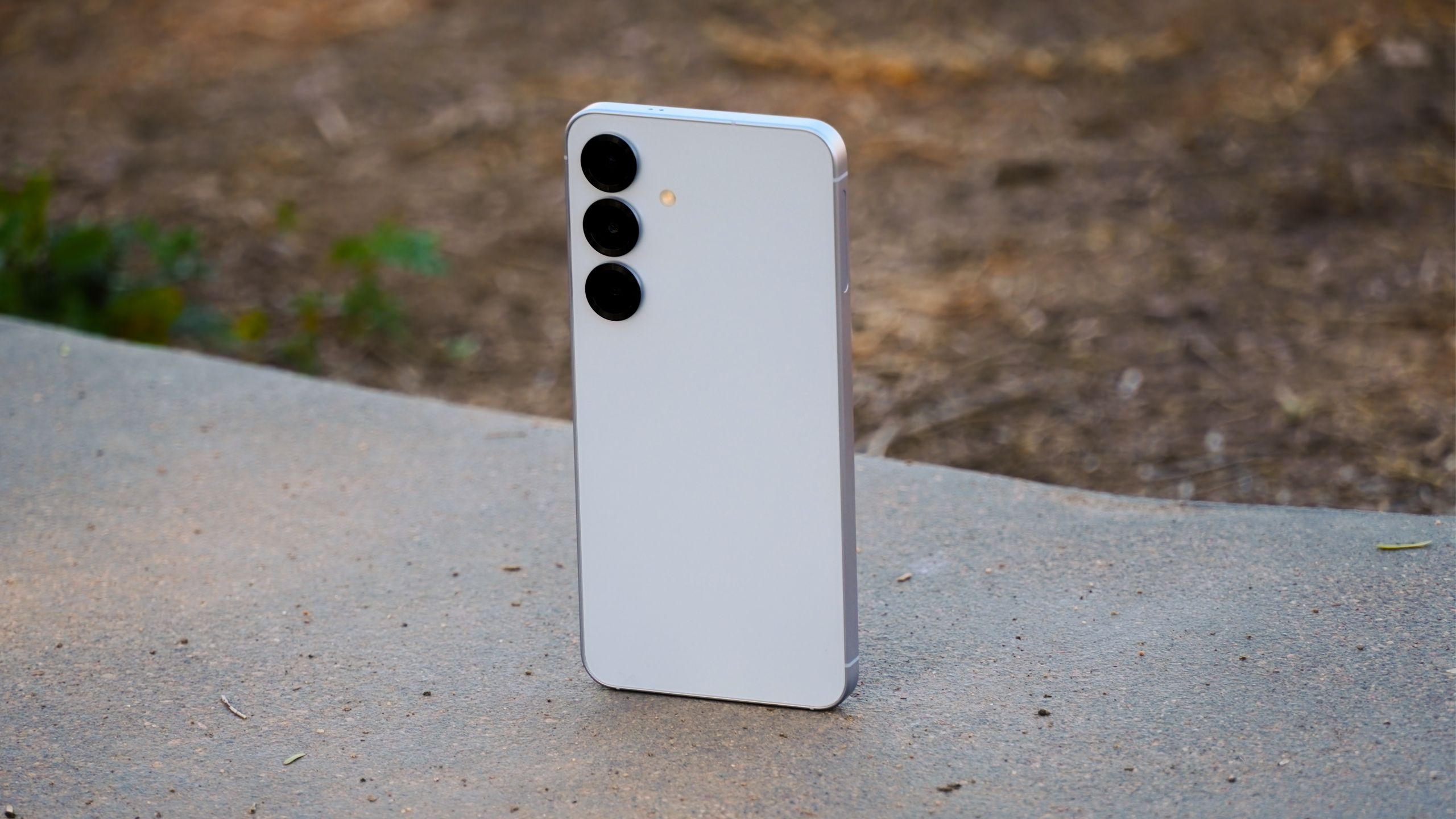
Alleged early retailer listings and tipsters indicate Samsung's Galaxy S26 could drop a 128GB base tier in favor of 256GB as the minimum and offer a 512GB upgrade, with the S26 Plus at 256/512GB and the S26 Ultra at 256/512GB/1TB. Reported suggested starting prices are $799 for the base S26, $999 for the S26 Plus and $1,299 for the S26 Ultra; additional rumors cite modest battery changes (S26: 4,300mAh/25W; Plus: 4,900mAh/45W; Ultra: 5,000mAh/60W). These remain unconfirmed prelaunch leaks ahead of a suspected February unveiling and are unlikely, by themselves, to materially move markets absent company confirmation.
Market structure: If Samsung (005930.KS / SSNLF) ships a 256GB base S26 at ~$799, NAND/flash content per unit rises materially versus a 128GB base — assume incremental NAND demand ~50M flagship units * 128GB ≈ 6.4 exabytes (order-of-magnitude). Direct winners: NAND suppliers (MU, WDC, 000660.KS SK Hynix) and component makers (Samsung SDI modestly for battery ASPs); losers: low-margin storage-tier OEMs and resellers if ASP/mix shifts. Cross-asset: higher NAND demand is mildly inflationary for tech capex, supportive for semiconductor equities, slight positive for commodities tied to memory supply chains; bond/FX moves will be second-order unless broader handset pricing changes consumer demand.
Risk assessment: Tail risks include a NAND supply glut (-20% price shock) or Samsung raising prices (compressing volume), regulatory/antitrust actions in key markets, or launch quality issues delaying sales. Immediate (days) — rumor-driven volatility; short-term (weeks/months) — channel stocking and supplier earnings revisions; long-term (quarters) — structural uplift to average storage per device. Hidden dependency: benefit only material if the storage change is adopted across high-volume SKUs and not offset by increased sourcing of cheaper TLC vs. QLC NAND.
Trade implications: Favor long NAND exposure via MU and WDC for 3–9 months sized 2–3% portfolio each, and consider 3-month call spreads 10–20% OTM to cap premium cost if you expect a supplier re-rating on stronger ASPs. Pair trade: long MU (or WDC) vs. short SSNLF small hedge if you expect suppliers to capture most margin; alternatively long SK Hynix (000660.KS) vs. short cyclical handset component distributors. Time entry: initiate on post-announcement dip within 1–4 weeks of Samsung Feb launch; trim into earnings/re-pricing events.
Contrarian angles: Consensus underweights cumulative NAND demand from incremental base storage across multiple launch cycles — small per-unit increases compound. Reaction may be underdone: a 5–15% NAND price uptick would re-rate memory names; conversely, if Samsung quietly widens margins instead of passing benefit to consumers, OEM equities may underperform. Historical parallel: Apple’s past storage step-ups led to measurable NAND supplier outperformance over 6–12 months; watch for similar pattern here. Unintended consequence: higher base storage could accelerate aftermarket cloud-storage declines, subtly shifting consumer spend patterns toward device upgrades.
AI-powered research, real-time alerts, and portfolio analytics for institutional investors.
Request DemoOverall Sentiment
neutral
Sentiment Score
0.15
