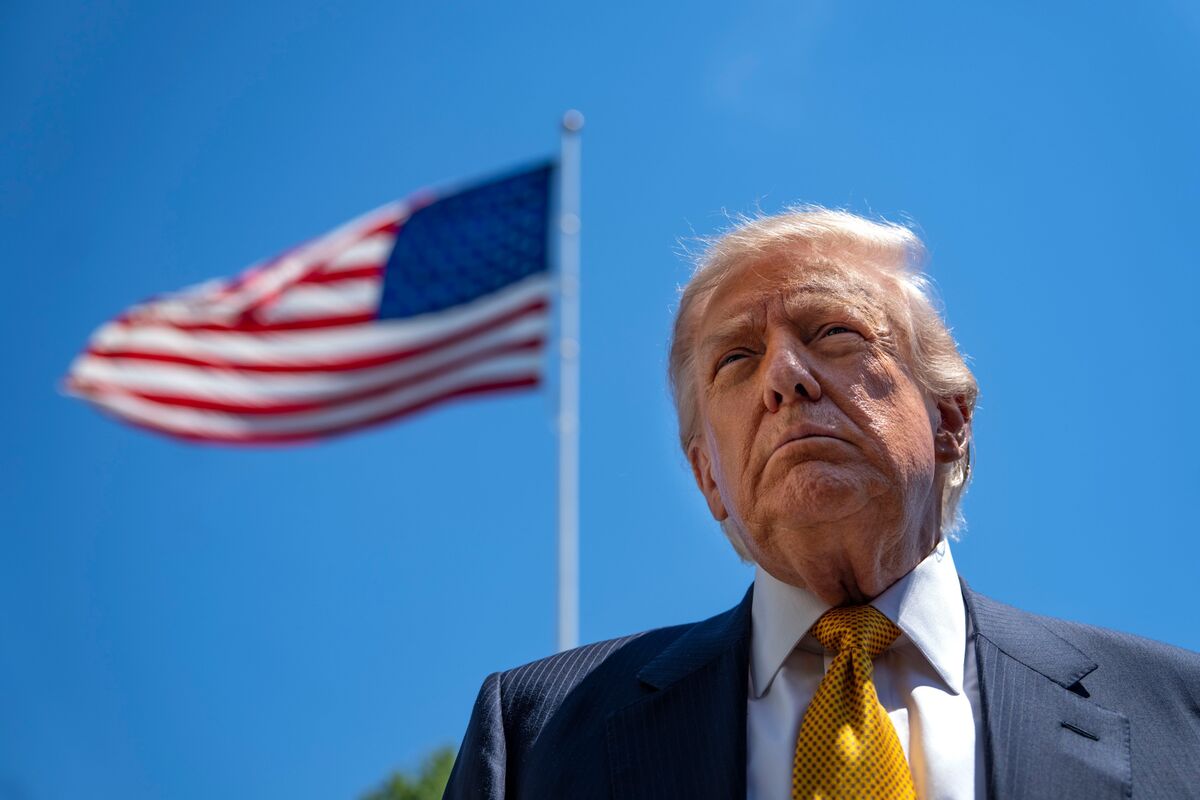
President Trump announced plans to place his proposed "American Heroes" sculpture garden in West Potomac Park near the National Mall, including an area by the Martin Luther King Jr. Memorial. The project is framed as a capital improvement and civic beautification effort, but the article provides no budget, timeline, funding, or approval details. Market impact is likely negligible.
This is less a market-moving asset decision than a governance signal with real option value for adjacent contractors and a non-trivial downside tail for any group exposed to federal park permitting or monument-adjacent public works. The first-order winner is not a specific stock but the “process stack” around design, civil works, security hardening, lighting, landscaping, and visitor management — which tends to favor firms with federal contracting depth and low political sensitivity. The second-order loser is the existing local stakeholder ecosystem: every delay, lawsuit, or design review increases carrying costs and keeps the project in a pre-award limbo that benefits incumbents able to monetize advisory and planning work rather than pure construction margin. The key catalyst is not construction start, but whether the project survives the next layer of approvals without becoming a multi-year litigation magnet. That means the tradeable horizon is months to years, not days: short-term headlines will likely overstate certainty, while the real economic impact only emerges if agencies fast-track environmental, memorial, and security reviews. A reversal would come from procedural challenges, cost overruns, or a shift in political control that recasts the site as a preservation issue rather than a beautification initiative. The contrarian angle is that markets may underestimate how much “prestige public realm” spending can bleed into broader D.C.-area infrastructure budgets, especially if the concept expands into lighting, surveillance, bollards, pathways, and traffic control. Those add-ons are small individually but meaningful for contractors specializing in urban hardening and public-space retrofits. If the project is framed as public safety and tourism enhancement, the budget envelope can widen quietly even if the sculpture element itself stays symbolic. From a portfolio perspective, this is a low-beta catalyst best expressed through baskets or options rather than single-name conviction. The biggest risk is that the project never moves beyond rhetoric, which would unwind any speculative bid in adjacent contractors quickly; conversely, if it proceeds, the upside accrues slowly but persistently through change orders and ancillary scopes rather than a one-time award.
AI-powered research, real-time alerts, and portfolio analytics for institutional investors.
Request DemoOverall Sentiment
neutral
Sentiment Score
0.05
