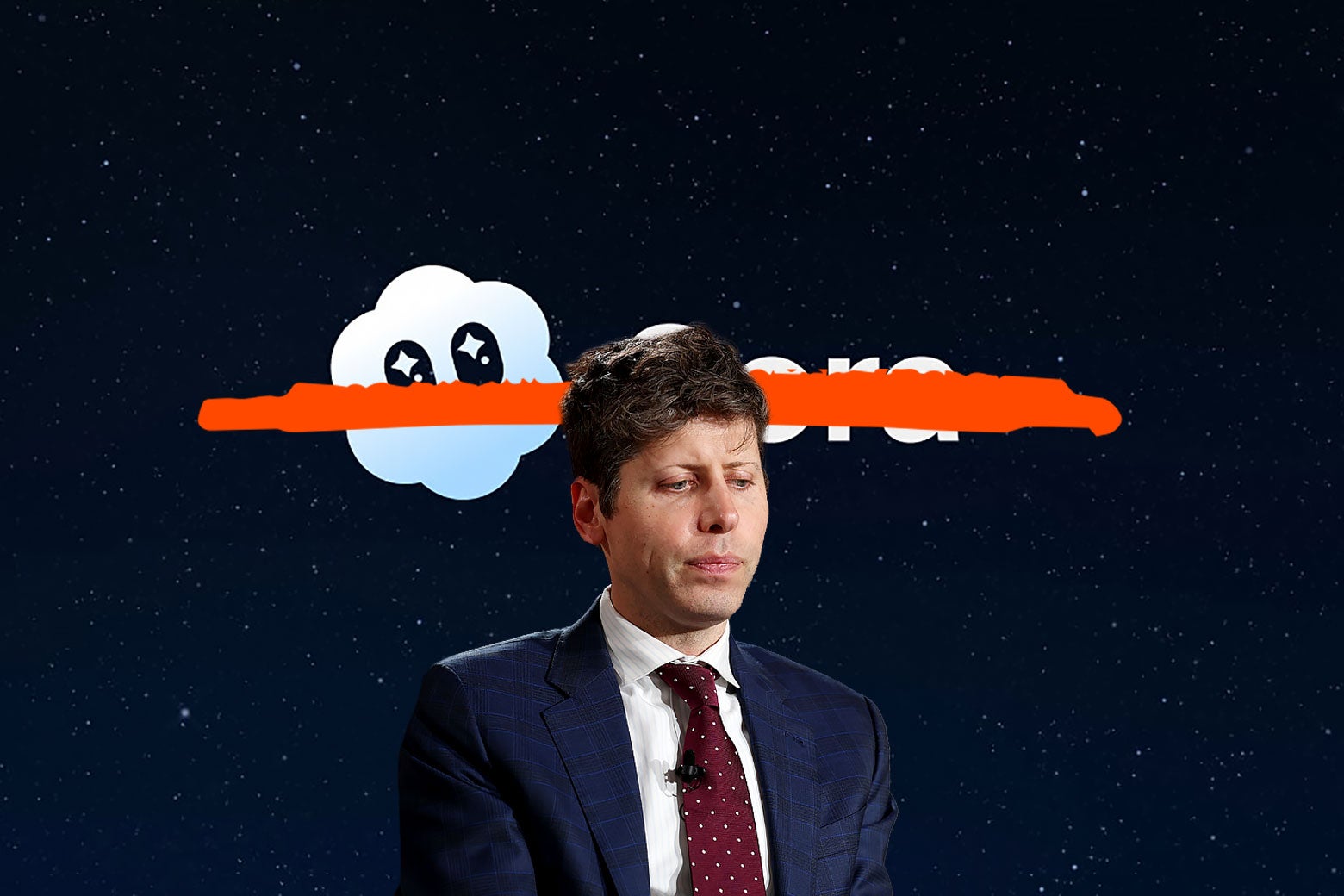
OpenAI is shutting down its Sora video-generation model six months after launch and winding down ChatGPT video features and animation APIs, upending a reported ~$1bn, three‑year licensing deal with Disney and surprising Disney’s tech team. The move follows a nearly 75% drop in Sora downloads from their November peak, an internal 'code red' cost-cutting push, and partner pullbacks (scaled-back Texas data-center plans, Nvidia chip uncertainty, Walmart pilot cancellation), raising doubts about OpenAI’s IPO readiness and likely slowing AI-related corporate spending and infrastructure investments across the sector.
OpenAI’s rapid retrenchment creates a wave of demand reallocation across the AI stack rather than an outright permanent demand destruction. In the next 6–12 months expect incremental GPU and hyperscale spend tied to consumer-facing visual products to re-route to enterprise-focused compute (inference/embedding workloads) or be deferred entirely, producing a step-down in spot GPU purchases but not necessarily in long-term system upgrades. This bifurcation favors vendors with sticky enterprise contracts or broad cloud footprints over single-purpose consumer apps.
Disney, Oracle, Nvidia and Walmart will feel different parts of this transmission. Disney carries an earnings exposure to promised licensing monetization paths that now face multi-quarter delay risk; Oracle loses an announced capex pipeline (revenue/timing risk 2–4 quarters) but could capture displaced enterprise cloud demand from companies choosing established cloud partners; Nvidia faces a near-term cadence risk where a few large customers pulling back can compress guidance in an otherwise still-tamper-resistant secular market for accelerators.
Tail risks cluster around disclosure and regulation: an OpenAI IPO within 6–12 months could force transparent reporting of unprofitable product lines and contingent liabilities (licensing, content-moderation legal risk), which would accelerate partner pullbacks. Conversely, a quick product-market reorientation that materially increases enterprise ARPU within 12 months would reverse pressure—watch enterprise contract wins and any renewed hyperscaler commitments as 1–3 quarter catalysts.
Contrarian read: this is pruning, not a wipeout. Capital-efficient, revenue-focused models win — firms that quickly translate models into predictable SaaS-like ARR (enterprise prompts, verticalized agents) will recapture spend. That argues for tactical shorts around noisy sentiment spikes but selective medium-term longs in vendors positioned to absorb or replace the orphaned spend.
AI-powered research, real-time alerts, and portfolio analytics for institutional investors.
Request DemoOverall Sentiment
strongly negative
Sentiment Score
-0.60
Ticker Sentiment
