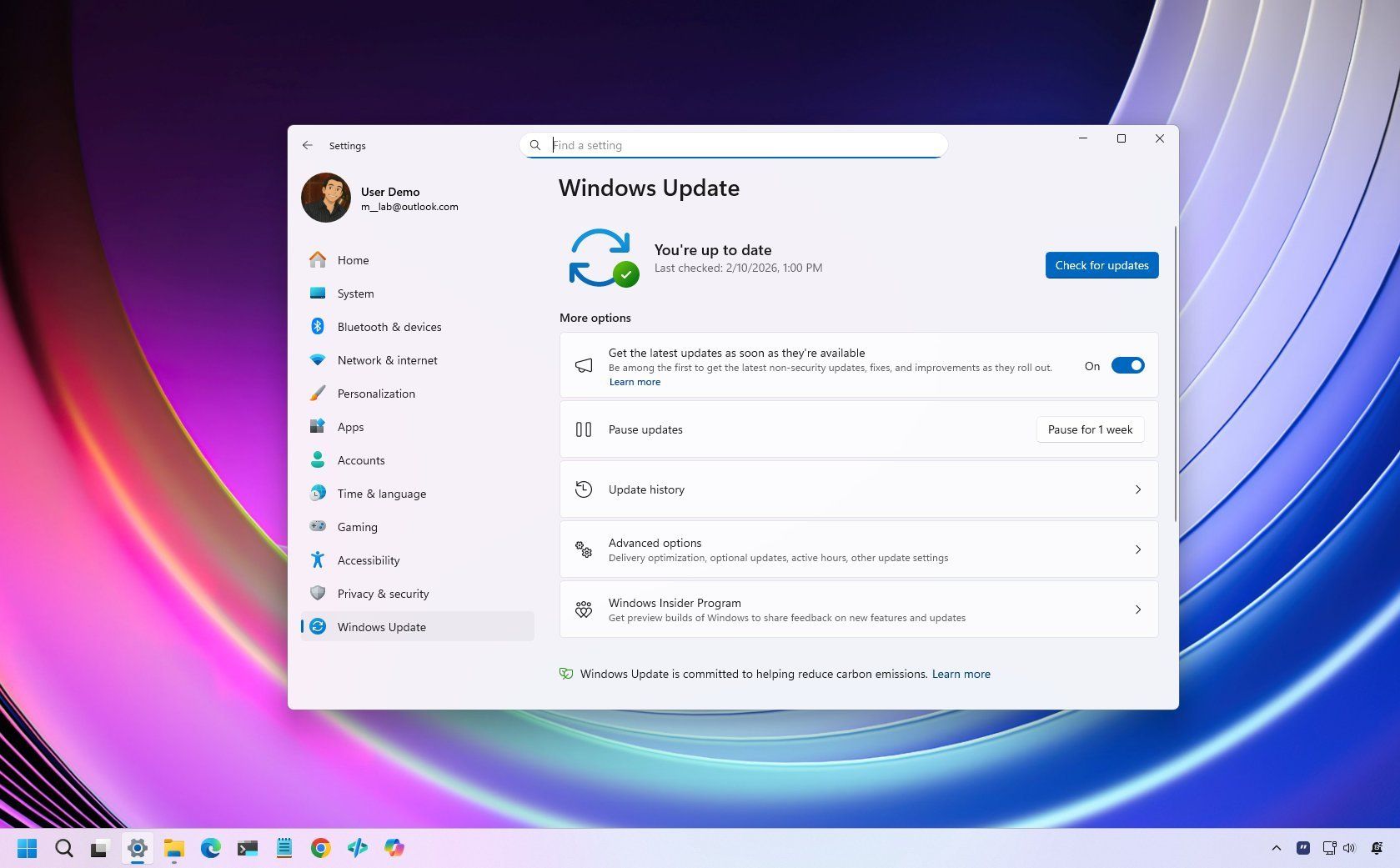
Microsoft's February 2026 cumulative update for Windows 11 (KB5077181) is producing a growing set of user reports of installation failures (error codes 0x800F0991, 0x800F0983, 0x800F0922, 0x80073712, 0x80096004) and post-update instability including DHCP-driven loss of internet connectivity, Bluetooth/device failures, audio/system hangs, and graphics/HDMI and Nvidia-related issues. Remedies cited by users range from uninstalling the patch and pausing updates to full repair reinstalls or system restores; Microsoft has not acknowledged a widespread critical fault, but the issues represent a reputational and operational risk that could modestly affect user sentiment toward Windows update quality.
Market structure: Microsoft (MSFT) is the direct loser in near term — credibility and enterprise update uptake risk a measurable hit (sentiment-driven flow could cause a 2–5% directional move in MSFT intraday/week following admissions or rollbacks). Nvidia (NVDA) is a secondary, limited loser where driver/firmware interactions surface (expect localized performance hiccups but no demand shock to GPU bookings). Patch-management, endpoint-security and OEM service providers (smaller vendors, not in dataset) are potential short-term winners as enterprises postpone automatic updates and pay for managed fixes.
Risk assessment: Tail risks include a widespread enterprise outage or class-action escalation that forces Microsoft to extend support or materially raise 2026 service costs (low probability, high impact). Immediate horizon (days): elevated IV and negative press; short-term (2–8 weeks): increased support costs and potential enterprise pause on upgrades; long-term (quarters+): negligible unless failures become systemic (>3 major faulty cumulative updates in 12 months). Hidden dependency: OEM drivers (NVIDIA/Intel) and AV vendors amplify failure incidence; WSUS/Intune telemetry and Microsoft acknowledgement are key catalysts.
Trade implications: Tactical option hedges on MSFT are warranted (buy 1–2 month OTM puts sized 0.5–1% portfolio) until a patch pull/fix confirmation; NVDA is a buy-on-dip (add 2–3% position on any >5% pullback within 30 days) because secular AI demand dominates driver noise. Rotate modest exposure into networking/enterprise management (CSCO) via a 1–2% overweight for 3–12 months to capture increased on-prem support spend.
Contrarian angle: The market often overprices user-report noise; historically (Windows 10/2018) MSFT recovered within 1–3 quarters and share price impact was transient. If MSFT falls >4% on sustained litigation/acknowledgement, that creates a high-conviction buy window (scale-in over 2–6 weeks). Also, enterprises delaying patches could accelerate third-party patch-management growth — a niche trade many ignore.
AI-powered research, real-time alerts, and portfolio analytics for institutional investors.
Request DemoOverall Sentiment
moderately negative
Sentiment Score
-0.40
Ticker Sentiment
