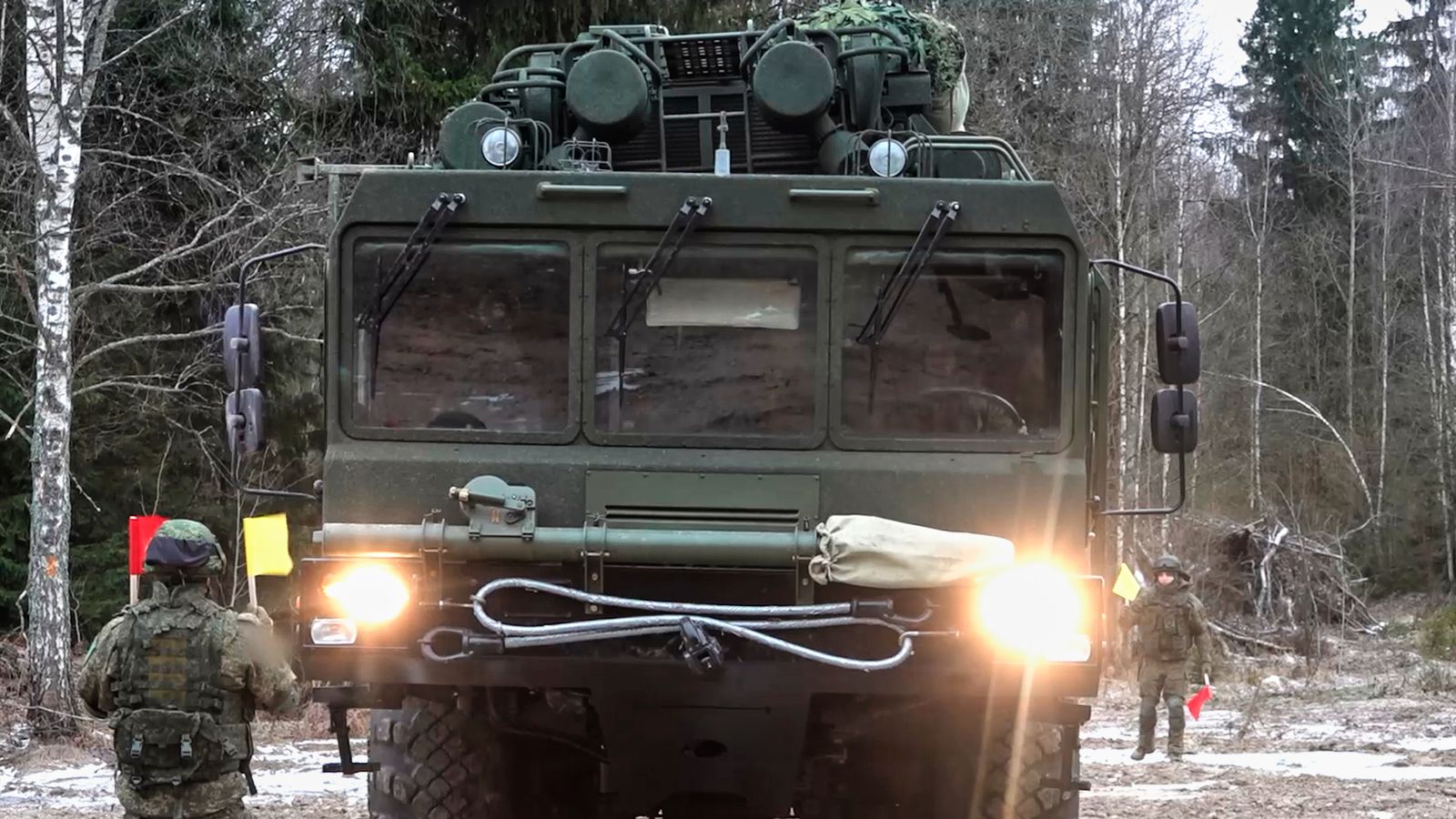
On 8 January Russia used its Oreshnik hypersonic IRBM in an overnight strike on Lviv as part of a 278-missile-and-drone attack, demonstrating a reported range of up to 5,500 km and speeds of Mach 10–11; the strike hit infrastructure roughly 40 miles from the Polish border and may have used inert warheads. The deployment — against the backdrop of Russia lowering its nuclear thresholds and Ukraine's interception rates falling to ~54% in late 2025 — highlights vulnerabilities in Western missile defenses, raises NATO strategic risk, and implies potential upward pressure on defense spending, risk premia for European assets, and short-term risk-off positioning by investors.
Market structure: Immediate winners are defense primes and specialty suppliers — US names to preference: LMT, NOC, RTX, GD and the ETF ITA — as governments accelerate urgent procurement; expect 10–30% revenue tailwinds in missile/air-defence lines over 12–24 months if NATO/EU funding votes pass. Losers include regional airlines and cross-border logistics (AAL, DAL, IAG.L) and frontier real-estate/utility assets near borders; insurance and operating costs likely rise 5–15% sector‑wide. Europe risk repricing will tighten supply/demand for interceptors, sensors and high-reliability semiconductors, extending lead times by 6–12 months and pushing component prices higher.
Risk assessment: Tail risks include NATO escalation or an inadvertent strike on NATO territory (low prob, very high impact) that would trigger broader sanctions, energy shocks and >20% equity drawdowns; timeframe: immediate to 3 months. Hidden dependencies: missile-counter systems depend on GaN/SiC semiconductors and satellite ISR capacity — chokepoints that could bottleneck delivery and raise program costs 10–40%. Catalysts to watch in next 30–90 days: NATO ministerial statements, EU defense budget votes, US DoD reprogramming notices.
Trade implications: Direct plays — establish 2–3% portfolio longs in LMT, NOC and RTX (each) via cash or 6–12 month call spreads sized to limit downside to ~3% of NAV; buy 3–5% in ITA as diversified exposure. Hedge with 1–2% long GLD and 1% long XOM/CVX for potential energy upside. Short 1–2% positions in AAL/DAL or IAG.L, and open 3–4 week buys of ATM puts on European airline ETFs if fireworks occur. Options: buy 6–12 month 25% OTM call spreads on LMT/NOC sized to cap premium to <=2% NAV.
Contrarian angles: Consensus fear of immediate NATO war likely overstates probability — markets may have overshot pricing of permanent defense wins; defense multiples could mean-revert after initial orders, so prefer suppliers of niche tech (LLL, MAXR) over broad-system primes if valuation spreads >15% versus peers. Historical parallels: post-2014 defence spikes corrected within 12–18 months when budgets normalized; risk of program delays and cost overruns can flip winners to losers. Monitor tender lead-times, semiconductor supply notifications and European budget votes as 3-8 week triggers to add/trim exposures.
AI-powered research, real-time alerts, and portfolio analytics for institutional investors.
Request DemoOverall Sentiment
moderately negative
Sentiment Score
-0.60
