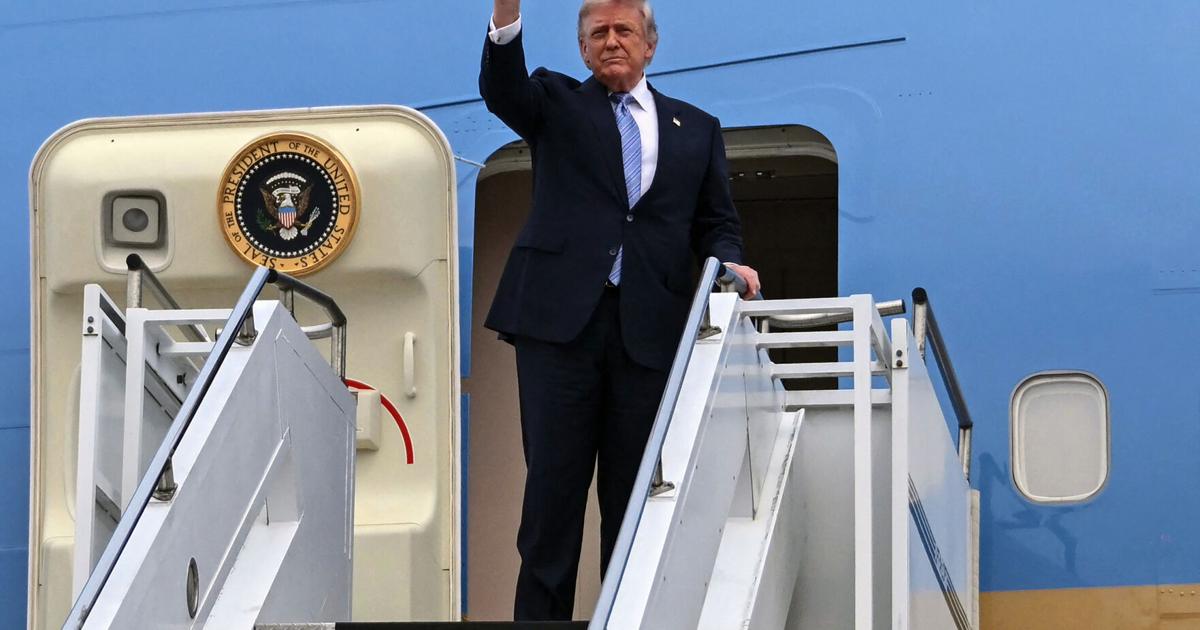
Trump said he made no commitment to Xi Jinping on Taiwan and will decide soon on a planned $14 billion arms deal with the island. The comments reinforce policy uncertainty around U.S.-China-Taiwan relations and could raise the risk of near-term diplomatic friction and regional escalation. Beijing reiterated opposition to Taiwan arms sales and warned that mishandling the issue could trigger serious conflict.
This is less a Taiwan-specific rerating than a reminder that U.S.-China cross-strait policy is now hostage to tactical bargaining, which increases event risk into every bilateral touchpoint. The market consequence is a higher volatility regime for defense procurement names with Taiwan exposure, but also for any China-facing industrials, semis, and shipping that would be hit by even a small probability shift in sanctions, export controls, or logistics friction. The underappreciated second-order effect is on supply-chain optionality: the more Washington signals ambiguity, the more Taipei is incentivized to diversify procurement, harden inventories, and pre-buy asymmetric capabilities rather than optimize for cost. That tends to favor fast-delivery, software-defined, and munitions-heavy platforms over slow-cycle legacy systems, while pressuring vendors whose revenue is tied to large, politically visible packages that can be delayed or re-scoped. Catalyst timing matters. In the next days, the headline risk is a policy U-turn or a symbolic approval that briefly compresses implied vol; over months, the bigger risk is a Chinese response calibrated to punish without forcing escalation, which would keep a lid on Taiwan asset multiples and raise the discount rate on regional trade. The real tail risk is miscommunication: if either side interprets ambiguity as a green light, the market can gap from policy noise to actual supply-chain disruption in a single session. Consensus is likely over-fixated on the binary arms-sale outcome and underpricing the broader message that transactional foreign policy makes defense demand less predictable but more frequent. That argues for owning volatility rather than making a clean directional call; if the package is approved, the upside is incremental, but if it is delayed or diluted, the downside is mainly in sentiment, not fundamentals, unless it triggers a broader alliance confidence shock.
AI-powered research, real-time alerts, and portfolio analytics for institutional investors.
Request DemoOverall Sentiment
moderately negative
Sentiment Score
-0.35
