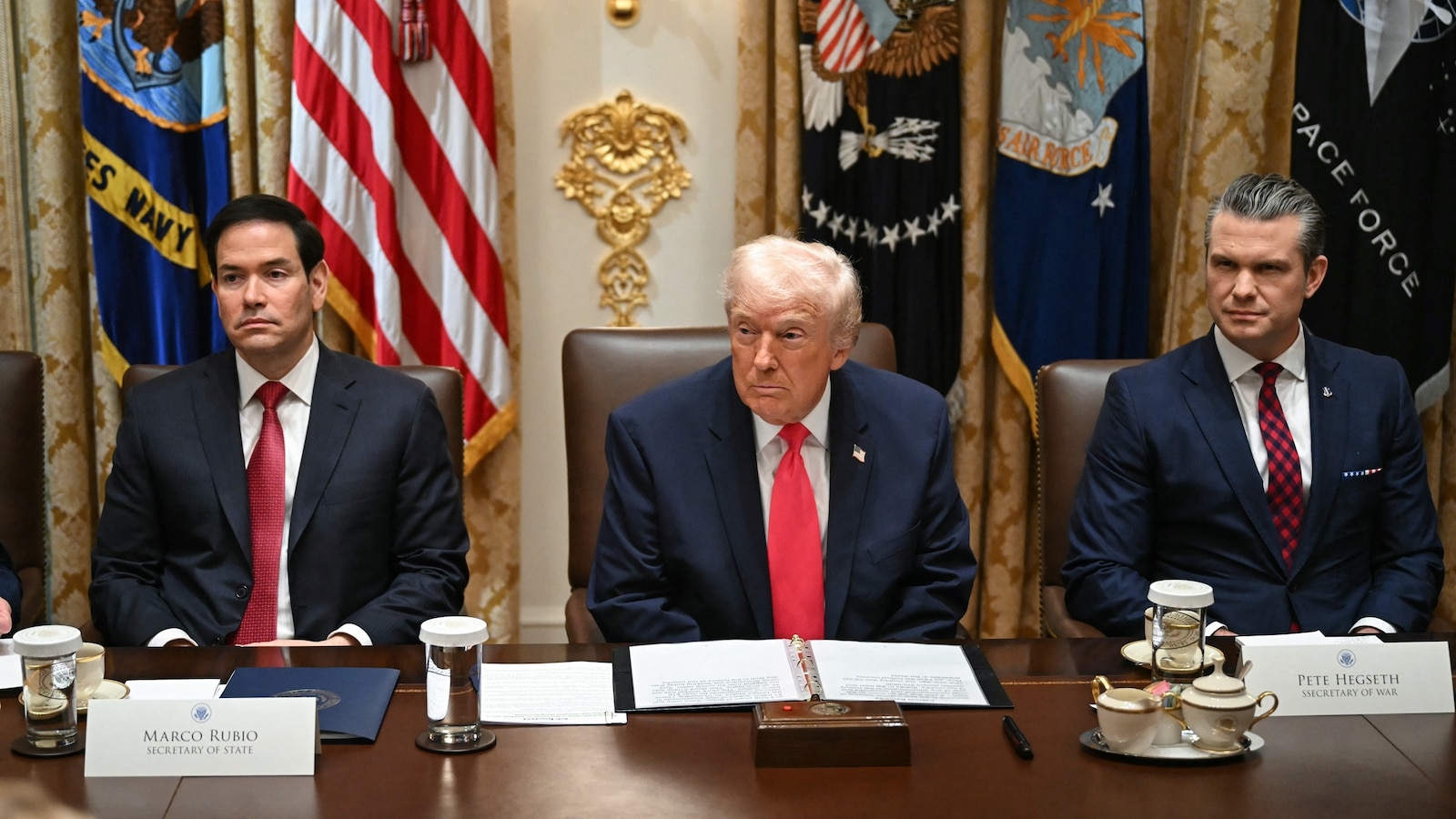
The Trump administration will announce a rollback of Biden-era vehicle fuel efficiency standards, an action the White House says could save Americans up to $109 billion; Ford CEO Jim Farley and Stellantis CEO Antonio Filosa are slated to attend the Oval Office event. The 2024 Biden rule had required modest annual fuel-efficiency gains for 2027–2031 and targeted an average vehicle economy near 50.4 mpg, while the rollback shifts regulatory trajectory toward lower compliance costs—raising implications for automaker capex/planning, fuel demand, and emissions-focused investors; Consumer Reports notes no clear historical link between stricter standards and higher inflation-adjusted vehicle prices.
Market structure: Loosening federal CAFE-style targets favors legacy ICE-focused OEMs and aftermarket parts suppliers by lowering near-term compliance costs and deferring EV capex; expect incremental gross-margin relief of 50–200 bps for high-margin light trucks over 12–24 months versus prior trajectory. Battery value chain (lithium, cobalt, cell manufacturers) and pure EV OEMs lose regulatory tailwinds; volume and ASP pressure could reduce revenue growth by mid-single digits annually if policy persists. Fuel demand/commodities: effect on US gasoline demand is small but non-trivial — on the order of <0.2% of global oil demand, implying modest upward pressure on refined product margins rather than a structural oil-price shock.
Risk assessment: Tail risks include swift legal challenges from states/NGOs, California re-regulation, or a future administration reversal that could strand renewed ICE investments — high-impact events that could re-rate OEMs by >15% within 12–36 months. Immediate market risk is headline-driven (days); short-term (weeks–months) risk centers on OEM guidance and supplier orderbooks; long-term (years) risk is technology adoption and capex sunk-costs. Hidden dependencies: many OEMs already contracted battery capacity and EV platforms — regulatory rollback may not instantly change supplier demand; watch capex revisions and factory conversion schedules for true impact.
Trade implications: Tactical long exposure to Ford (F) and Stellantis (STLA) is justified 3–9 months as compliance relief translates to margin; consider 2–3% position in F and 1%–1.5% in STLA, scale into dips. Pair trade: long F vs short TSLA on 6–12 month basis to capture relative value as regulatory relief helps ICE margin profile while EV multiples remain vulnerable. Options: implement concentrated call-spreads on F (3‑month 10% OTM buy) to limit capital and sell 1–3 month covered calls into any post-announcement pop; consider buying protection (puts) if legal reversal risk rises above 30% in next 12 months.
Contrarian angles: Consensus assumes policy change kills EV adoption — miss is that consumer preference, state rules (CA, 15% of US auto market) and existing OEM investments will sustain EV growth; rollback may only delay 1–3 years, creating a window for ICE profit cycles but not permanent demand destruction for batteries. Reaction may be underdone for suppliers tied to pickup/SUV margins (ex: parts suppliers, steel, aluminum); monitor OEM capex revisions and state regulatory filings over 30–90 days for mispricings. Unintended consequence: multi-jurisdictional compliance complexity could raise unit-level costs and depress share prices of smaller OEMs/suppliers that lack scale.
AI-powered research, real-time alerts, and portfolio analytics for institutional investors.
Request DemoOverall Sentiment
mildly positive
Sentiment Score
0.22
Ticker Sentiment
