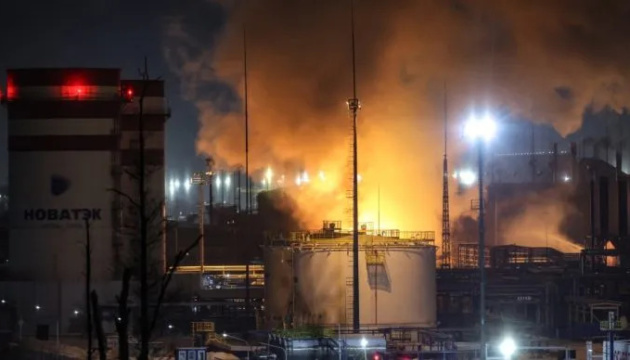
31 drones were reportedly shot down during a nighttime attack that caused damage and a fire at the Ust-Luga port and the Novatek-Ust-Luga plant in Russia's Leningrad region; regional authorities report no casualties. The strike, which Ukraine's president framed as retaliation for strikes on Ukraine's energy sector, risks disrupting port operations and energy export logistics at a key Baltic gateway. Monitor Novatek and regional shipping/terminal activity for near-term operational outages or insurance and security cost increases.
A localized hit to a major export node raises the marginal cost of moving fossil fuels and LNG even if physical throughput loss is small; markets price the uncertainty ahead of confirmed repair timelines. Historically, a single-terminal disruption can widen spot LNG and regional gas spreads by mid-single digits to low teens percent over 2–8 weeks as cargoes reroute, insurance premiums reprice and charter rates spike on short-notice demand for specialized tonnage.
Second-order plumbing effects matter more than headline capacity. Higher war-risk and hull insurance increases landed fuel costs (bunker + freight) for all routes out of northern Europe, creating an immediate arbitrage for pipeline suppliers and storage owners to capture seasonal spreads; owners of LNG carriers and short-term charter fleets see both utilization and dayrates re-rate before producers can allocate contracted tonnage.
Time horizons and tail risks: expect freight/insurance repricing inside days–weeks, contract reallocation and LNG cargo reshuffling over 1–3 months, and infrastructure hardening/capex responses over 1–3 years. Reversal catalysts include an unexpectedly quick repair, a diplomatic de-escalation that removes war-risk premiums, or a large counterflow of alternate supply (e.g., additional cargoes from Qatar/US) within 4–8 weeks that would compress spot spreads.
For portfolios, the clearest levered exposures are: owners/operators of LNG tonnage and short-duration charter markets, brokers/reinsurers capturing renewed pricing power, and defense/air-defense suppliers where procurement timelines can compress in response to repeated incidents. Monitor Baltic/TC indices, war-risk surcharge filings, and near-term charter availability as primary high-frequency signals.
AI-powered research, real-time alerts, and portfolio analytics for institutional investors.
Request DemoOverall Sentiment
mildly negative
Sentiment Score
-0.35
