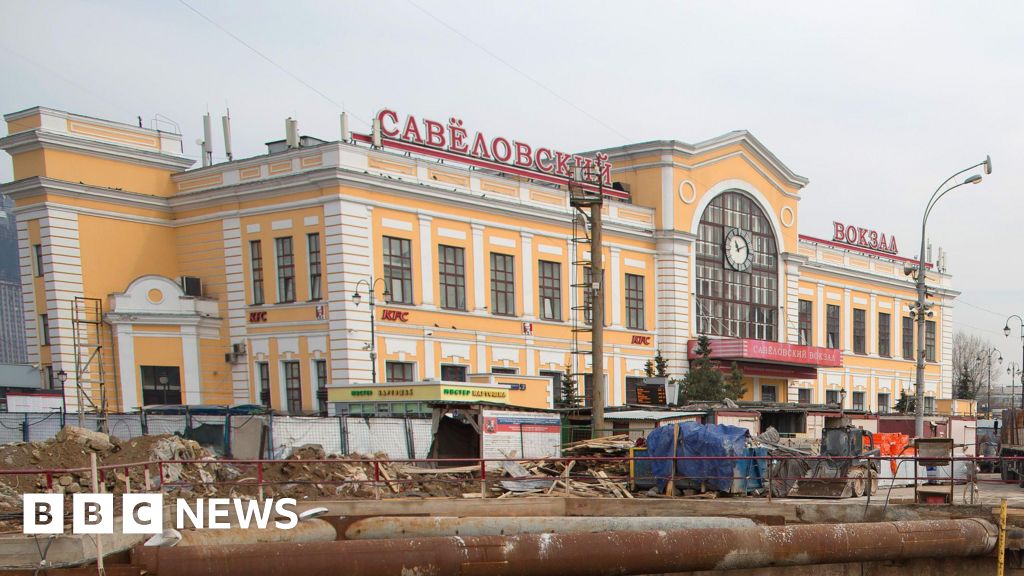
A suicide bombing outside Moscow's Savyolovsky Station Square just after midnight killed a 34-year-old traffic police lieutenant, Denis Bratuschenko, and the attacker, and injured two other officers; officials identified the suspect as a 22-year-old from Udmurtia and say a criminal investigation has been opened. President Putin asserted the suspect was apparently recruited online and claimed remote detonation, while authorities continue to investigate motive and possible accomplices. The incident raises security and political risk in Russia's capital and could prompt heightened domestic security measures, though immediate direct market ramifications are likely limited.
Market structure: this isolated suicide attack raises local security premia but is unlikely to reprice global markets absent a sustained campaign. Short-term losers are Moscow transit operators, local retail/consumer-facing small caps and travel-related services; winners are security contractors and defense primes (idiosyncratic demand for perimeter screening, surveillance, EOD gear). Expect a modest reallocation of government spend toward domestic security and counterterrorism procurement over 6–24 months.
Risk assessment: tail risks include a sustained wave of domestic attacks or credible attribution to external intelligence that triggers retaliation or sanctions—each would push OFZ yields wider and RUB weaker. Immediate (0–7 days) effects are reputational and flow-driven; short-term (weeks–3 months) could see EM Russia risk premia rise by several hundred basis points if incidents cluster; long-term (1–3 years) could embed structural higher security budgets and reduced consumer mobility.
Trade implications: liquidity and volatility will tick up in Moscow-related instruments and safe-haven assets; FX (USD/RUB) and OFZs are the most sensitive. Hedge with 1–3% tactical positions in US defense primes (LMT, GD, RTX) and short concentrated Russia exposure (RSX/local bond hedges); use short-dated volatility structures (30–60D VIX call spreads or VXX call buys capped by spreads) to protect portfolios against episodic spillovers.
Contrarian angle: consensus may overprice permanency—one-off or isolated attacks typically cause a 48–72h shock that fades unless followed by copycat strikes. Avoid large directional bets on global defense demand; instead prefer small, liquid hedges and trigger-based sizing (scale up only if >2 similar attacks occur within 30 days or MOEX/RSX drop >10%).
AI-powered research, real-time alerts, and portfolio analytics for institutional investors.
Request DemoOverall Sentiment
moderately negative
Sentiment Score
-0.45
