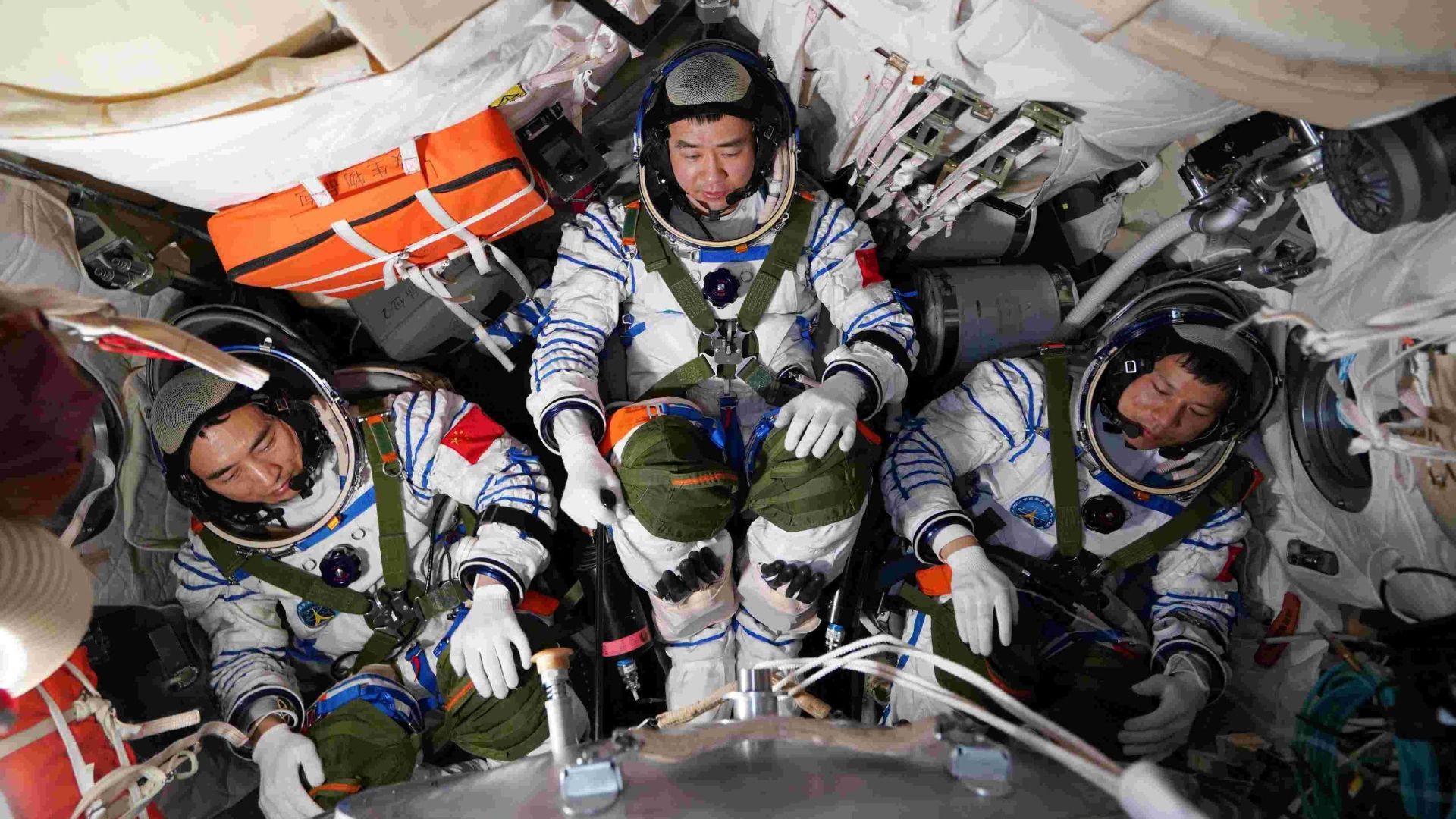
China delayed the Nov. 5 return of its Shenzhou 20 crew after suspected space‑debris damage cracked a window; the astronauts instead returned on Nov. 14 in a different capsule, leaving a docked vehicle deemed unsafe for reentry and prompting acceleration of the previously 2026‑planned Shenzhou 22 as an uncrewed flight. The incident is a wake‑up call about growing orbital‑debris risk and the absence of interoperable space‑rescue standards—China’s docking design appears APAS‑based but compatibility with the International Docking System Standard is unclear—highlighting operational, schedule and contingency risks as more governments and commercial actors operate in orbit. For investors, the episode signals potential program delays and cost increases for national space programs, and it strengthens demand for debris‑mitigation, on‑orbit servicing and rescue capabilities, even as legal and international coordination hurdles remain (China claims a 10‑day launch‑on‑need capability).
China delayed the Nov. 5 return of its Shenzhou 20 crew after suspected orbital-debris damage cracked a return-capsule window; the crew ultimately returned on Nov. 14 using a "borrowed" Shenzhou 21 vehicle, leaving the originally docked Shenzhou 21 spacecraft damaged and deemed unsafe for reentry. Technicians are now readying Shenzhou 22 and its rocket for a reportedly uncrewed flight that had been scheduled for 2026, demonstrating an accelerated contingency response and an operational failure mode in human spaceflight.
Experts cited in the article (RAND's Jan Osburg; The Aerospace Corporation's Grant Cates, Brian Weeden, Marlon Sorge) frame the episode as a wake-up call for interoperable docking interfaces, compatible communications and formal rescue procedures; China’s docking design appears APAS-based but adherence to the International Docking System Standard (IDSS) is unclear given U.S. legal limits on engagement. The piece stresses government missions have station "safe havens" and more contingency funding, while a growing commercial sector lacks those buffers, increasing systemic rescue risk as more actors operate in orbit.
From an industry perspective the incident implies near-term program risk and potential cost or schedule impacts for national human-spaceflight programs, while simultaneously strengthening addressable demand for debris mitigation, on-orbit servicing, rendezvous/docking hardware and rescue-capable vehicles; the article-aligned sentiment score is mildly negative (-0.3) but the market-impact score (0.25) signals modest commercial opportunity for suppliers. Material headwinds remain—regulatory, international coordination and orbital-inclination differences (ISS vs Tiangong) will constrain how quickly interoperable standards and commercial rescue solutions can be deployed.
AI-powered research, real-time alerts, and portfolio analytics for institutional investors.
Request DemoOverall Sentiment
mildly negative
Sentiment Score
-0.30
