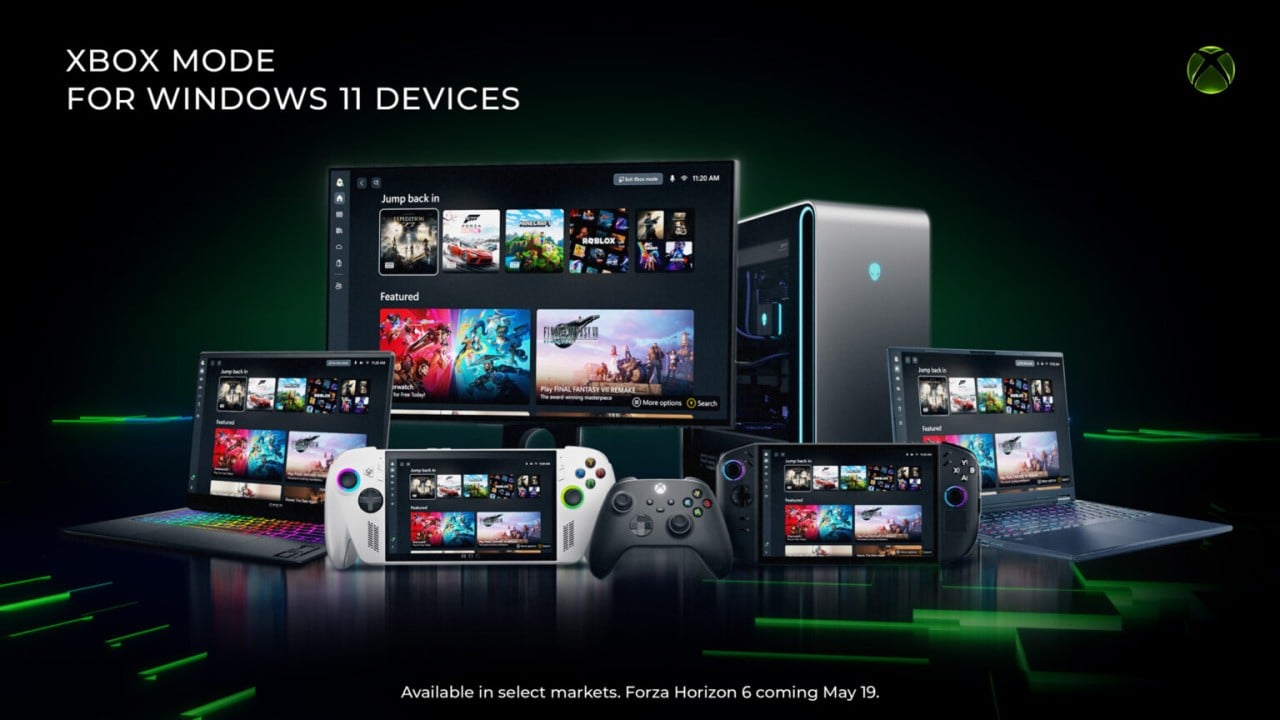
Microsoft has launched Xbox Mode on Windows 11 PCs, beginning a gradual rollout in select markets with broader availability to follow in coming weeks. The console-inspired interface is designed to improve controller navigation and provide direct access to Xbox PC games, PC Game Pass titles, and other storefronts. The update is a modest product enhancement for Windows gaming rather than a material financial event.
This is less about a headline feature and more about Microsoft extending its control over the gaming distribution layer. The strategic value is that Xbox Mode reduces friction for controller-first sessions, which should improve engagement time and attachment to the Xbox PC app/Game Pass ecosystem even on non-Xbox hardware. That matters because the highest-value outcome is not new device sales; it's lowering the churn rate of casual subscribers who otherwise bounce between Steam, Epic, and native Windows workflows. The second-order competitive effect is on Valve, not because this is a direct Steam killer, but because Microsoft is slowly making Windows less hostile to a console-like gaming experience. If the experience is good enough, it weakens one of SteamOS/handheld Linux's key advantages: a purpose-built UI that hides Windows complexity. The deeper signal is that Microsoft is willing to trade some Windows purity for gaming stickiness, which is bullish for ecosystem monetization but mildly dilutive to OS differentiation in the long run. Near term, the catalyst is adoption velocity over the next 1-2 quarters. If usage is limited to enthusiasts, the impact on MSFT fundamentals is negligible; if telemetry shows meaningful session share gains, it supports a broader gaming-services upsell narrative. The main risk is execution: any perception that this is a thin UI layer rather than a genuinely smoother, lower-overhead path will cap adoption and make the feature a marketing event rather than a product inflection. The contrarian view is that the move may be underrated as a distribution weapon but overrated as a standalone monetization lever. The market should not price this as hardware optionality; it is more plausibly a retention tool that improves Game Pass engagement and reduces competitive leakage at the margin. In other words, the upside is real but indirect, and it should show up gradually in gaming KPIs rather than immediate revenue acceleration.
AI-powered research, real-time alerts, and portfolio analytics for institutional investors.
Request DemoOverall Sentiment
mildly positive
Sentiment Score
0.20
Ticker Sentiment
