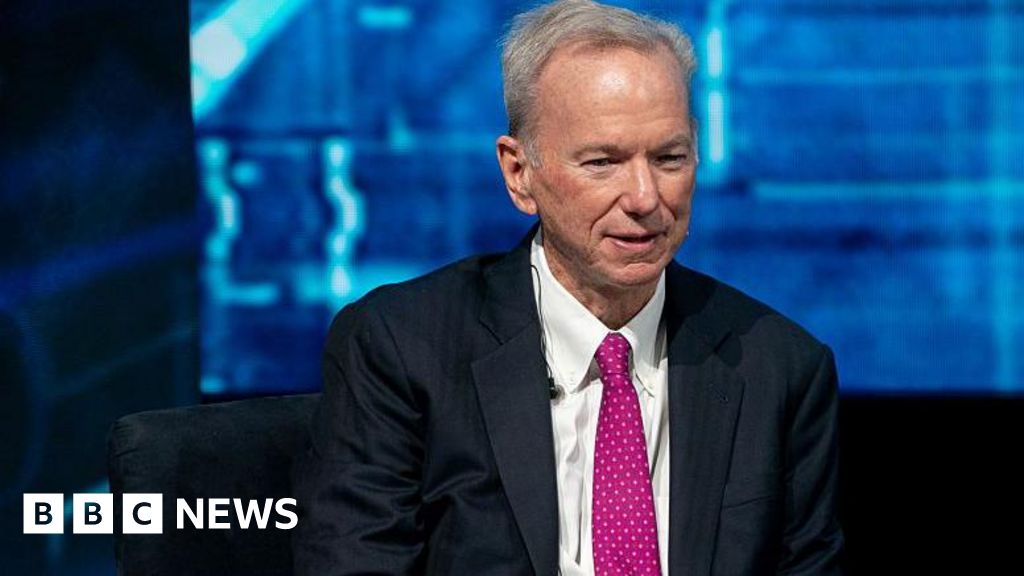
Former Google CEO Eric Schmidt was booed at the University of Arizona graduation after discussing AI, highlighting rising anxiety among students about automation and job displacement. The article cites surveys showing 50% of American adults are more concerned than excited about AI, while students are shifting away from entry-level tech and statistical analysis toward more human-centric fields. The piece is sentiment-driven commentary rather than market-specific news, so direct price impact is likely limited.
The signal here is not reputational noise for GOOGL; it is a slow-burn demand and policy-risk tell for the broader AI capex stack. When the labor market narrative shifts from “AI productivity” to “AI displacement,” you tend to get a lagged but meaningful political response: hiring scrutiny, procurement rules, and more expensive compliance for enterprise deployments. That matters most for vendors monetizing inference into white-collar workflows, where adoption is discretionary and can be paused if buyers fear employee backlash or brand damage.
Second-order, the market may be underestimating how this changes the competitive mix inside AI. If campuses and job seekers increasingly optimize toward “human” skills, the short-run winners are not necessarily the frontier model providers but the workflow software and services layers that position AI as augmentation rather than replacement. That favors firms with embedded distribution and low-friction adoption, while pressuring pure-play automation narratives that depend on rapid labor substitution. In that sense, the negative read-through is less about search/ads and more about sentiment toward the entire productivity trade.
Near term, the catalyst window is months, not days: graduation-season headlines won’t change enterprise spending immediately, but they can feed into summer board discussions and fall budget cycles. The contrarian point is that public anxiety often peaks before utilization does; the broader the backlash, the more room for companies to repackage AI as safety, filtering, and copilot functionality. That means the strongest trade is not to short AI beta outright, but to fade the most crowded “AI replaces jobs” names and own the picks-and-shovels that monetize adoption friction.
AI-powered research, real-time alerts, and portfolio analytics for institutional investors.
Request DemoOverall Sentiment
mildly negative
Sentiment Score
-0.15
Ticker Sentiment
