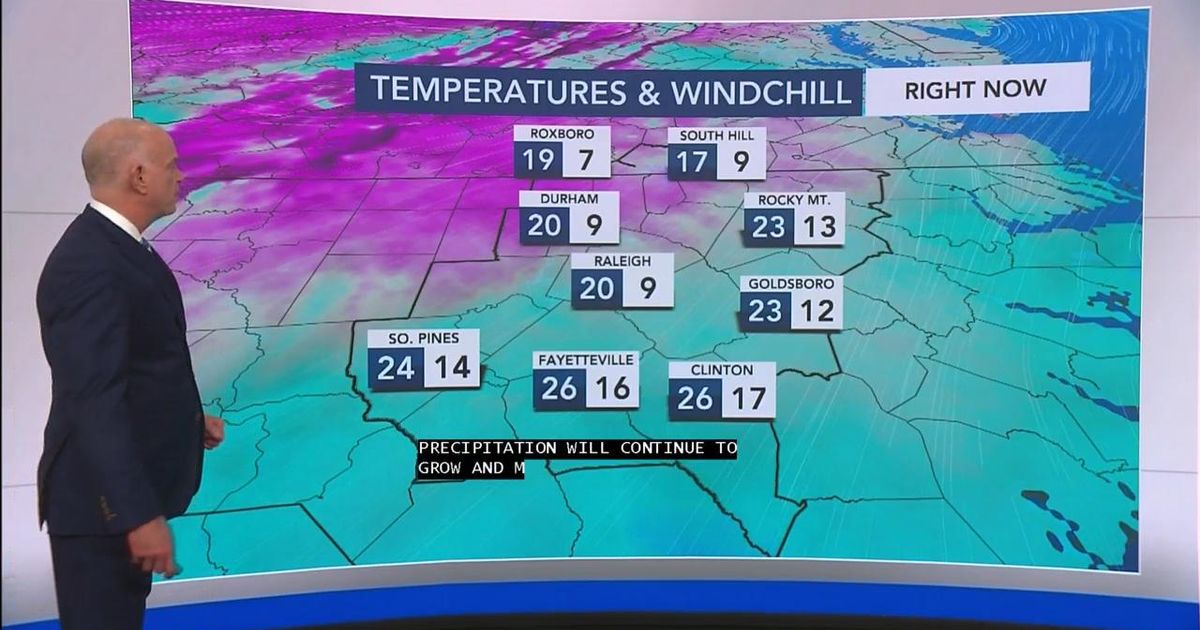
A winter storm producing freezing rain is expected to peak between midnight and noon Sunday across central North Carolina, prompting a statewide state of emergency and local declarations as DOT and utility crews stage for outages and ice clearance. Impacts already reported include Duke Energy outages (134–338 customers reported during the evening), significant flight disruption at RDU with 159 of 187 Sunday departures canceled, road closures and crashes (I-440), and localized ice accumulations up to about 1 inch near the Virginia line and over 0.5 inch north/west of Raleigh, creating material but largely localized operational risk for airlines, utilities, retailers and transportation infrastructure.
Market structure: Winners are power restoration contractors, diesel/fuel suppliers and short-dated natural gas markets as freezing rain increases electricity and backup-generator demand; losers are ultra‑low‑cost carriers (ULCC) and local retail/transportation exposed to canceled flights and closures. Regulated utilities like DUK face near‑term O&M and restoration costs that compress quarterly EPS but have rate‑base recovery pathways, so pricing power is muted but credit/cash flow timing matters. Expect short‑dated spikes in prompt power/NG (front‑month) and elevated airline seat volatility; small‑cap travel names will underperform large diversified carriers.
Risk assessment: Tail risks include widespread outages >72 hours leading to material insured/uninsured losses, state regulatory inquiries or accelerated storm surcharges (negative for cash flow), and cascading supply-chain bottlenecks for linemen/materials. Immediate window (0–7 days): travel revenue loss and margin hits; short term (weeks–months): repair costs and potential regulatory filing; long term (quarters+): higher capex/insurance and slightly higher allowed returns could neutralize losses. Hidden dependencies: utility insurance programs, mutual aid agreements for crews, and airline overbooking exposures that amplify P&L.
Trade implications: Tactical short ULCC exposure—establish 1–1.5% portfolio short or buy 30‑day 5%‑OTM puts to capture a 10–25% downside if cancellations persist; enter within 48 hours. For DUK, set limit to buy 2% position if shares gap down >3% intraday and target 6–8% mean reversion over 1–3 months with a 4% stop; regulators typically allow cost recovery. Buy front‑month NG calls (0.5–1% risk) if 7‑day heating degree days (HDDs) exceed forecast by ≥10%.
Contrarian angles: The market may over‑discount DUK’s long‑run regulated cash flows—if shares fall >5% this is a favorable dip buy because storm costs are often recoverable within 1–2 quarters. Conversely, volatility in ULCC options could be overpriced; for well‑capitalized major carriers consider selling short‑dated strangles for 10–20 days to collect elevated IV if you can hedge tail risk. Historical storms show utilities dip 3–7% then recover in 6–12 weeks; exploit that pattern with disciplined stops.
AI-powered research, real-time alerts, and portfolio analytics for institutional investors.
Request DemoOverall Sentiment
moderately negative
Sentiment Score
-0.40
Ticker Sentiment
