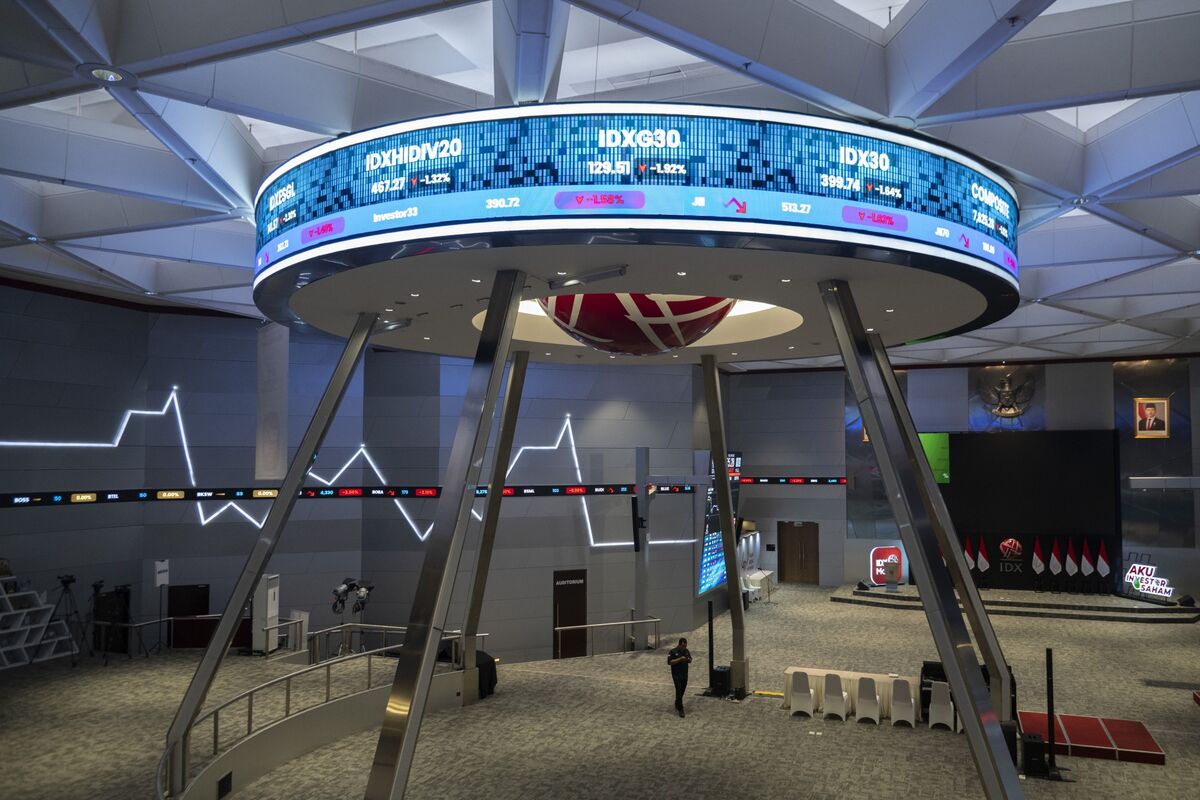
Nomura Holdings upgraded its recommendation on Indonesian equities to overweight, citing attractive valuations and a domestic policy mix supportive of growth. The report by strategist Chetan Seth highlights Bank Indonesia's interest rate-cut cycle as positive for domestic stocks and expects easing of earlier market concerns around central bank independence, fiscal credibility, policy uncertainty and slow fiscal disbursement, which could improve investor sentiment and flows into the market.
Market structure: Rate-cut expectations and “underdog” valuations favor domestically exposed Indonesian sectors—retail/consumer staples, banks with high CASA (BBRI.JK, BMRI.JK), property and infrastructure—because lower terminal rates reduce equity discount rates and spur credit growth. Exporters and commodity-linked names (coal, nickel) will see mixed effects: weaker rates can mean a weaker IDR or risk-on flows that benefit equities but compress export competitiveness; expect relative performance dispersion of 10–25% over 3–6 months. Cross-asset: bond yields should trade down 25–75bp on a credible cut cycle, FX volatile (USD/IDR ±3–6%), and equity option vols to compress 20–40% on sustained inflows.
Risk assessment: Key tail risks are renewed central-bank independence concerns, a fiscal slippage >1% of GDP, or a global rates shock (US 10y +50bp) that reverses flows; each could wipe out 15–30% of local equity gains. Timing matters: immediate (days) = relief rally on positioning; short-term (weeks/months) = sensitivity to BI policy moves and CPI prints; long-term (quarters) = corporate earnings recovery if fiscal disbursement normalizes. Hidden dependency: foreign ownership is high in select large caps—outflow concentration (>15% free-float selling) can spike volatility.
Trade implications: Tactical direct plays: establish 2–3% long EIDO targeting +10–15% in 3–6 months with a 7–10% stop loss; add 1–2% longs in BBRI.JK and 1% in TLKM.JK (defensive consumer cash flows) as multi-month holds. Pair trade: long BBRI.JK (domestic credit) vs short PTBA.JK (coal exporter) 1:1 to capture domestic cyclical vs commodity downside. Options: buy 3-month EIDO call spread (5%–10% OTM) to limit premium; buy 3–6m USD/IDR put if carry becomes attractive on confirmed 25–50bp BI cuts.
Contrarian angles: Consensus may underprice fiscal execution risk and foreign flow volatility—if BI cuts but inflation stays >3.5% or USD/IDR weakens >4% in 30 days, equity outperformance can reverse. Historical parallels (EM cuts 2016–17) show initial strong rallies followed by mean reversion when external liquidity tightens; therefore scale into positions and set hard exit triggers: trim 50% if USD/IDR moves adverse >3% in 14 days or if BI delays first cut beyond next 60 days.
AI-powered research, real-time alerts, and portfolio analytics for institutional investors.
Request DemoOverall Sentiment
moderately positive
Sentiment Score
0.50
Ticker Sentiment
