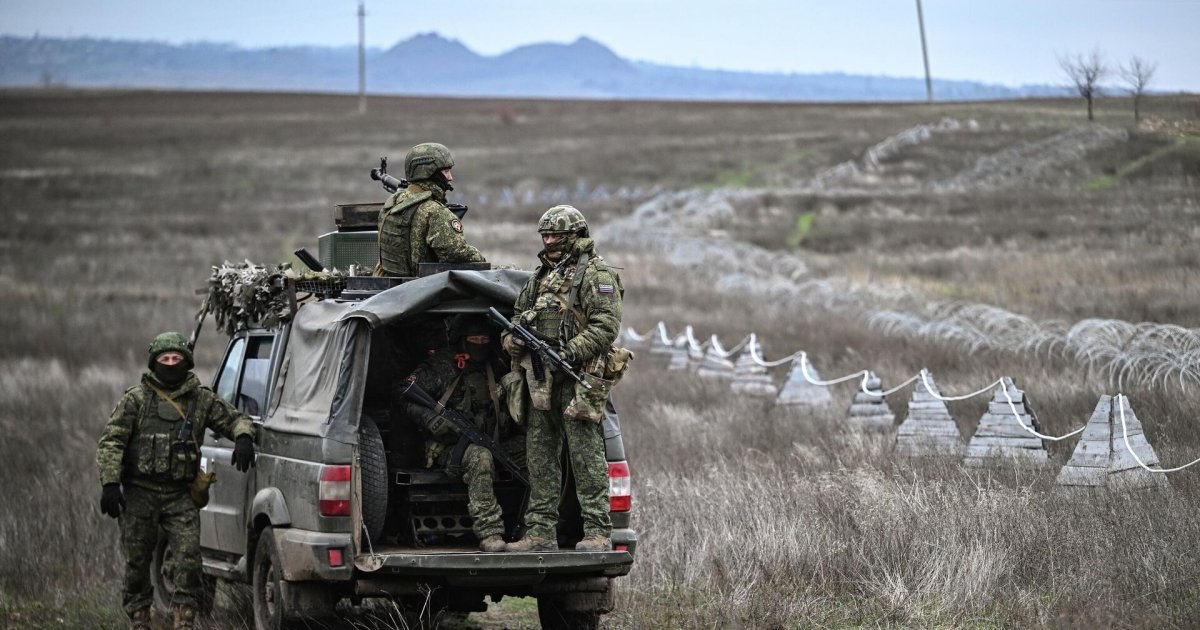
The American Institute for the Study of War finds Russian battlefield losses have been so severe that Moscow cannot form strategic reserves for a major offensive, with volunteer recruitment only covering frontline losses. Analysts conclude Russia lacks the capacity to concentrate forces for a decisive breakthrough and is likely to struggle to accelerate advances in 2026 absent significant external changes, implying continued attritional fighting and constrained operational risk for investors tracking regional stability.
Market structure: A protracted attritional fight with no Russian strategic reserve favors Western defense primes (Lockheed LMT, Northrop NOC, RTX) and specialty munitions suppliers (Oshkosh OSK, rare-niche industrials) through 2025–26 as governments replenish stocks; expect the US/EU defense sub-sector to outperform the S&P by ~3–7% over 6–12 months as order books firm and pricing power improves. Energy and commodity markets bifurcate: reduced probability of a single large escalation lowers tail oil spikes, but a longer war sustains higher baseline demand for gas, ammonia/fertilizer and wheat for 12–36 months, supporting commodity prices and commodity-heavy equities.
Risk assessment: Tail risks include sudden NATO escalation or Russian mass mobilization (low prob, high impact) that could drive crude +$20 in 1–4 weeks and spike defense stocks; conversely abrupt Western aid cuts would cause a 10–25% hit to defense names within months. Near-term volatility (days–weeks) will hinge on aid package votes and battlefield headlines; medium-term (3–12 months) risks are munitions production bottlenecks and US budget cycles that can re-rate revenue realization. Hidden dependencies: artillery shell production capacity, Ukrainian counteroffensive success, and Congressional supplemental approvals are the key gating variables.
Trade implications: Tactical overweight aerospace & defense (LMT/NOC/ITA) funded by trimming cyclicals and EM Russia-exposed positions; size 2–4% positions with options to cap downside and amplify upside. Use GLD (1–2%) as a cost-effective geopolitical hedge and maintain USD/RUB long or RSX short exposure (1%) to capture continued ruble pressure if sanctions persist.
Contrarian angles: Consensus assumes perpetual stalemate; underappreciated is supply-side constraints—defense contractors may miss delivery windows, delaying revenue recognition and compressing 12–18 month cash conversion. Historical parallels (Bosnia/Afghanistan) show defense revenue growth can be lumpy; avoid overpaying for future growth—prefer call spreads and ETFs over outright long equities to limit execution and timing risk.
AI-powered research, real-time alerts, and portfolio analytics for institutional investors.
Request DemoOverall Sentiment
moderately negative
Sentiment Score
-0.35
