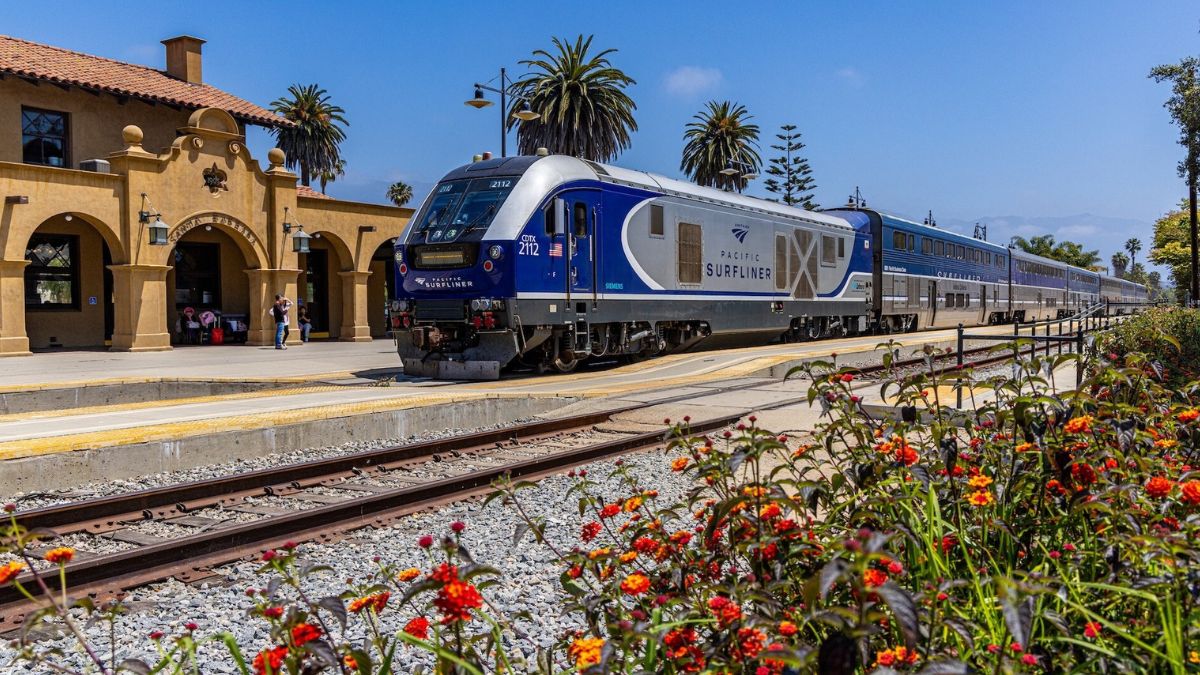
A new daily Amtrak Pacific Surfliner roundtrip between Los Angeles and San Luis Obispo launches May 4. The additional roundtrip brings service to six daily trips to Goleta and three daily trips to San Luis Obispo on a 351-mile route serving 29 stations. Agencies expect improved regional connectivity across LA, Ventura, Santa Barbara and San Luis Obispo counties during peak weekday periods. Pacific Surfliner is offering a 20% fare discount for travel between May 1 and July 15 for 2026 FIFA World Cup–related travel.
Incremental frequency increases on an established coastal passenger corridor are a classic demand-side nudge: higher frequency pulls discretionary and some commute trips out of cars because it reduces total travel time uncertainty. Using conservative elasticity assumptions (frequency elasticity ≈ 0.25–0.35), a modest service add can lift origin-destination ridership 5–15% on affected station pairs over 6–18 months, concentrating load and commercial foot traffic around intermediate stops rather than creating large net new statewide travel demand.
Second-order winners are not Amtrak itself but the ecosystem that benefits from more reliable, higher-frequency regional mobility: rolling-stock and signaling vendors (the maintenance and spare-parts tail), engineering/contractors that win iterative service improvements, and hospitality/short-stay lodging on the Central Coast that captures marginal leisure trips. Conversely, near-term pressure will be on ultra-short-haul intermodal providers—rideshare and point-to-point shuttle operators—and marginal regional air routes where train travel displaces sub-150–200 mile flights by a few percentage points of load factor.
Key risks and catalysts: 1) fiscal sustainability — state budgets and subsidy allocations are the gating factor; if mid‑cycle budget squeezes occur the marginal trip could be trimmed within 12 months; 2) behavioral stickiness — hybrid work patterns mean peak-period commuter recovery may plateau below 2019 levels, slowing revenue payback; 3) operational shocks (crew shortages, strikes, or equipment faults) could reverse ridership gains quickly. Watch quarterly state budget releases, union negotiations, and rolling stock procurement awards as 3–12 month catalysts.
Time horizon matters: the service change creates asymmetric optionality — limited 6–18 month downside (small ridership slip) but a multi-year upside if frequency proves sticky and political capital flows to broader corridor investments, which typically unlock 2–5 year capex cycles for suppliers and contractors.
AI-powered research, real-time alerts, and portfolio analytics for institutional investors.
Request DemoOverall Sentiment
mildly positive
Sentiment Score
0.15
