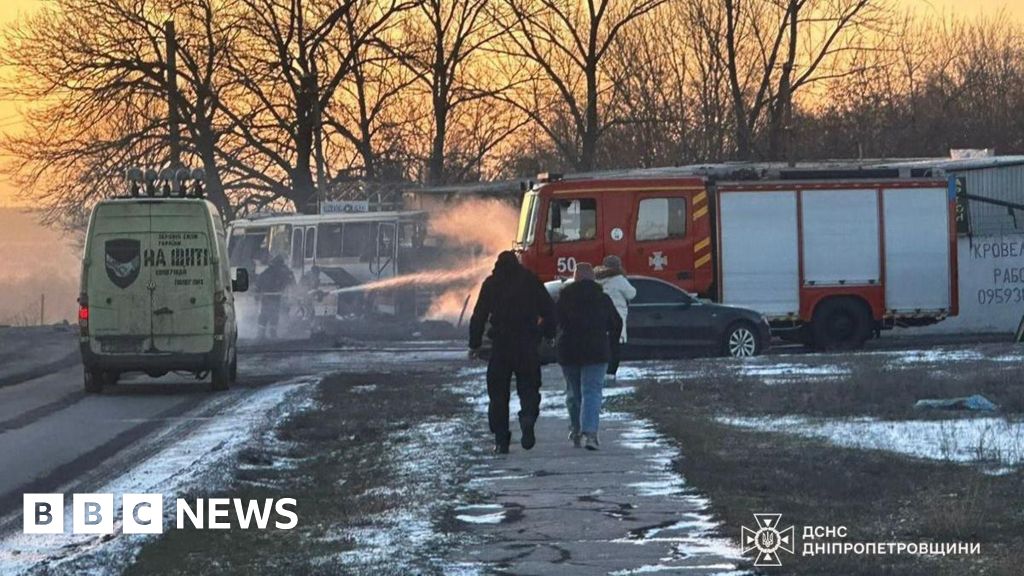
A Russian drone strike on a bus carrying miners in Terenivka, eastern Ukraine, killed at least 12 people according to DTEK (initially reported as 15) and injured multiple others; separate strikes hit a maternity hospital in Zaporizhzhia and residential areas, with at least two additional fatalities. Moscow's earlier wave of targeted attacks on Ukraine's power grid in January has already strained heating and electricity supplies ahead of a severe cold snap (temperatures forecast below -20C), raising the prospect of further energy disruption and elevated risk premia for regional energy and infrastructure exposures. Ukrainian President Zelensky has postponed three-way talks with Russian and US officials to Wednesday in Abu Dhabi, underscoring continued geopolitical uncertainty that could pressure energy prices and risk assets.
Market structure: The strikes reinforce a durable risk premium on energy and defense corridors — beneficiaries are defense primes and LNG exporters while Ukrainian energy operators, regional utilities and commodity transporters are immediate losers. Expect near-term upward pressure on European gas/coal prices and LNG cargos; pricing power shifts to LNG suppliers and freight owners for 3–6 months if winter demand stays elevated.
Risk assessment: Tail risks include escalation to wider energy embargoes or Russian targeting of major pipelines (low probability, very high impact) that could spike TTF/NBP >50% within 30–90 days and force rationing. Short-term (days–weeks) is risk-off volatility; medium-term (1–6 months) depends on winter severity and sanctions; long-term (quarters) on durable capex reallocation into energy security and defense.
Trade implications: Favor convex hedges (gold, long-duration Treasuries) and selective longs in defense and LNG exporters while trimming Europe energy‑exposed industrials and EM risk. Use options to monetize volatility: buy calls on ITA or RTX and calendar spreads in Dutch TTF/UK NBP futures; size conservatively (1–3% portfolio per theme) and re-evaluate after key catalysts (Abu Dhabi talks, EU sanction votes) within 7–30 days.
Contrarian angles: Consensus will overweight defense and gold; underrated is freight/shipowner upside (LNG carriers) and European storage/reliability capex suppliers (compressors, pipeline repair). If talks advance and ceasefire sticks within 30 days, expect rapid mean-reversion in gas and risk assets — plan disciplined exit thresholds (e.g., TTF down 25% or RTX up 15%).
AI-powered research, real-time alerts, and portfolio analytics for institutional investors.
Request DemoOverall Sentiment
strongly negative
Sentiment Score
-0.75
