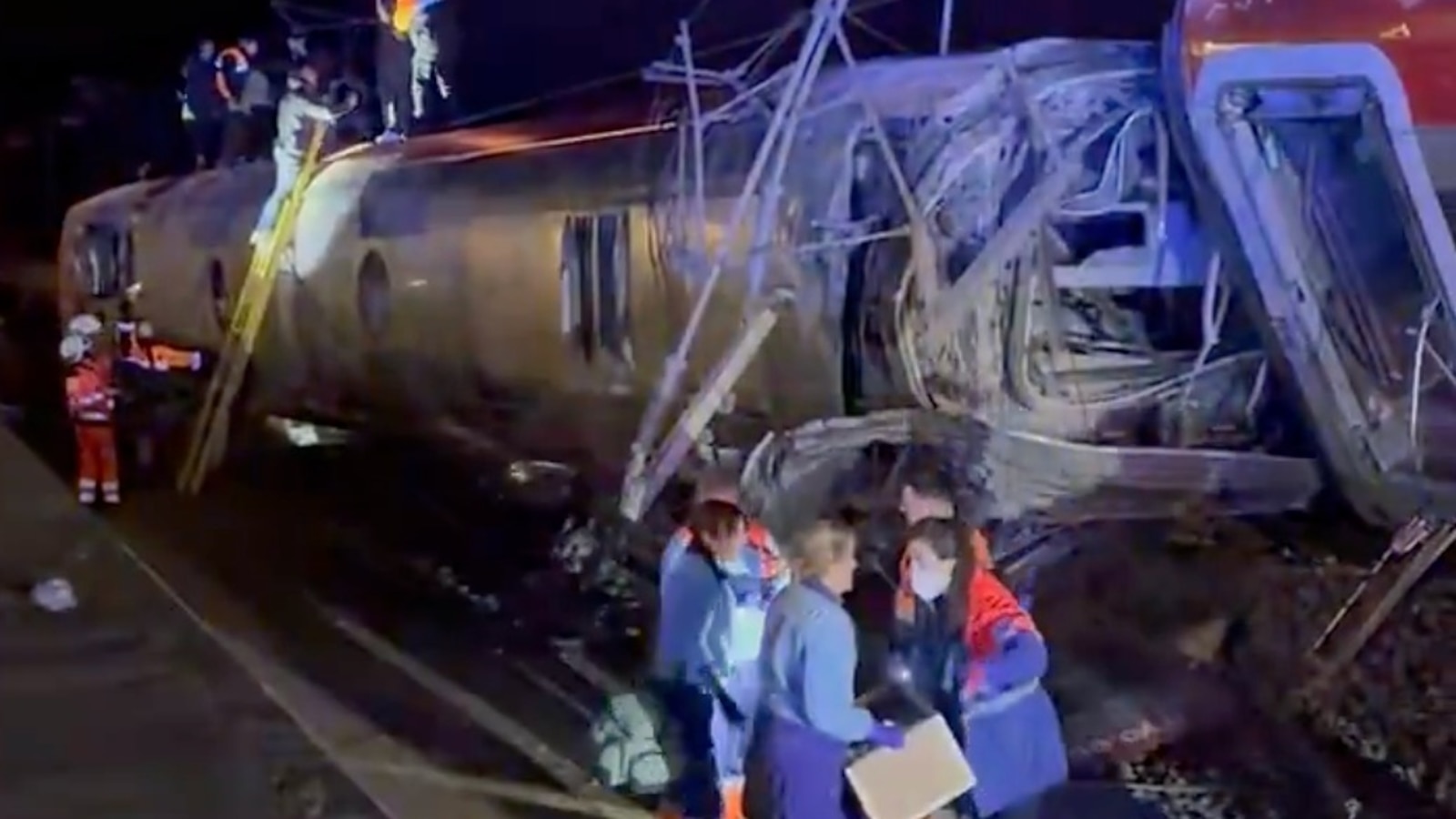
A high-speed train from Málaga to Madrid derailed near Adamuz and crossed onto an adjacent track, colliding with a Madrid-to-Huelva train; officials report at least 21 dead and about 100 injured, including 25 seriously, with roughly 300 passengers on the derailed service. Rescue operations are ongoing, all Madrid–Andalusia services have been suspended, the operator Iryo has activated emergency protocols and the cause has not been released; the incident raises short-term operational disruption, potential liability and regulatory scrutiny for the rail operator and regional transport networks.
Market structure: Immediate winners are safety/signal vendors (Thales HO.PA, Siemens SIE.DE, Alstom ALO.PA) and large infrastructure contractors (Ferrovial FER.MC, ACS ACS.MC) that can win expedited ERTMS/safety retrofit work; they gain pricing power for 6–24 months as governments prioritize quick fixes. Direct losers are operators with reputational exposure (Iryo, Renfe non-listed) and any rolling-stock OEM implicated (Talgo TLGO.MC) which could face order delays and claims; expect 5–15% short-term revenue hit to implicated operators. Cross-assets: expect a modest flight-to-quality: Spanish 10y spreads +5–20bps over Bunds in days, slight EUR weakness (0.5–1%) and higher implied vols on Iberian travel/transport stocks for 2–6 weeks.
Risk assessment: Tail risks include a regulatory overhaul (EU/Spanish mandate accelerating ERTMS rollout) that forces €0.5–3bn incremental public capex and possible industry litigation costing a few hundred million to >€1bn for a culpable OEM/insurer. Timeline: operational disruption immediate (days), investigations & provisional fines in 4–12 weeks, capex procurement and deliveries 12–36 months. Hidden dependencies: EU funding approvals, ADIF procurement cycles, signaling supplier lead-times (12–24 months) that determine revenue recognition. Catalysts: investigative findings, emergency procurement announcements, or insurer loss-reserving updates.
Trade implications: Favor selective longs in signaling and large contractors: establish 1.5–2% positions in Thales (HO.PA) and Siemens (SIE.DE) targeting +15–25% over 6–12 months if EU/Spain announce accelerated safety programs; size 0.5–1% in Ferrovial (FER.MC) for maintenance upside. Protect downside via 3–6 month call spreads (buy ATM, sell +10–15% strikes). Construct a contingent short on Talgo (TLGO.MC) limited to a 1% position or buy 6-month put spread if investigation attributes equipment fault; exit on exoneration or after 3 months.
Contrarian angles: Consensus may overstate permanent hit to rail demand — expect modal rebound within 2–6 weeks, so broad short on travel/transport is likely overdone. Historical parallel: 2013 Santiago crash triggered signaling procurement that benefited OEMs for years — similar procurement upside is underpriced now. Watch for unintended winners: short-haul airlines (IAG.L) could see transient demand gain; consider a small pair trade long Thales (HO.PA) vs short regional leisure operator exposure if spreads widen >10bps.
AI-powered research, real-time alerts, and portfolio analytics for institutional investors.
Request DemoOverall Sentiment
moderately negative
Sentiment Score
-0.40
