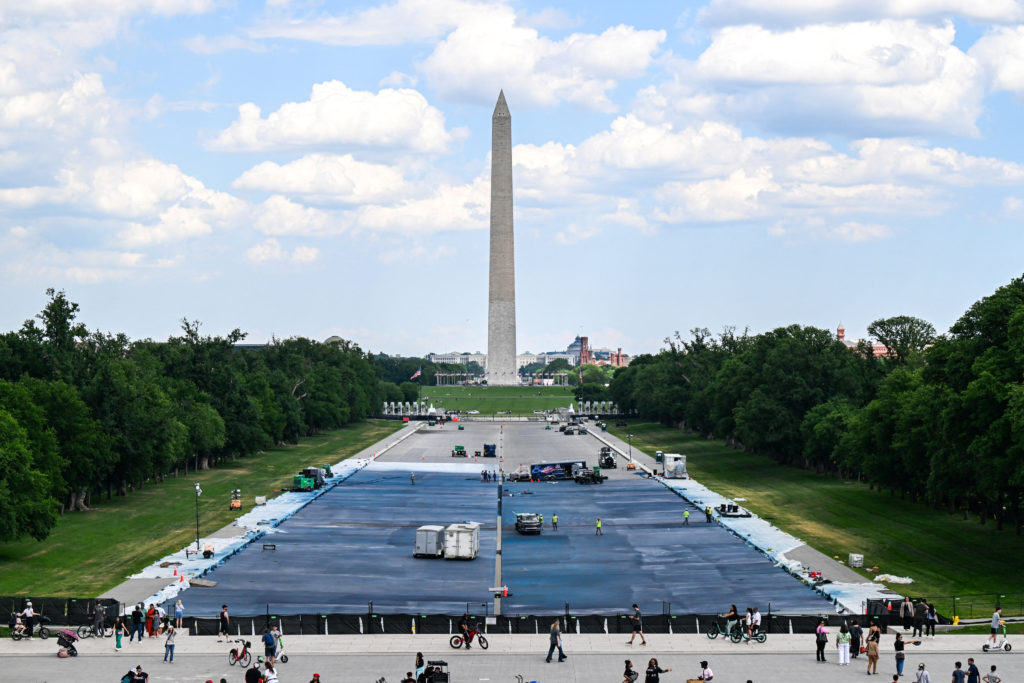
A nonprofit has filed suit to block President Trump's reflecting pool renovation, alleging the National Park Service violated historic preservation law by repainting it 'American flag blue.' The project’s estimated cost has risen to $13.1 million from Trump’s stated $1.8 million, and it is being funded with Park Service money sourced from national park entrance fees. The article also highlights no-bid contracting and concerns over bypassing normal procurement and preservation review processes.
The marketable signal here is not the renovation itself but the repeated demonstration that discretionary federal spending is being routed through exception pathways rather than normal procurement. That is structurally negative for governance-sensitive contractors and for any firm relying on clean competitive bidding, because once oversight is bypassed, pricing discipline usually weakens while execution risk rises. The immediate economic impact is small, but the reputational and legal overhang can persist for months and create a broader chill on agencies that expect scrutiny of similar projects.
For NYT specifically, this is incremental engagement value rather than a direct earnings catalyst. The article reinforces the paper’s positioning as a political accountability asset, which matters more for audience retention and subscription durability than for near-term ad revenue. If the litigation expands or the cost overrun narrative becomes a sustained controversy, the story can become a recurring franchise, modestly supporting traffic and brand salience over the next several weeks.
The contrarian angle is that the most material loser may be the contractor ecosystem, not the headline project. When a no-bid award becomes politically noisy, the second-order effect is higher bid-qual costs, more compliance friction, and a greater discount rate applied by counterparties to firms perceived as politically exposed. That can suppress valuation multiples for small, specialized contractors with concentrated government exposure, even if the specific project remains immaterial in dollars.
Catalyst timing is bifurcated: legal headlines can move sentiment over days, while procurement/ethics fallout plays out over months if the administration keeps leaning on exception-based funding. The main reversal would be a court setback or a forced rebid that normalizes the process; either would reduce the governance overhang and limit the story’s shelf life. Until then, the risk is less about budget size and more about the precedent it sets for future discretionary capital allocations.
AI-powered research, real-time alerts, and portfolio analytics for institutional investors.
Request DemoOverall Sentiment
mildly negative
Sentiment Score
-0.25
Ticker Sentiment
