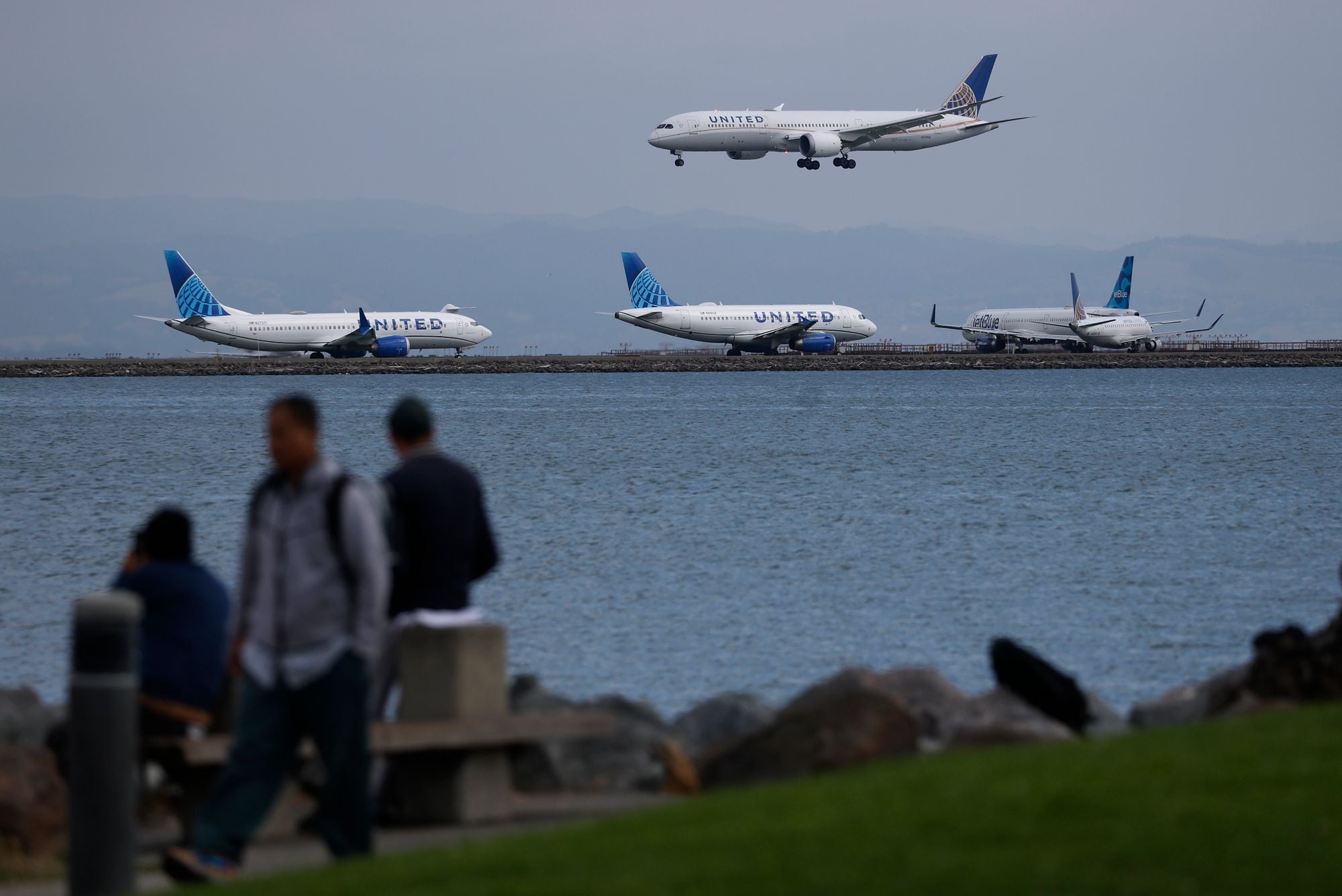
San Francisco International Airport will close Runway 1R/19L for pavement and systems upgrades from March 30, 2026, through October 2, 2026, as part of a reported $180 million runway modernization program (with the FAA funding roughly half). Airport officials project limited disruption, estimating fewer than 10% of flights will be delayed primarily during peak periods, but the six-month closure spans the summer travel season and may affect United Airlines and other carriers using SFO as a hub.
Market structure: Closing 1 of 4 runways (25% runway capacity) for Mar 30–Oct 2, 2026 compresses peak-hour landing/takeoff slots and disproportionately affects hub carriers at SFO (notably UAL). Short-term winners: airport construction contractors, airfield lighting/system suppliers, and alternative Bay Area airports (OAK, SJC) capturing diverted demand. Airport projection of <10% flights delayed understates peak-week risk — expect localized peak-day delay incidence of 10–25% in July–Aug without aggressive slot cuts.
Risk assessment: Immediate (days) risk is operational disruption to schedules and higher recovery costs; short-term (Mar–Oct 2026) risk is rebooking/cancellation expense, passenger spillover and higher CASM ex-fuel (estimate +0.5–2% for concentrated carriers); long-term (post-2026) runway upgrades should reduce maintenance-related outages and improve payload/weight limits. Tail risks include project overruns (time or budget), FAA coordination failures, or compounding staffing shortages that could push delays >25% and produce >1–3% EPS downside for hub-dependent airlines.
Trade implications: Tactical short exposure to UAL around summer 2026 is warranted (regional capacity shock, reputational costs) while selectively going long assets benefiting from capex (airport services, contractors, or nearby airport operators). Use defined-risk option structures (put spreads) to express downside through the closure window; consider pair trades: short UAL/long OAK/SJC-exposed plays or defensive REIT exposure to airport-adjacent real estate (small weight).
Contrarian angles: Consensus focuses on near-term pain but underprices the permanent upside to airport throughput once work is completed and FAA funds 50% of capex — a re-rate catalyst for airport operators/infra suppliers in 2–3 years. Market may overreact to temporary schedule noise; unintended consequence: capacity shift benefits low-cost carriers and ground transport providers, creating relative winners outside legacy hubs.
AI-powered research, real-time alerts, and portfolio analytics for institutional investors.
Request DemoOverall Sentiment
mildly negative
Sentiment Score
-0.25
Ticker Sentiment
