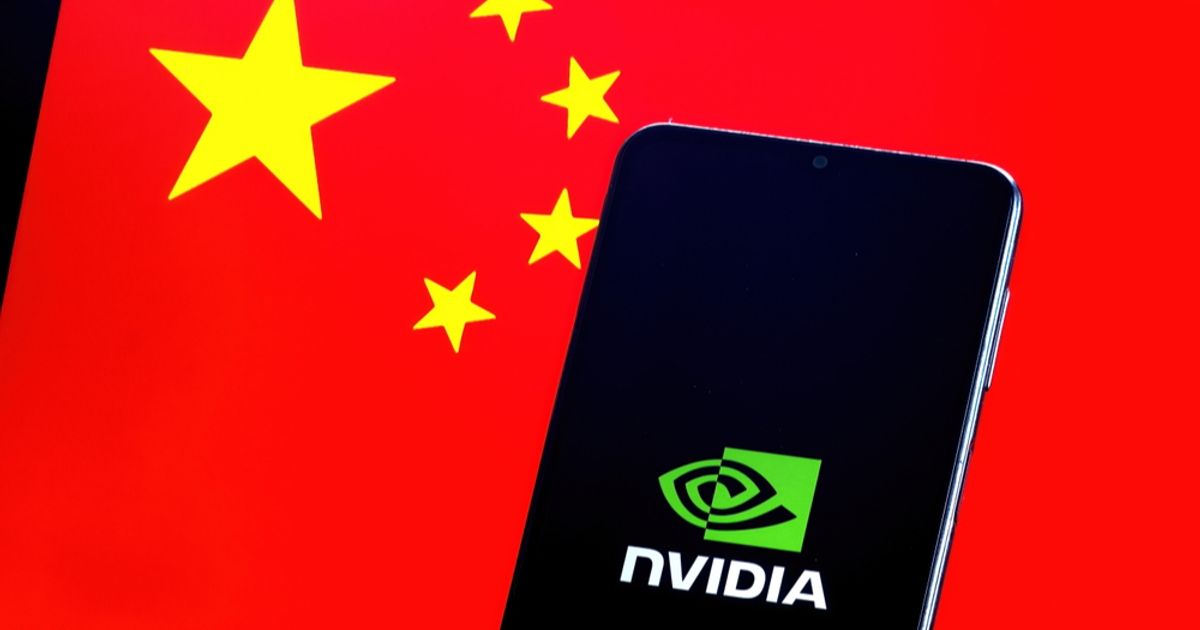
Nvidia is racing to meet unexpectedly large demand from Chinese tech firms for its H200 AI chips after orders reportedly exceeded 2 million units for 2026 while inventory stands at roughly 700,000 units. The company has asked TSMC to begin additional production starting in Q2 2026 and plans to offer specific H200 variants to China at about $27,000 per chip, underscoring significant near‑term revenue opportunity but also supply constraints and regulatory risk as Beijing has not yet formally approved shipments.
Market structure: The reported >2.0M H200 orders vs ~700k stock and $27k/list price implies up to ~$54B of nominal chip value if fully converted into 2026 revenue, which would materially reallocate AI-compute spend toward Nvidia (NVDA) and its foundry partner TSMC (TSM). TSMC gains immediate pricing power for advanced nodes and higher utilization; competitors (AMD, INTC) face pricing/volume pressure in datacenter GPUs and accelerator SKUs. Short-term spot compute prices should stay elevated into Q2–Q3 2026 as capacity is allocated to H200 volumes and Blackwell ramp competes for wafers.
Risk assessment: Key tail risks are regulatory reversal from Beijing or additional US export tightening (low-probability, high-impact), a TSMC capacity shortfall or Taiwan outage, or Chinese substitution with domestic accelerators; any of these could wipe >30–50% of the incremental revenue implied. Time buckets: immediate (days–weeks) sees sentiment/IV moves; short-term (Q1–Q2 2026) hinges on TSMC wafer starts and China approvals; long-term (2026–2027) risk is product cannibalization by Blackwell/Rubin and geopolitical supply-chain fragmentation. Hidden dependencies include substrate/OSAT capacity and Nvidia’s decision which H200 variants clear Chinese approvals.
Trade implications: Tactical: overweight NVDA and TSM into Q2 2026 production start—expect outperformance if TSMC confirms wafer starts; prefer NVDA exposure via 12–18 month LEAP calls to capture compound upside while limiting capital. Relative-value: long NVDA/short AMD (1:1) to express GPU share shift; size NVDA 2–3% net long, AMD short 1–1.5%. Options: buy NVDA Jan 2027 LEAP calls or a Q2 2026 call spread (buy 6–9 month ITM call, sell higher strike 9–12 month call) to exploit elevated near-term IV while capping cost.
Contrarian angles: Consensus assumes smooth conversion of orders to shipments; that understates Beijing approval risk and overstates near-term revenue—if approval is delayed past Mar 31, 2026, NVDA upside is materially cut. Conversely, the market may underprice TSMC upside from capacity reallocation; confirmation of wafer starts would be a 20–40% positive re-rating catalyst for TSM. Unintended consequences include crowding-out of other TSMC customers leading to knock-on margin/revenue impacts for Apple/others and potential political backlash that could reduce multi-year China exposure.
AI-powered research, real-time alerts, and portfolio analytics for institutional investors.
Request DemoOverall Sentiment
mildly positive
Sentiment Score
0.25
Ticker Sentiment
