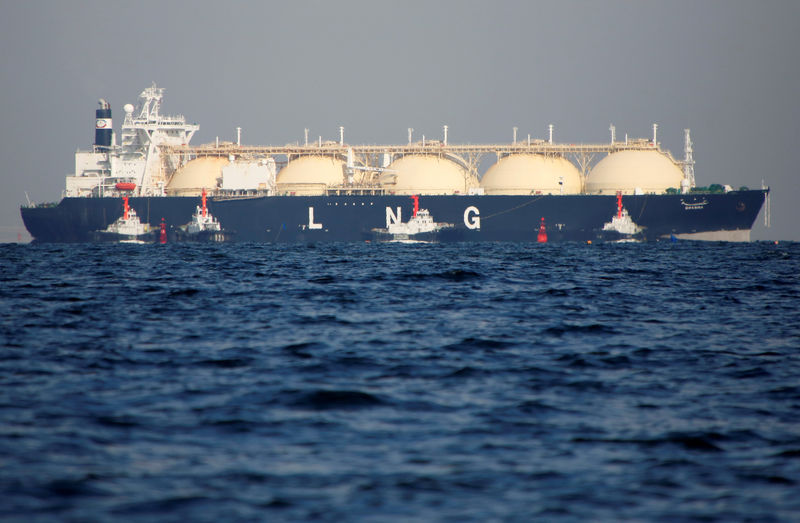
European benchmark Dutch TTF front-month natural gas fell 3.7% to 40.17 euros/MWh, but prices remain well above pre-war levels amid renewed uncertainty over U.S.-Iran peace talks and ceasefire expiration. Iran rejected a second round of talks, threatened retaliation after a U.S. seizure of an Iranian-flagged vessel, and said the Strait of Hormuz is again closed, keeping geopolitical risk elevated for energy markets. The developments are broadly negative for gas and oil supply sentiment and could continue to support volatility across global energy prices.
The market is treating this as a binary headline risk, but the cleaner read is that Europe’s gas complex is becoming a volatility instrument for Middle East security premiums rather than a pure supply-demand market. When geopolitical risk is re-priced faster than physical molecules can move, the first beneficiaries are not necessarily producers but traders, storage owners, and balance-sheet-intensive utilities that can monetize intraday and regional basis dislocations. The muted rebound suggests the market is still underpricing how quickly a short-lived disruption can cascade into forced hedging by power generators and industrial users across Europe. The second-order effect is in cross-commodity substitution and inventory behavior. If gas remains elevated while Asian demand stays soft, Europe can temporarily defend inventories without outright shortages, but that only shifts pain forward into winter optionality and raises the value of storage-capacity exposure. At the same time, elevated gas prices tend to bleed into power prices, ammonia/fertilizer margins, and ultimately energy-intensive manufacturing competitiveness; that creates a lagged drag that is easy to miss when the tape is focused on the headline geopolitics. The real tail risk is not a sustained move higher in gas by itself, but a perception shift that shipping risk in the Strait of Hormuz is durable enough to alter LNG routing and vessel insurance. If that happens, the market could see a discontinuous repricing of European gas basis and freight, even without a major physical outage. Conversely, any credible de-escalation or inspection protocol would likely compress the risk premium quickly because current prices already embed a meaningful amount of political friction. The consensus appears to be assuming this is a tactical scare rather than a regime change. That may be right, but the asymmetry is still skewed because downside from peace-talk headlines is gradual while upside from another maritime incident or infrastructure strike is immediate and violent. In other words, the market is short convexity into a fragile ceasefire window.
AI-powered research, real-time alerts, and portfolio analytics for institutional investors.
Request DemoOverall Sentiment
moderately negative
Sentiment Score
-0.35
Ticker Sentiment
