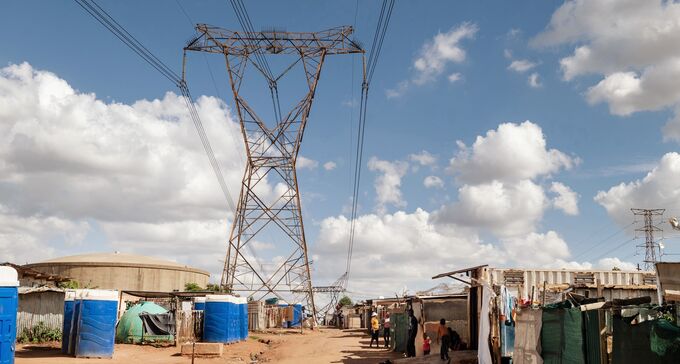
Africa's pervasive energy deficit is severely hindering industrialization and job creation across the continent, leading to substantial economic losses and preventing value-added processing of critical resources. Businesses face high operational costs due to reliance on private generators, while state-owned utilities struggle with inefficiency, debt, and a declining grid as major industrial consumers opt for self-generation. This systemic challenge is compounded by a significant reduction in foreign funding for large power projects, necessitating strategic investments in both traditional and renewable energy, and regional grid integration to unlock Africa's economic potential and attract sustained institutional capital.
Africa's pervasive energy deficit critically hinders industrialization, with manufacturing contributing only 11% of sub-Saharan Africa's GDP, far below East Asia's 22%. This power shortage leads to significant economic losses, such as Nigeria's estimated 5-7% annual GDP loss from outages, compelling businesses to rely on costly private generators. The lack of reliable power directly impedes job creation for the continent's rapidly growing youth population.
Funding for major power infrastructure has sharply declined, with public and development finance falling by a third to $20 billion in 2024, largely due to an 85% reduction from China. This, coupled with inefficient state utilities, forces large industrial consumers to invest in expensive off-grid solutions, further weakening centralized grids. This "death spiral" is compounded by stalled international initiatives and energy transition programs.
Some nations are pursuing large-scale projects, like Ethiopia's $5 billion GERD, aiming to attract foreign investment with its 5,150-megawatt capacity, though its financial sustainability is under scrutiny. There is a strategic debate on prioritizing industrial electrification over rural access to drive export-led growth, maximizing the impact of limited power resources. Major miners, including Glencore, are investing hundreds of millions in dedicated hydropower for their operations in the DRC.
The continent's vast renewable resources present opportunities for private clean energy firms, but analysts advocate an "all-of-the-above" approach, including natural gas, for short-term industrial scale-up. Securing sustainable financing and implementing cost-reflective tariffs are critical challenges to attract investment and prevent further utility collapse.
AI-powered research, real-time alerts, and portfolio analytics for institutional investors.
Request DemoOverall Sentiment
moderately negative
Sentiment Score
-0.45
Ticker Sentiment
