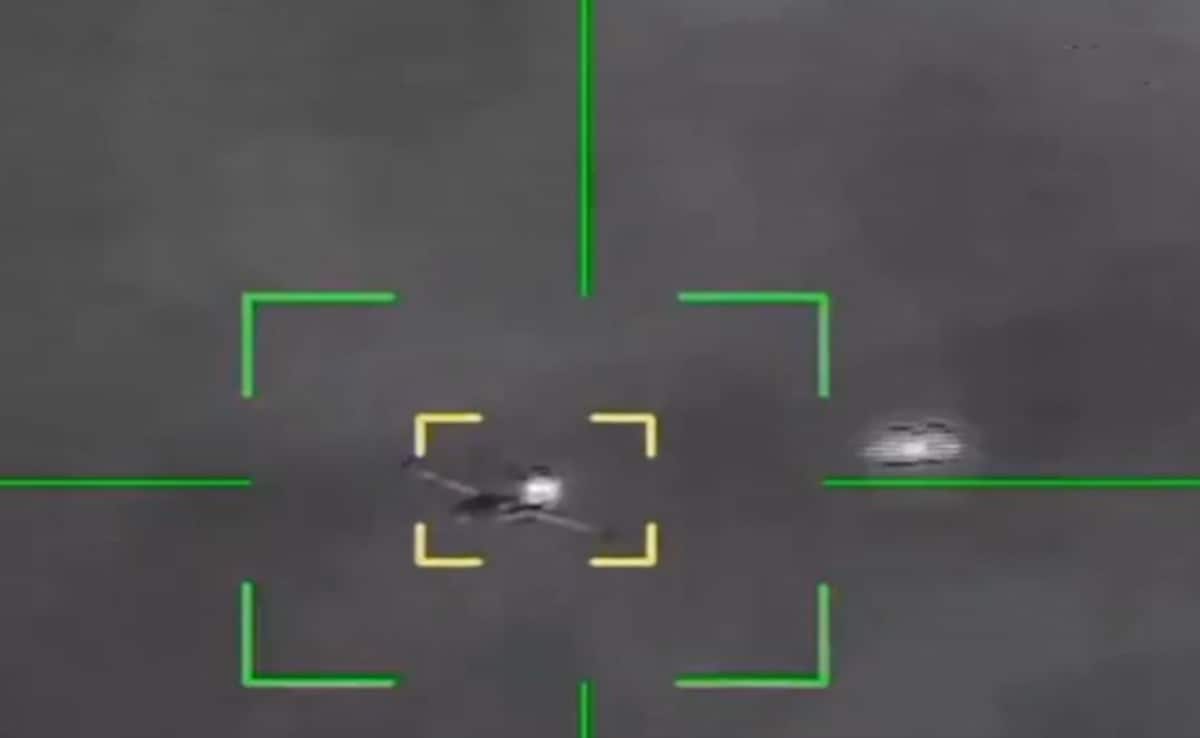
Iran shot down two US military aircraft (a USAF F-15E Strike Eagle downed over central Iran on April 3 with one crew rescued and one missing, and a US A-10 Warthog that crashed in the Persian Gulf) after weeks of US‑Israeli strikes. US Central Command reports >13,000 missions and >12,300 targets struck in the campaign; Iran claims use of indigenous EO/IR-guided Majid (AD-08) short-range SAMs, highlighting resilient layered air defenses. Expect elevated risk premia for Gulf oil and broader risk-off market moves, and potential incremental demand for defense contractors amid heightened regional escalation.
Iran’s demonstrated ability to attrit advanced platforms using passive EO/IR systems materially changes the tactical economics of air campaigns: standoff ISR, electronic warfare suites, and upgraded IR countermeasures become immediate procurement priorities, not multi‑year wishlists. Expect procurement velocity to accelerate within 6–18 months and unit prices for cooled IR detectors, gimbals and EW pods to rise 20–50% as vendors reallocate production to prioritized defense programs and chokepoints in the detector supply chain appear.
Market second‑order winners are not the largest primes alone but the niche suppliers of cooled focal‑plane arrays, IR gimbals and countermeasure sub‑systems — firms where a single multi‑year award moves revenues materially (domestic TDY/Teledyne‑type exposure, and small-cap optics vendors). Losers in the near term are commercial aviation and MRO chains: higher insurance, rerouting, and security premiums will compress margins within weeks and could shave several percentage points from 2Q operating profit for exposed carriers. Energy and shipping see an immediate risk premium: tanker owners and short‑haul oil producers capture the shock if chokepoint risk persists, while refiners face volatile feedstock spreads.
Tail risks skew to kinetic escalation within days–weeks if the US elects SEAD or strike missions against mobile IR systems, which would widen the market risk premium dramatically; conversely, a credible diplomatic de‑escalation or rapid suppression of Iranian systems could unwind much of this repricing within 30–90 days. The clearest market signal to watch is procurement announcements and export‑control moves on cooled detectors: those will set a 6–24 month revenue path for the specialty suppliers and determine whether the defense re‑rating is durable or transient.
AI-powered research, real-time alerts, and portfolio analytics for institutional investors.
Request DemoOverall Sentiment
strongly negative
Sentiment Score
-0.75
Contrarian angle: consensus will chase large primes at headline multiples, but contract timing and budget appropriation lag mean immediate upside is asymmetric. Better risk/reward sits in targeted, higher‑convexity plays tied to sensors, counters and tankers; pair these with short, time‑limited airline or travel exposure to capture the dislocation without overpaying for the prime‑stock beta.
