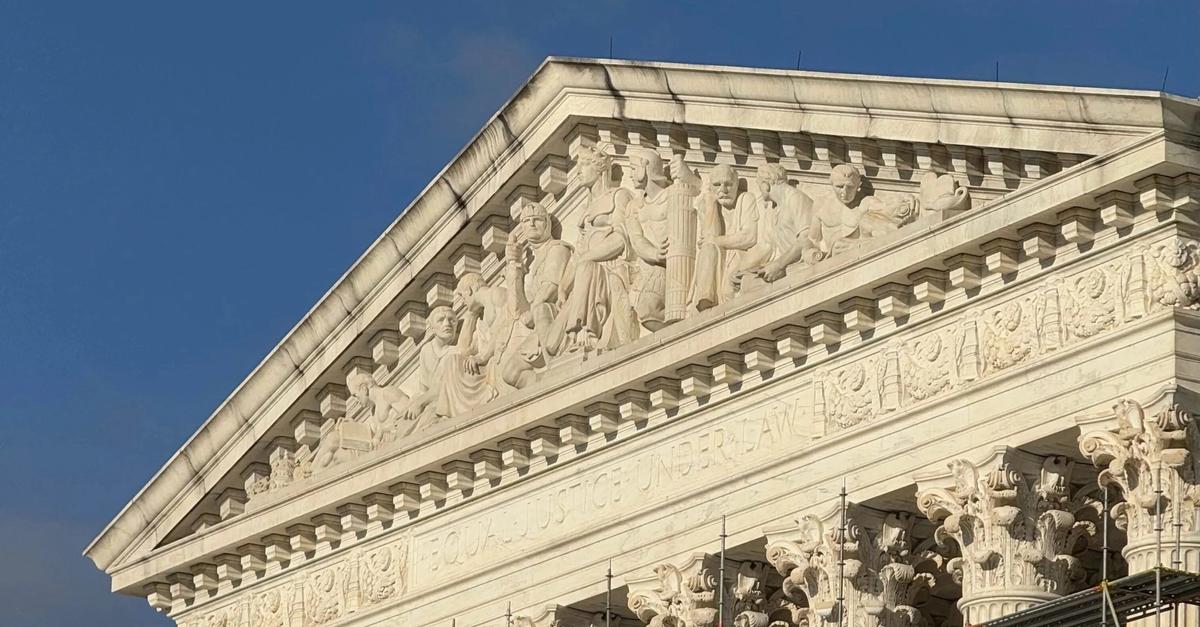
The article centers on Supreme Court activity, including ongoing fallout from redistricting rulings, a temporary pause on the mifepristone in-person dispensing requirement, and upcoming conference consideration of cases involving Section 230 and religious preschool rules. The most market-relevant item is the potential revisit of Section 230 in Doe v. X Corp., where plaintiffs seek to hold X liable for child pornography left on the platform after notice; X argues the 9th Circuit’s immunity ruling is settled law. The piece is largely legal and political analysis with limited immediate financial market impact.
The marketable issue here is not the underlying merits of the Section 230 dispute so much as the court’s willingness to keep narrowing the practical scope of platform immunity at the margins. If the justices even grant review, it would re-open a live overhang on large-cap internet names whose legal moats were assumed to be stable; that matters most for companies with high user-generated-content exposure and thin moderation economics, because any incremental duty to respond faster to notice can raise fixed compliance costs faster than revenue growth. The second-order loser is not just the defendant platform but smaller peers that cannot spread moderation/legal overhead across as many users. The key timing catalyst is binary and near-term: the conference creates a day-to-day cert risk, but any real repricing would likely occur only if a grant happens or if a separate opinion signals a broader appetite to revisit platform liability. The tail risk is legislative spillover: once the Court starts carving out child-safety or criminal-content exceptions, plaintiffs will use that opening to pressure claims around design, algorithmic amplification, and notice-response latency. That widens the attack surface from a narrow immunity defense to a broader product-liability framework, which would be structurally negative for digital-ad-adjacent names over a 6-18 month horizon. The contrarian view is that the consensus is underestimating how little direct P&L impact a cert grant would have in the near term. Even if the Court takes the case, the most likely outcome is a procedural narrowing rather than a wholesale rewrite of Section 230, and that would preserve the market’s basic assumption of platform immunity for ordinary content distribution. The better trade is on volatility and dispersion, not directional collapse: the legal overhang should support multiple compression in the most litigation-sensitive names while leaving cash-rich mega-platforms relatively insulated. For SNAP specifically, this is a governance/risk-premium story more than an earnings-story today: the stock is vulnerable to any court language that increases expected moderation spend or raises perceived headline risk around youth safety, even if no immediate liability follows.
AI-powered research, real-time alerts, and portfolio analytics for institutional investors.
Request DemoOverall Sentiment
neutral
Sentiment Score
-0.05
Ticker Sentiment
