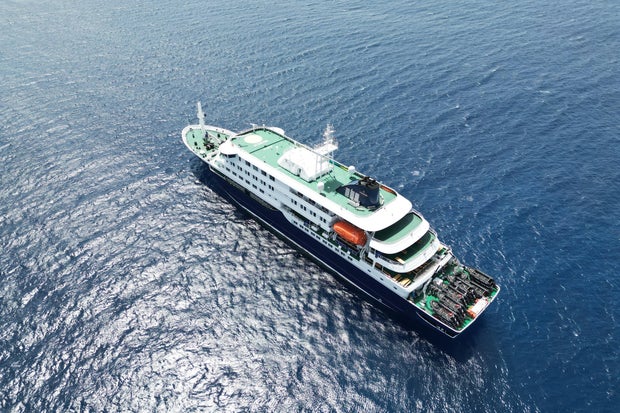
At least 3 people have died and several more cases are suspected in a hantavirus outbreak aboard the MV Hondius cruise ship, with officials evacuating sick passengers and investigating possible human-to-human transmission. WHO and local health authorities believe the virus likely originated off the ship, possibly in Argentina or on islands along the route, and say no rodents were found aboard. The incident is likely to weigh on cruise-travel sentiment, though the broader market impact should remain limited.
The market implication is not a direct healthcare shock so much as a near-term confidence hit to discretionary travel logistics. Cruise operators, premium expedition travel, and adjacent air/port service providers face a short window of booking deferrals and higher cancellation risk while the story is unresolved; the first-order damage is less about earnings from this one vessel and more about how quickly a rare, fear-driven headline can compress forward demand for a niche product with already high fixed costs. The second-order effect is on operational standards across the entire cruise ecosystem: if investigators cannot quickly rule out onboard spread, insurers and regulators may push for more aggressive quarantine, testing, and wildlife-exposure protocols for expedition itineraries, especially routes involving remote ports and multi-country handoffs. That would raise per-passenger costs and reduce itinerary flexibility, which disproportionately hurts smaller operators and premium polar/adventure brands that rely on scarcity pricing rather than volume. The contrarian read is that the selloff risk in broad travel names may be overdone if the event is ultimately traced to pre-boarding exposure rather than onboard transmission. In that case, the incident becomes a one-off biosecurity failure rather than a cruise-specific contagion risk, and the medium-term damage is mostly reputational. The bigger underappreciated risk is not a wider hantavirus spread, but the operational bottleneck created by stranded passengers, crew isolation, and potential route disruptions over the next 1-3 weeks. For healthcare, the episode is a reminder that rare zoonotic events can still create high-visibility volatility in diagnostics, telemedicine triage, and emergency-response vendors even without a broad outbreak. The investable angle is to fade knee-jerk contagion narratives while staying alert for any evidence of person-to-person spread, which would meaningfully extend the duration of the risk window from days to months.
AI-powered research, real-time alerts, and portfolio analytics for institutional investors.
Request DemoOverall Sentiment
strongly negative
Sentiment Score
-0.55
