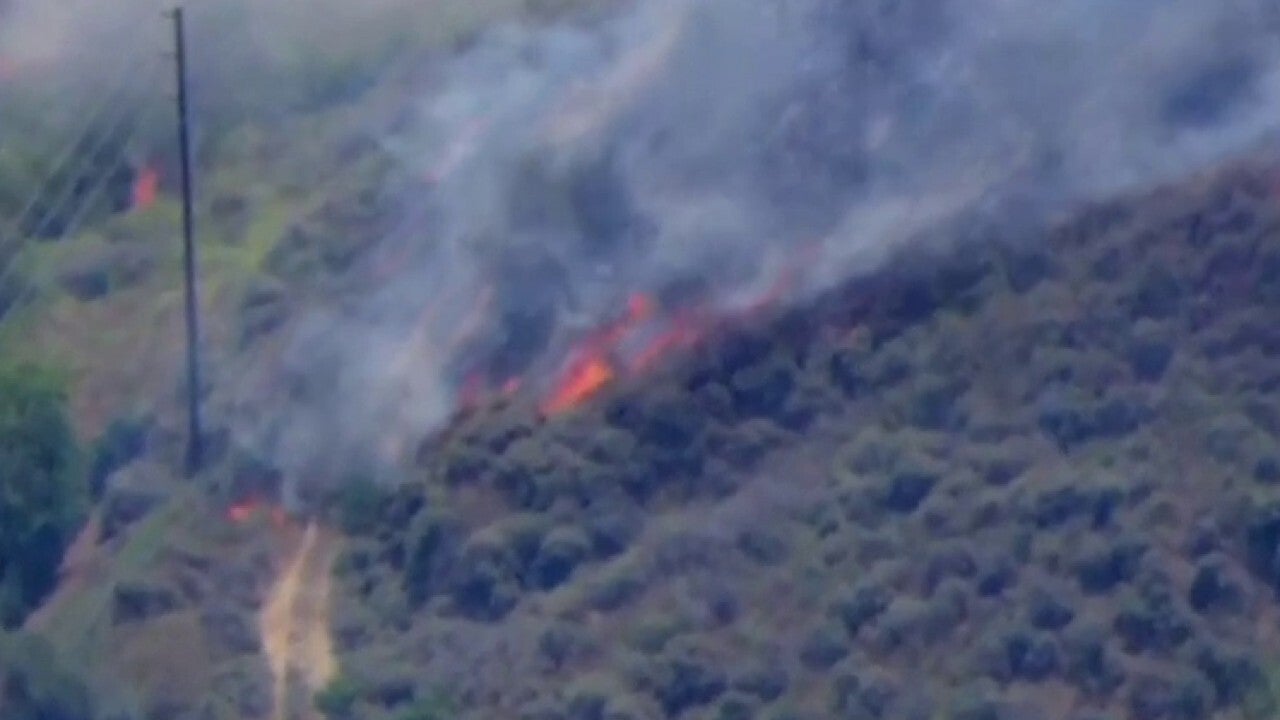
The Sandy Fire has burned nearly 200 acres in Ventura County, triggering evacuation orders in parts of Simi Valley and Thousand Oaks and forcing the evacuation of the Ronald Reagan Presidential Library. Air and ground crews are actively working containment with water and retardant drops, bulldozers, and mutual aid support, while two elementary schools were evacuated as a precaution. The article is primarily a public-safety update with limited direct market impact.
The immediate market impact is not in the fire itself but in the operating stress it creates across the regional response stack: municipal budgets, utility hardening spend, and insurers will face another episode of elevated near-term claims and longer-tail reserve pressure. For the most exposed public equities, the first-order read-through is less about direct damage than about a higher probability of stricter mitigation rules, faster vegetation-management approvals, and more expensive reinsurance at the next renewal cycle. That tends to benefit companies selling prevention, monitoring, and grid/fire-hardening services while pressuring insurers and any issuer with dense Southern California property exposure.
The second-order political effect matters more than the tactical fire maps. A visible evacuation event tied to a high-profile regional jurisdiction increases the odds of accelerated policy action on fuel breaks, transmission corridor clearing, school evacuation protocols, and building-code enforcement, which can create a multiquarter capex tailwind for infrastructure contractors and utility services. It also keeps fire response and rebuilding red tape in the public eye, which is a negative for local housing turnover and a positive for firms with exposure to remediation, temporary housing, and claims handling.
The contrarian point is that markets often overreact to headline fire events on day one, then underprice the slower but more durable earnings effects that show up 2-6 quarters later. If the burn remains contained, the tradable issue becomes not catastrophe but recurrence: every additional incident tightens underwriting standards, boosts premiums, and increases budget pressure on municipalities and school districts. That makes this a better medium-horizon policy-and-infrastructure trade than a pure disaster alpha event.
AI-powered research, real-time alerts, and portfolio analytics for institutional investors.
Request DemoOverall Sentiment
strongly negative
Sentiment Score
-0.65
