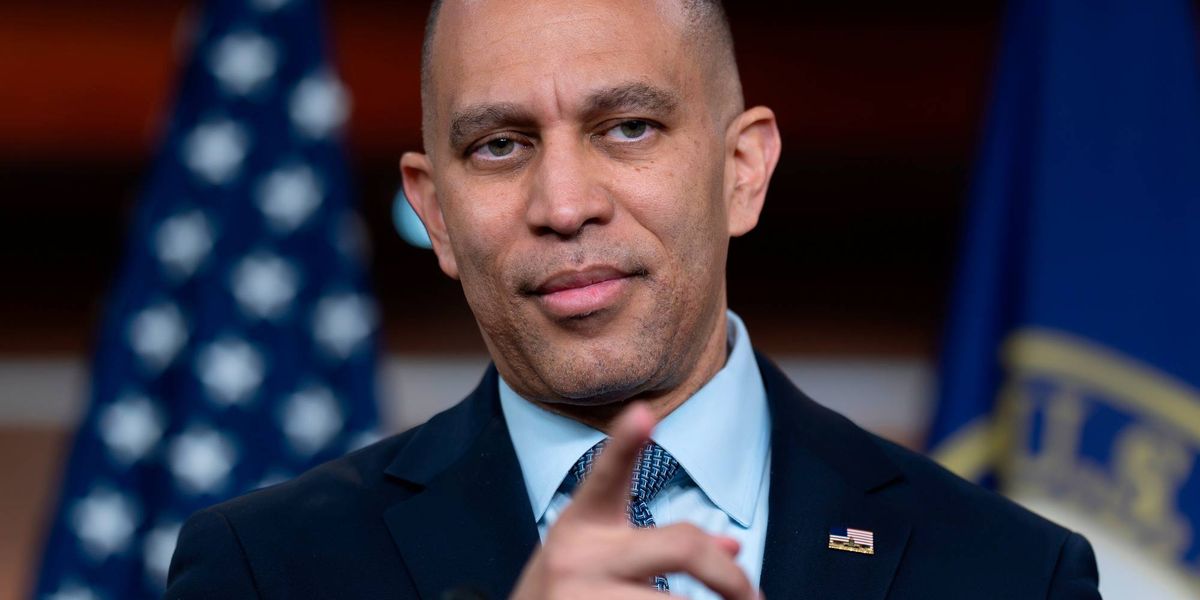
Court rulings upended Democrats' redistricting gains in Virginia and raised the odds of further Republican-friendly map changes in the South, potentially forcing Democrats to win roughly 6 seats rather than 3 to take the House. The article highlights threatened Black representation, a shrinking path to a Democratic majority, and Jeffries' shift of focus toward the 2028 redistricting cycle. This is politically important but not a direct market mover, with limited near-term financial-market impact.
The immediate market read is not about a single House cycle, but about the durability of institutional checks. A more aggressive redistricting environment raises the odds of a status quo Congress that is harder to predict on taxes, antitrust, and fiscal cliffs; that is mildly negative for broad beta and especially for sectors that depend on legislative clarity. The second-order effect is that political capital shifts from policy-making to map-making, increasing the chance of headline-driven volatility around any close-seat names for the next 6-18 months. The deeper issue is that the Supreme Court and state courts are now functionally active participants in shaping seat math, which increases path dependency into 2028. That favors firms and strategies that monetize uncertainty over those exposed to stable majority expectations. In practice, it means the “blue wave” trade is less reliable, and any long positioning predicated on a clean Democratic sweep should be discounted until after the next court calendar and state legislative deadlines. The contrarian takeaway is that the market may be overpricing the political impact on November/2026 and underpricing the longer-dated repricing of voting-rights fights into 2028. If Republicans preserve more seats than expected, the near-term risk is a higher probability of policy gridlock rather than sweeping deregulation; that is usually supportive for large-cap quality, but negative for small-cap cyclicals that need fiscal support. The biggest losers are Black incumbent Democrats and the donor/network ecosystem tied to expensive defensive map fights, which could crowd out turnout and field spending in marginal districts.
AI-powered research, real-time alerts, and portfolio analytics for institutional investors.
Overall Sentiment
neutral
Sentiment Score
-0.10
