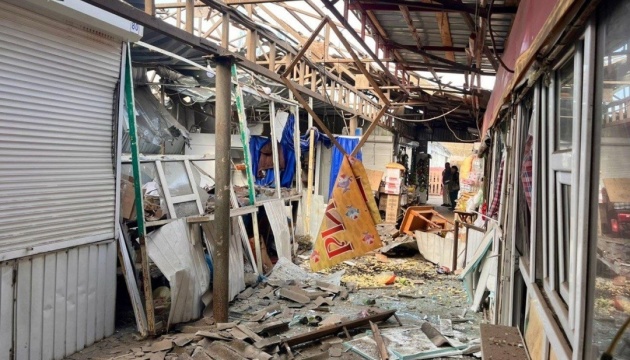
Five people were killed and 19 injured after a Russian FPV-drone strike on Nikopol in Dnipropetrovsk region; casualties include three women, two men and a 14-year-old girl in serious condition. The attack damaged trade pavilions and a shop and caused fires; authorities reported the region endured more than 20 strikes overnight with additional injuries (three people, including two children). This localized escalation increases geopolitical risk and could modestly weigh on regional investor sentiment and risk assets.
FPV and loitering-drone attacks are accelerating a durable shift in defense procurement: militaries are prioritizing short-cycle counter-drone sensors, electronic warfare kits, and scalable ISR-to-shooter integration over platform buys. Expect multi-quarter procurement windows where primes capture recurring software/hardware service revenues (patches, geofencing, sensor upgrades) while smaller drone makers see lumpy, volatile order flows. Supply chokepoints will center on stabilized cameras, RF front-ends, and small high-torque motors — component shortages can delay ramp-ups by 3–9 months and concentrate bargaining power in tier-1 defense suppliers.
Second-order commercial effects: insurance premiums for logistics and retail in contested regions rise, lifting pricing power for insurers and security contractors; local reconstruction demand temporarily boosts steel, cement and bulk freight volumes but is highly idiosyncratic and timing-limited. Politically, sustained incidents increase the odds of additional Western military aid packages within 1–6 months, which is a clearer revenue catalyst for contractors than one-off emergency buys. The main downside that would reverse this dynamic is a negotiated pause or rapid attrition of drone stocks—both would compress near-term C-UAS spend and leave recent re-ratings vulnerable.
Investor positioning should differentiate scalable, recurring-revenue plays from single-product drone manufacturers and from insurance/EM trades that price in a lasting escalation. Volatility will spike around any announcement of U.S./EU aid votes or large C-UAS contracts; those are the optimal rebalancing moments. Valuation risk is meaningful among small-cap drone names that already reflect a ‘winner-take-most’ scenario; larger primes have execution risk but a cleaner path to recurring revenue and balance-sheet resilience.
AI-powered research, real-time alerts, and portfolio analytics for institutional investors.
Request DemoOverall Sentiment
strongly negative
Sentiment Score
-0.80
